The Centre is preparing to introduce the Constitution (132nd Amendment) Bill, 2026, in the Lok Sabha on November 30, aimed at implementing women's reservation and increasing the number of seats in the Lok Sabha and state assemblies. The revised proposal seeks to address concerns raised by southern states over their parliamentary representation.
The proposed Bill seeks to increase the maximum strength of the Lok Sabha from 550 to 850 members. Of these, up to 815 members could represent states and 35 members could represent Union Territories. The maximum strength of state legislative assemblies is also proposed to be increased from 500 to 650.
Under the revised proposal, the number of seats in every state and Union Territory would be increased uniformly by 50% from the existing strength.
The proposal is aimed at maintaining the existing proportion of representation of states in the Lok Sabha. Southern states had expressed concerns that allocating seats based on population could reduce their share of representation in Parliament.

According to the proposed Bill, delimitation would be based on the latest published census data available at the time the constitutional amendment comes into force. Accordingly, constituency boundaries may be determined using the 2011 Census.
The proposal seeks to retain the revised distribution of seats until 2051. A three-member Delimitation Commission would be constituted for the exercise.
The Centre would appoint a current or former Supreme Court judge as the chairperson of the commission. Along with determining constituency boundaries, the commission would also be responsible for identifying constituencies reserved for women.
The proposed legislation provides for 33% reservation for women in the Lok Sabha and state legislative assemblies. Women belonging to Scheduled Castes and Scheduled Tribes would also benefit from the reservation.
The women's reservation provision introduced through the 2023 constitutional amendment would remain in effect for 15 years. Parliament could extend the period through legislation if required. Reserved constituencies for women would be changed on a rotational basis.
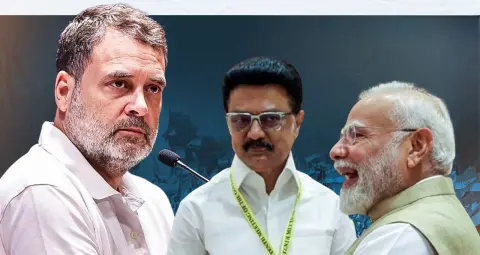
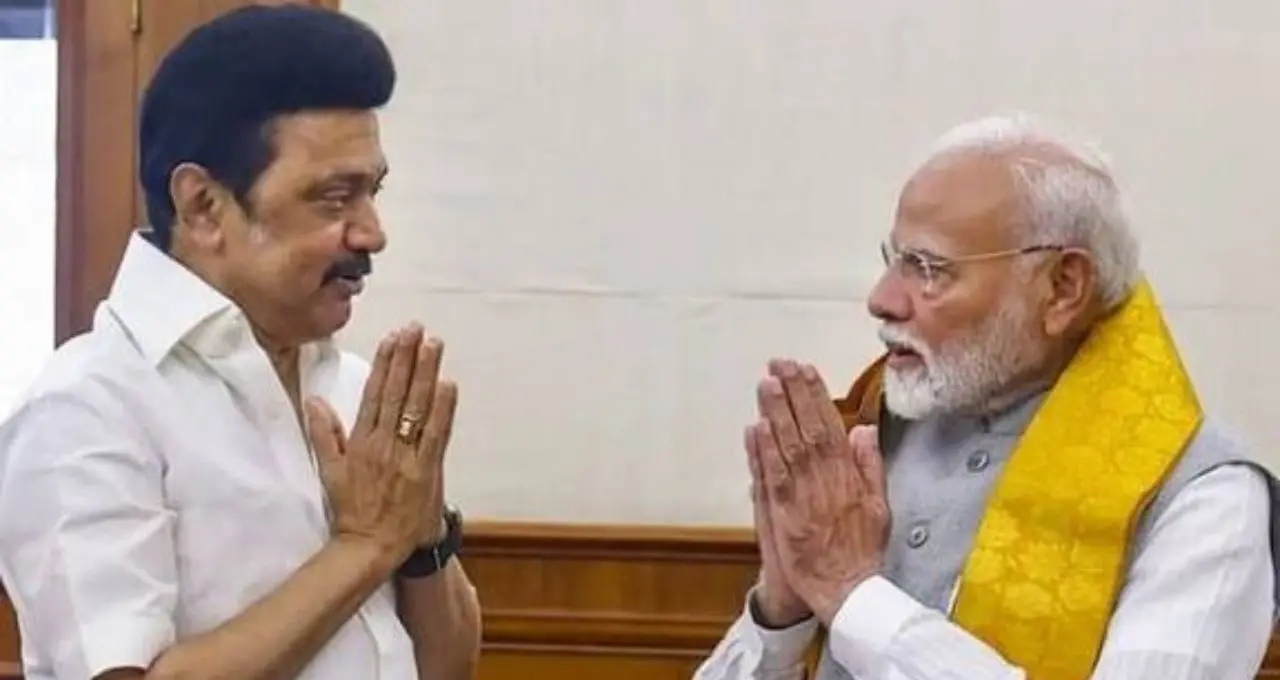
Tamil Nadu Chief Minister and DMK chief MK Stalin wants the state's existing 7.18% share of seats in the Lok Sabha to remain unchanged. He has also sought to retain the representation ratio of states determined on the basis of the 1971 Census for the next 25 years.
According to reports by The Indian Express and The Economic Times, the Centre's revised proposal is close to Stalin's key demand. The DMK currently has 22 Lok Sabha MPs.
Meanwhile, Jitendra Awhad, a leader of Sharad Pawar's NCP (SP), has indicated support for the Bill. However, the party's working president, Supriya Sule, has said that the party will take its final decision after examining the draft. NCP (SP) has eight Lok Sabha MPs.
On April 17, the constitutional amendment Bill received 298 votes in favour and 230 against. The government fell 54 votes short of the required two-thirds majority.
Meanwhile, 20 rebel Trinamool Congress MPs have announced their merger with the NDA-supporting Nationalist Citizens Party of India. Their disqualification proceedings are reportedly pending before Lok Sabha Speaker Om Birla.
The Lok Sabha currently has 540 members, with three seats vacant. Abhishek Banerjee has written to the Lok Sabha Speaker seeking the lifting of the suspension of Trinamool Congress MP Kalyan Banerjee.
If the suspension remains in place and all 538 members, excluding the Speaker, vote, the Bill would require 359 votes to pass.
The final positions of the DMK and NCP (SP) on November 30 are expected to be closely watched. Their support could strengthen the government's position, although neither party has yet announced a final decision on voting separately from the opposition alliance.