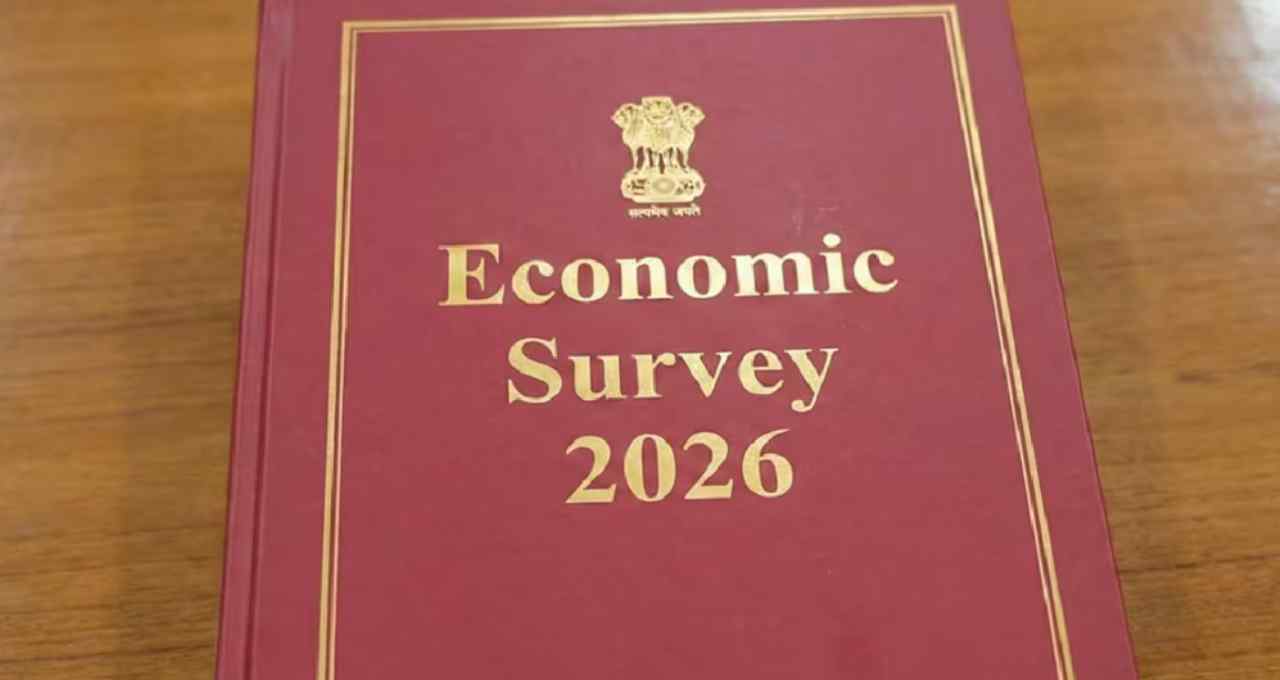
The Economic Survey 2026 will be tabled in Parliament on January 29, ahead of the presentation of the Union Budget 2026. The survey is regarded as a key official document for assessing the current state of the Indian economy, the challenges it faces, and the government’s policy priorities.
Presented annually before the Union Budget, the Economic Survey outlines the prevailing economic conditions over the past year and indicates areas of policy focus. It is widely seen as an assessment of economic performance during the year and provides the analytical backdrop against which budgetary decisions are formulated.
As a pre-budget exercise, the Economic Survey plays a defined role distinct from the budget. While the Union Budget sets out the framework for government revenue and expenditure for the coming year, the Economic Survey evaluates the existing economic situation and identifies key challenges and areas requiring attention.




The survey reviews economic activity across the financial year and examines trends related to economic growth, inflation, and employment. It also outlines the measures taken by the government during the year and assesses their impact, while indicating sectors that may require greater policy focus.
The Economic Survey presents trends across major sectors of the economy, including agriculture, industry, infrastructure, employment, money supply, inflation, trade, foreign exchange reserves, and other macroeconomic indicators. These assessments form the analytical basis used to inform decisions on resource mobilisation and expenditure allocation in the Union Budget.
The document is relevant not only for the government but also for Members of Parliament and the public, as it provides insight into revenue assumptions, expenditure priorities, and borrowing plans underlying budget proposals. By mapping economic trends, it supports policy formulation and helps explain the rationale behind fiscal decisions.
Over time, the role of the Union Budget has evolved from a statement of income and expenditure to a key instrument for communicating government policy direction. The Economic Survey provides the foundation for this by setting out an assessment of economic conditions that informs major budgetary measures.
The analysis of government expenditure extends beyond headline figures to examine spending from a broader economic perspective, including allocations towards capital formation, direct government spending, and funds channelled to other sectors through grants and loans. These aspects are reflected through the economic and functional classification of the central government budget published by the finance ministry, which are consolidated in the Economic Survey.
The Economic Survey is prepared by the Chief Economic Adviser under the finance ministry, with inputs from economists and subject-matter experts. The document reflects the government’s economic approach and highlights priority areas considered during policy formulation.
In recent years, changes have also been made to the presentation of the Economic Survey. Under the leadership of Principal Economic Adviser Sanjeev Sanyal, the Economic Survey 2021–22 was presented in a single-volume format after eight years, moving away from the earlier two-volume structure to simplify presentation and improve readability.
The Economic Survey is also of significance to the general public, as it provides a consolidated view of economic trends related to inflation, employment, growth, and government spending, which have a direct bearing on daily economic conditions.