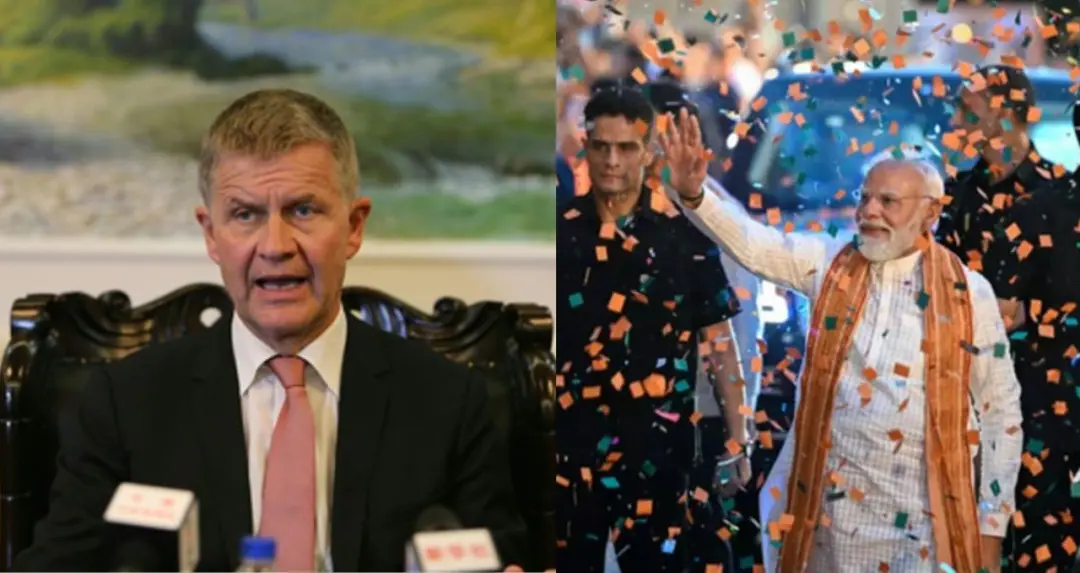
Norway’s former minister and senior diplomat Erik Solheim praised Prime Minister Narendra Modi following the Bharatiya Janata Party’s victory in the West Bengal Assembly elections, stating that the result was a response to claims previously made by sections of the Western media.
Posting on social media platform X, formerly Twitter, Solheim said the BJP’s victory was not only an electoral success but also reflected a b political and organisational resurgence backed by public support. He described the result as a “spectacular revenge” and said it answered analysts who had earlier questioned the party’s electoral performance.


Solheim also referred to the 2024 Lok Sabha elections, stating that several Western media organisations had portrayed the BJP falling short of a majority as “the beginning of the end of the Modi era.” He said subsequent election outcomes had contradicted that assessment.
According to Solheim, the BJP has since recorded b performances in Odisha, Haryana, Delhi, Maharashtra, Bihar, Assam and now West Bengal. He said these successive victories demonstrated that the party’s political influence and organisational strength remained intact.
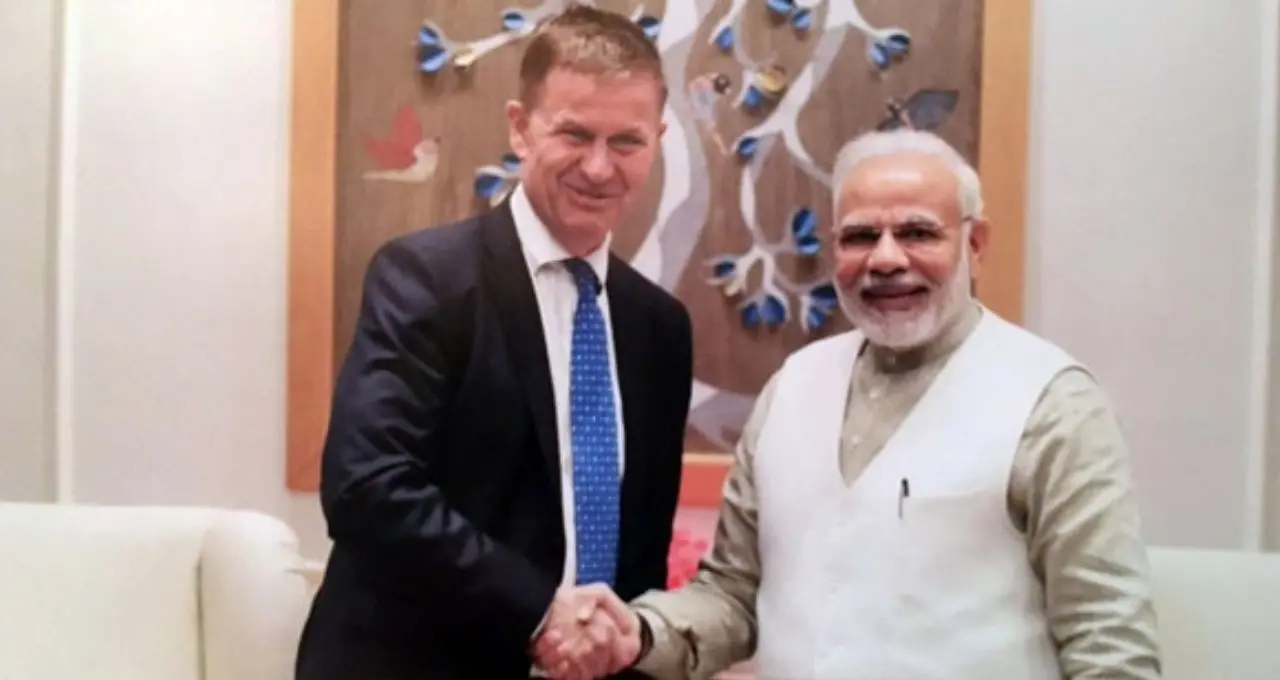
Commenting on voter participation in West Bengal, Solheim said turnout exceeding 90 percent in a state with more than 100 million voters reflected the strength of democratic participation in India. He said such large-scale electoral participation indicated deep public trust in the democratic process.
He further stated that voter participation at this level was often not seen in several developed countries, particularly in Europe and the United States. According to Solheim, India’s electoral model could serve as an important example for global democracies.
Praising India’s democratic system, Solheim said India was among the world’s largest democracies and that its electoral process was highly organised and transparent. He said active voter participation showed that citizens were highly aware of their political future.
Solheim added that India’s democratic system was not only b but also continuously evolving, presenting a model from which other countries could learn.
In his remarks, Solheim also commented on politics in Tamil Nadu and referred to the performance of actor-turned-politician Vijay’s party TVK as a possible indicator of political change in the state.
He said the emergence of new political forces reflected the plurality and diversity of Indian democracy. According to Solheim, emerging political alternatives in states such as Tamil Nadu could influence the direction of state politics in the coming years.