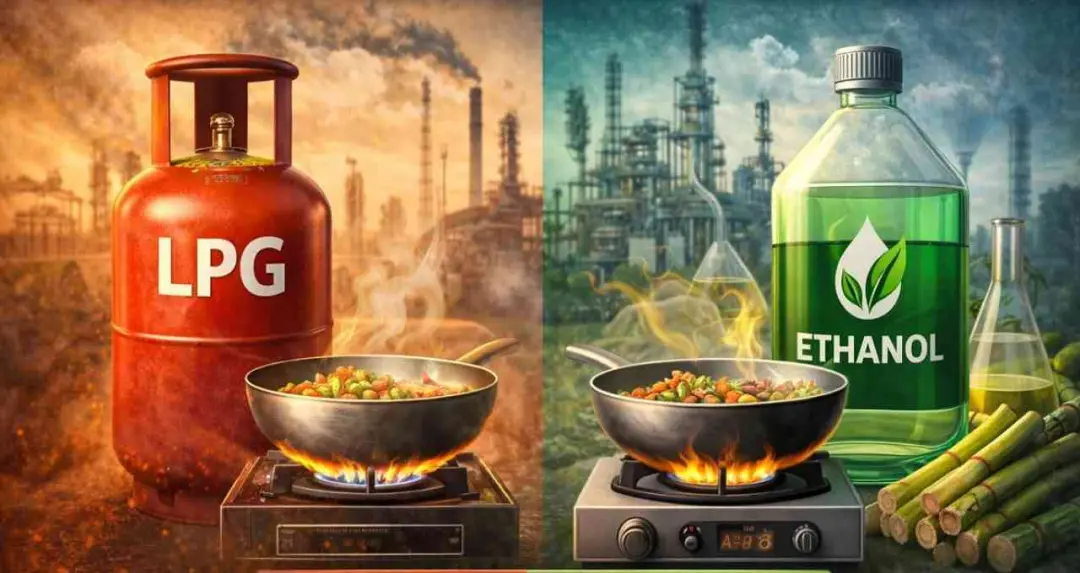
An ethanol stove is emerging as a new clean cooking technology that claims to offer lower costs and reduced pollution compared with LPG. The biofuel-based technology is being presented as a smoke-free cooking alternative with lower risk.
An ethanol stove is being discussed as an alternative to traditional LPG cylinders used in kitchens. Union Minister Nitin Gadkari recently referred to the technology, describing it as a cheaper and more environmentally suitable option. Claims suggest the ethanol-based stove is capable of producing high heat at lower cost.
An ethanol stove is a modern cooking appliance that operates on ethanol fuel. Ethanol is a biofuel produced from crops such as sugarcane, corn and sweet sorghum. The stove uses ethanol in liquid or gel form and is being considered a clean cooking technology.

One of the key features of this technology is reduced smoke, soot and b odour during cooking. Ethanol combustion generates high heat, which may help cook food faster.
The ethanol stove contains a small fuel tank filled with ethanol. When the burner is ignited, the fuel burns in a controlled manner to generate heat.
According to reports, burning ethanol can produce temperatures of about 700 to 800 degrees Celsius. Its flame is being compared with LPG. In terms of design, it may resemble older kerosene stoves, although its combustion technology is described as more modern and efficient.
Cost has emerged as a major point of discussion around ethanol stoves. Reports claim that one litre of ethanol can provide continuous flame for about 15 hours. On this basis, it is being described as a more economical option than LPG.
However, actual savings will depend on several factors, including local ethanol prices, availability and stove efficiency. The technology is currently in an early stage and has not yet been adopted on a large scale.
Experts say that if ethanol supply strengthens and prices remain controlled, it may become a lower-cost option for consumers.
Ethanol is considered a more environmentally suitable fuel because it is produced from plants and is described as causing less pollution than fossil fuels. Its use may reduce smoke and soot in kitchens, which could help improve indoor air quality.
From a safety perspective, ethanol is also being considered a suitable option. It can be used in gel form, which may reduce risks associated with incidents such as gas leaks. However, experts say additional testing is required before the technology is adopted on a wider scale.
At present, ethanol stoves remain in an early stage of development but are being viewed as a future clean cooking technology. If governments and companies work on supply chains, pricing and safety standards, the technology may emerge as an alternative to LPG cylinders in the future.
Experts believe the technology could help lower fuel expenditure and contribute to reducing pollution.