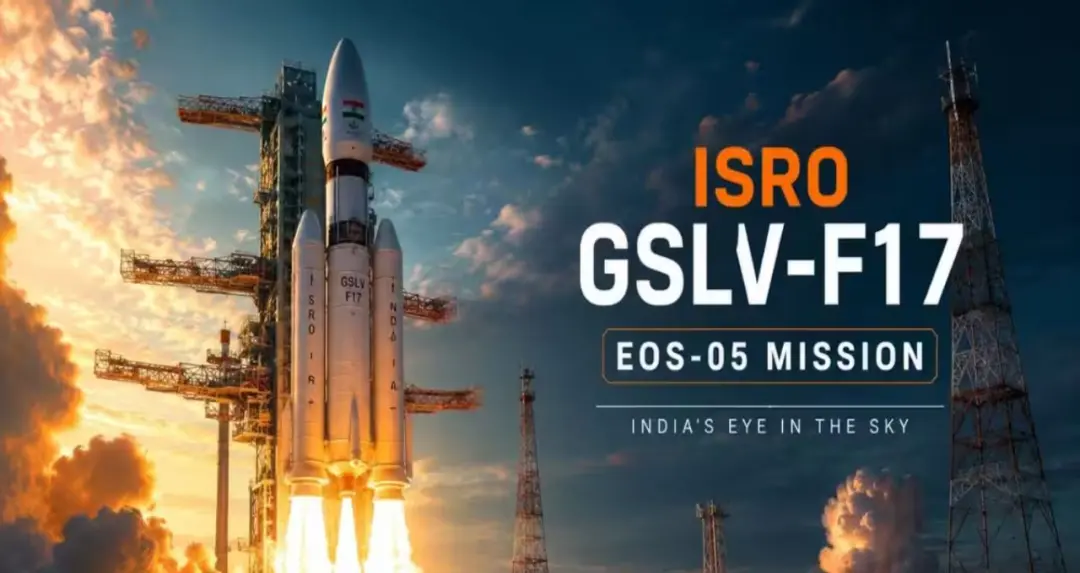
Indian Space Research Organisation (ISRO) successfully launched the advanced Earth observation satellite EOS-05, also known as GISAT-1A, aboard the GSLV-F17 rocket from the Satish Dhawan Space Centre in Sriharikota, Andhra Pradesh, on Friday.
GSLV-F17 lifted off at 2:55 am Indian time and placed EOS-05 into the designated Sub-Geosynchronous Transfer Orbit (Sub-GTO) as planned. The satellite has been designed for Earth observation and near-real-time imaging, with data intended for applications including agriculture, disaster management and environmental monitoring.
Following the launch, ISRO chief Dr V. Narayanan confirmed the success of the mission and said GSLV-F17 placed EOS-05 accurately in its designated orbit.
Mission Director Thomas Kurian also welcomed the achievement and said it was a moment of pride for the entire team. He said GSLV had successfully completed its 19th mission and described EOS-05 as a satellite with near-real-time imaging capability.
Kurian said the launch process is completed within a few minutes, but the mission involves months and years of work by scientists and engineers.
EOS-05 has been developed for continuous Earth observation. Its advanced imaging capability enables it to provide data in visible, infrared, multispectral and hyperspectral bands.
Union Science and Technology Minister Jitendra Singh also praised the ISRO team following the mission's success. He said EOS-05 would strengthen India's advanced imaging capabilities from geosynchronous orbit.
EOS-05 is to be deployed in geostationary orbit, enabling continuous observation of the Indian subcontinent. Compared with satellites in low Earth orbit, this arrangement can allow more regular monitoring of a specific region.
The satellite's rapid imaging capability can be used during natural disasters. Data from EOS-05 can support monitoring of areas affected by cyclones, floods, forest fires and other disasters. The ability to obtain images of priority areas at shorter intervals can help disaster response.
Multispectral and hyperspectral data from EOS-05 can be used to assess crop conditions. The satellite can also be used for monitoring water resources, forest areas, environmental changes and natural resources.
The mission follows the EOS-03 mission, which failed to achieve success in August 2021 because of a technical problem in the cryogenic stage. The success of the new mission is being considered in the context of the reliability and technical improvements of the GSLV.
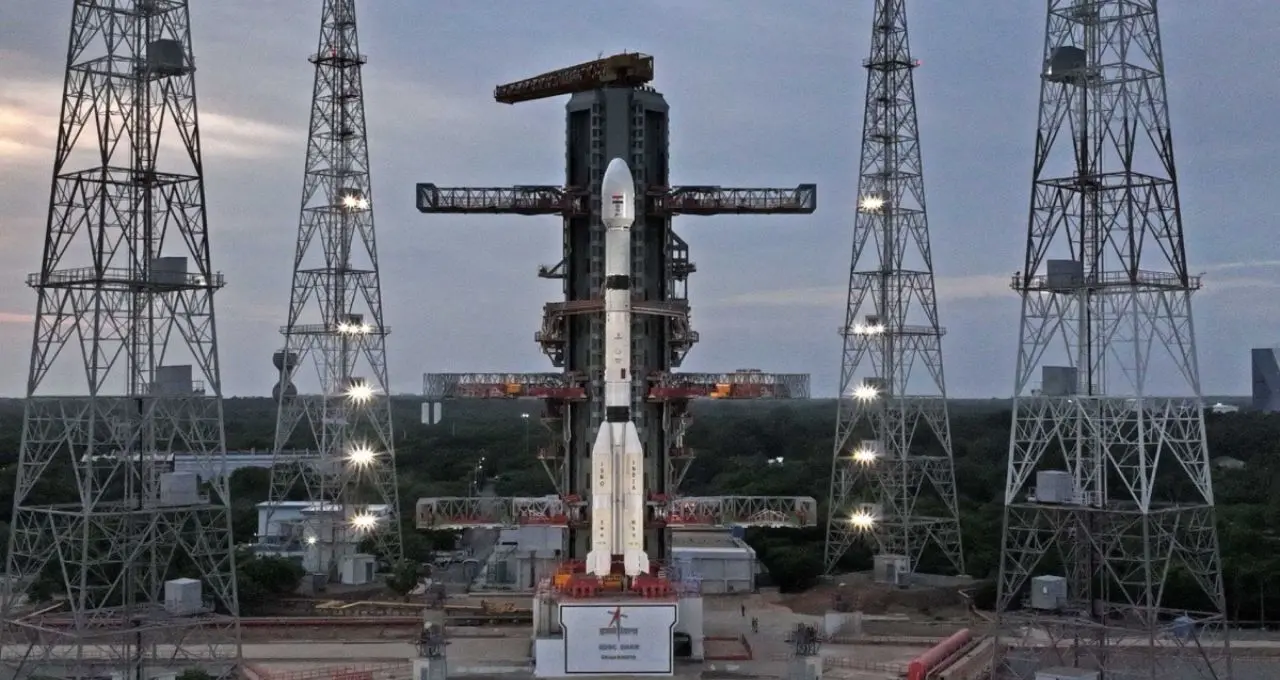
EOS-05, weighing approximately 2,367 kilograms, is described as the heaviest payload sent into Sub-GTO orbit by a GSLV Mk-II. The GSLV-F17 is approximately 51.7 metres tall and has a lift-off mass of approximately 420.5 tonnes.
The successful launch of EOS-05 comes as ISRO prepares for its upcoming missions. Earlier this year, the PSLV-C62/EOS-N1 mission did not achieve the expected success because of a technical problem in the rocket's third stage.