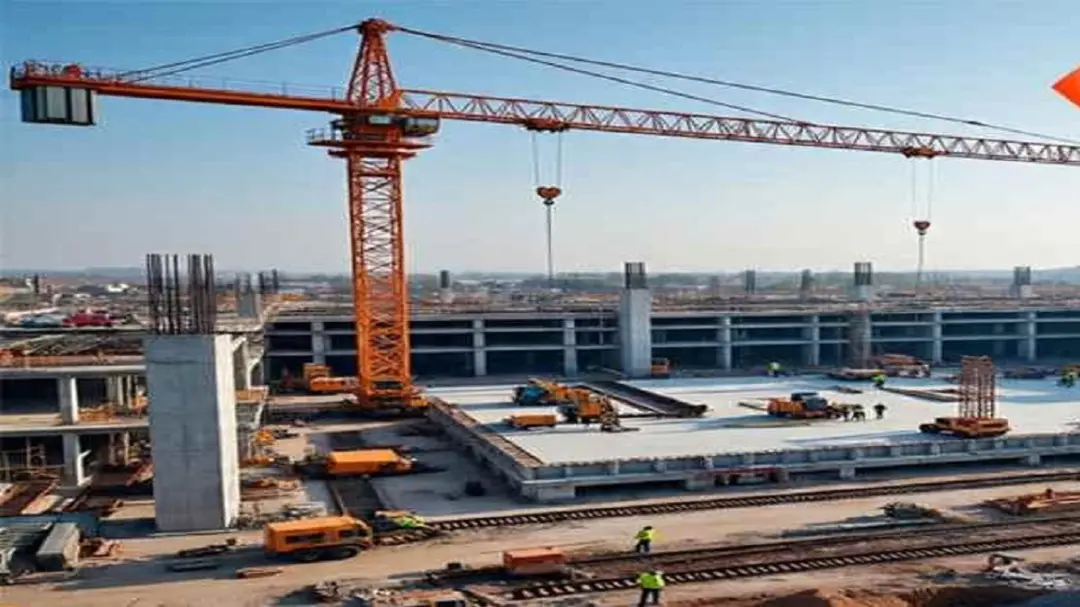
The new passenger terminal being developed at Harding Park to ease pressure from increasing passenger and train traffic at Patna Junction remains stuck at a slow pace of construction. The project, estimated to cost around ₹95 crore, is intended to support Patna’s suburban rail system, but even about 24 months after the tender was awarded, less than 10 percent of the first phase has been completed.
According to the railway’s plan, the first phase was to be completed within the stipulated period and passenger trains were to begin operating from the terminal. However, technical and operational constraints related to the washing pit line have affected the pace of construction.
The Harding Park passenger terminal project is intended to reduce pressure on the main line at Patna Junction. Once completed, a portion of passenger train operations, including local and MEMU services, is proposed to be shifted to Harding Park.
The plan is aimed at increasing the operational capacity available at Patna Junction and providing a separate terminal for local passengers. The railway’s official project document also lists the development of five terminal platforms at Harding Park and an increase in Patna Junction’s handling capacity among the key benefits of the project.
The tender for the project was awarded in September 2024 at a cost of around ₹95 crore. Under the initial plan, the first phase was to be completed in about 12 months. The railway later set a target of completing the first phase by December 2026.
September 2026 has now come to an end and the deadline is approaching, while the physical progress of the project is reported to be less than 10 percent. This has made completion of the scheduled work by December challenging.
The washing pit line in the Harding Park area has been identified as the biggest obstacle to the project. Existing railway operations and activities associated with the washing pit are limiting the work area available to the construction agency.
The railway has to maintain the existing operational arrangements without affecting train services while also advancing the construction of tracks, platforms and buildings for the new terminal. This coordination has affected the pace of construction.
The impact of the washing pit-related constraint is not limited to one part of the project. It has also affected the linking of new railway tracks and several platform-related works. Progress on the SNT, or Signal and Telecommunication, building has also reportedly been affected for the same reason.

The railway faces the challenge of continuing existing rail operations during construction while making the required space available for the project.
The slow progress of the project has also been reviewed at the railway level. On April 30, 2026, former East Central Railway General Manager Chhatrasal Singh issued directions on the status of the Harding Park terminal during a review meeting on railway projects in Patna.
A timeline was set for expediting Phase I works related to track linking, the boundary wall, bridge extension and the S&T building, along with removing technical obstacles. Directions were also issued for preparing the design for the second phase at the earliest.
However, the project did not show the expected acceleration after the review. According to the latest report, even after five months, a substantial portion of the construction has not progressed.
Work related to the boundary wall has moved forward, but construction of the main terminal structure, platforms and other key structures has not reached the expected level. The railway now faces the challenge of completing the work within the stipulated deadline.
The first phase of the Harding Park terminal includes plans for five platforms and five railway lines. A G+4 station building, G+6 SNT building, subway, foot overbridge, Signal and Telecommunication building and other passenger facilities are also planned.
Cover sheds are also proposed on the platforms to provide passengers protection from weather conditions.
Initially, four platforms were planned for the Harding Park terminal. After the Railway Board approved the project in April 2024, the plan to develop a terminal for MEMU and local train operations emerged. The number of platforms was later increased to five in the first phase.
The railway’s plan also indicated the possibility of operating a large number of local trains from Harding Park.
The project is also linked to the redevelopment of Patna Junction and future passenger capacity. Patna Junction is among the busiest railway stations in the capital and handles different categories of trains.
If a portion of local and suburban train services is operated from a separate terminal, the use of line capacity at the main station could be altered. The original Harding Park terminal plan was prepared in this direction to separate operations.
According to the railway, the five new terminal platforms at Harding Park could increase Patna Junction’s handling capacity. Better train scheduling, turnaround and modern passenger facilities are also listed among the project’s benefits.
The project therefore involves not only construction of a new station building but also forms part of a broader plan to reorganise railway operations in Patna.
There were also different stages in the commencement of construction of the project. Prime Minister Narendra Modi laid the foundation stone online for the proposed new terminal building at Harding Park on May 30, 2025.
At the time, the estimated project cost was reported to be around ₹95 crore and the project was planned to be completed in two phases. The first phase proposed development of five platforms and five lines.
Construction began after the foundation stone was laid, but technical and operational obstacles at the site prevented the work from progressing at the expected pace. During a review of the project in 2026, railway officials also directed that technical obstacles be removed and construction accelerated.
Despite this, a large part of the project remained incomplete as of September 2026.
The latest report has also indicated an increase in the project cost. According to the report, the cost of the project has increased by more than 15 percent with the passage of time.
However, the final revised cost and the status of formal approval for it remain to be clarified separately. Delays in construction could affect the railway’s budget and the economic aspects of the project.
The incomplete Harding Park terminal could directly affect passengers for whom a separate terminal for local and MEMU trains has been proposed.
At present, these trains continue to depend on the existing railway network and stations. Once the new terminal is completed, changes in the operational arrangement are expected, but the existing system will continue until construction is completed.
Resolving the issue related to the washing pit line is also important because the construction agency needs sufficient and safe working space to build the new tracks and platforms.
At the same time, the railway cannot suddenly stop existing train and coaching activities. Coordination between operations and construction therefore has to be managed in phases. This coordination challenge is being cited as one of the key reasons for the delay.
The railway has said that the project is being monitored to ensure timely completion. According to East Central Railway CPRO Saraswati Chandra, efforts are being made to remove the obstacles and move the work forward smoothly.
The progress of the project in the coming months will depend on how quickly the technical issue related to the washing pit is resolved and how rapidly the construction agency can increase work at the site.
At present, the ₹95-crore Harding Park terminal remains largely under construction, with less than 10 percent of the first phase reportedly completed. The December 2026 deadline is approaching.
The terminal, planned with five platforms, five lines, a station building, SNT building, subway, foot overbridge and passenger facilities, will depend on the resolution of technical constraints and the pace of construction for its completion.