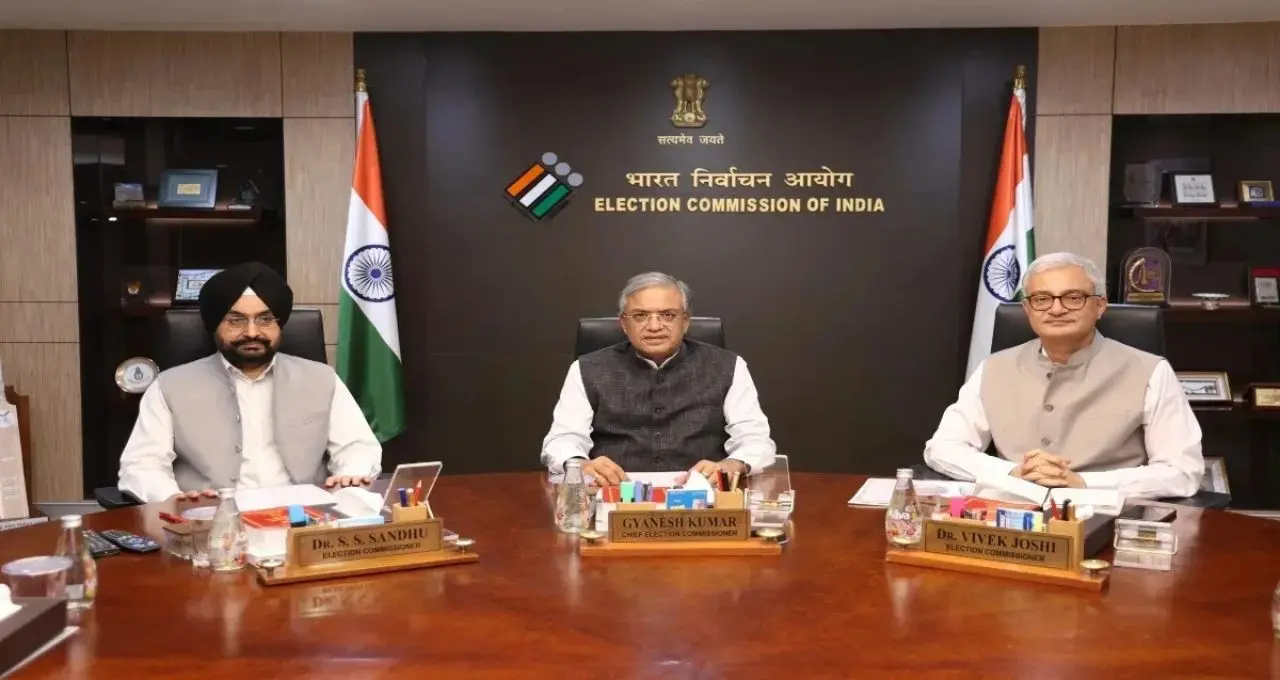
The INDIA alliance has filed a fresh application in the Supreme Court over alleged irregularities in electoral rolls, seeking answers to 48 questions from the Election Commission of India (ECI) on the Special Intensive Revision (SIR), Form 6 and the ECINET digital platform. The Opposition has sought responses from Chief Election Commissioner Gyanesh Kumar and other senior officials of the poll body.
The dispute between the Election Commission and the Opposition over the Special Intensive Revision of electoral rolls has taken a new legal turn. Congress leader Rahul Gandhi and other INDIA alliance leaders have approached the Supreme Court, seeking permission to put 48 questions to the Election Commission.
The Opposition wants clarification on who took the decisions regarding the implementation of SIR, changes to the online Form 6 application and the digital systems used for managing electoral rolls, as well as how these decisions were approved.
The Election Commission submitted affidavits before the court on October 26 and November 14, 2026, in connection with the matter. The poll body stated that decisions related to SIR were taken with the consent of all three Election Commissioners.
However, the Opposition has said that the response is insufficient. The petitioners argue that if the decisions were taken collectively, the relevant files, dates of meetings and records of approvals should also be made available.
Accordingly, they have sought separate information from Chief Election Commissioner Gyanesh Kumar and Election Commissioners Sukhbir Singh Sandhu and Vivek Joshi.
The Opposition has also asked whether any Election Commissioner had expressed disagreement with these decisions. If any objections were raised, the petitioners want to know how those objections were addressed and how the final decisions were reached.



A major focus of the 48 questions is the decision to conduct the Special Intensive Revision across the country.
The Opposition has asked the Election Commission to specify the date on which approval was granted for conducting SIR nationwide. It has also sought details of the files in which the proposal was discussed.
The petitioners want to establish whether all three Election Commissioners agreed to the proposal during a joint meeting or whether their approvals were obtained separately through official files.
The Opposition has also referred to an RTI response issued in August 2025. According to the petitioners, the response indicated that information relating to the decision to conduct SIR across the country was not available. They have now sought clarification from the Election Commission on the matter.
The Election Commission's digital platforms, ECINET and ERONET, have also come under scrutiny in the application. These platforms are used for managing electoral rolls and related information.
The Opposition has sought details of the individuals authorised to add or delete voters' names and modify information in these systems. It has also asked whether employees of private companies or technology agencies were given access to make changes to electoral roll data.
The petitioners have further sought information about the mechanisms used to maintain records of changes made to voter details. In particular, they want to know whether the system records the identity of the person making a change and the date on which it was carried out.
Another question concerns whether large numbers of voters' names were ever deleted without an order from an Electoral Registration Officer. However, allegations of irregularities in such changes have not been established before the court.
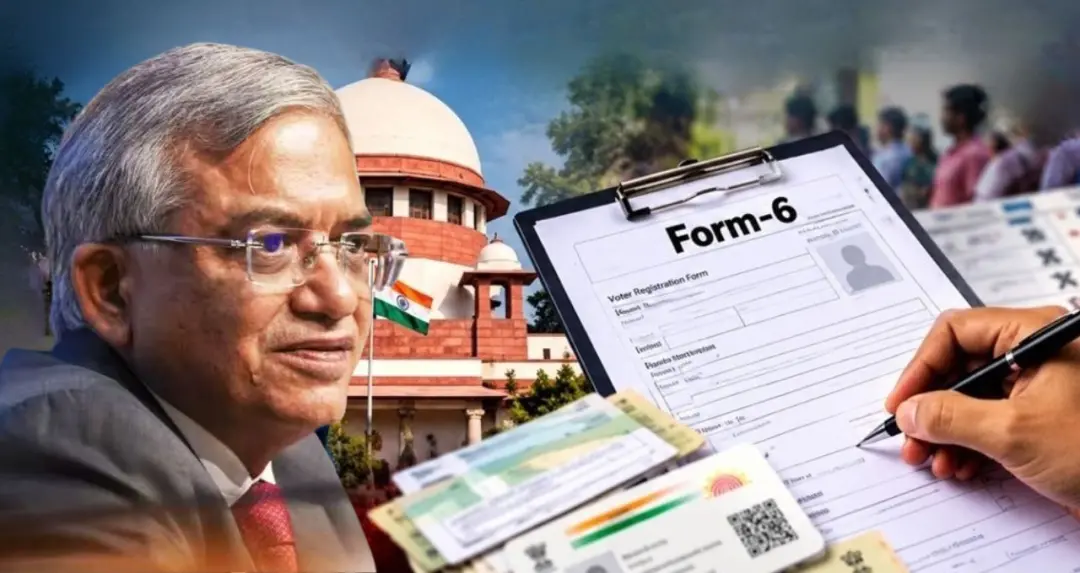
Form 6 is used by new applicants to seek inclusion of their names in electoral rolls. The Opposition has raised objections to an additional declaration introduced in the online version of the form.
In its application, the Opposition has asked whose instructions led to the inclusion of the declaration and whether it was approved by all members of the Election Commission.
It has also sought the number of applications that were rejected or remained pending because applicants failed to provide additional information or complete the required declaration.
Questions have also been raised about Form 7, which is used to file objections seeking the deletion of a person's name from the electoral roll.
The Opposition wants details of the number of complaints received through this process, the manner in which they were examined and the action taken against individuals found to have provided incorrect information.
The application has also raised questions about appeals filed in West Bengal against orders directing the inclusion of voters' names in electoral rolls.
The Opposition has asked which official took the decision to challenge orders passed by judicial officers. It has also sought details of the number of appeals filed and the level at which approval was granted for initiating those proceedings.
In addition, the petitioners have requested state-wise data on individuals whose names were not included in electoral rolls, along with details of the reasons for their exclusion.
Rahul Gandhi and the other petitioners have sought responses from Deputy Election Commissioner Bhanu Prakash Yeturu, who filed an affidavit on behalf of the Election Commission. They want him to answer the questions with reference to the relevant documents.
The petitioners have also requested separate affidavits from the Election Commissioners on questions concerning their individual decisions. For technical matters, they have sought responses from the Director General of the Election Commission's IT department.
The matter currently involves the Opposition's requests and the Election Commission's position before the Supreme Court. The questions raised by the petitioners do not establish that the allegations against the poll body are true.
The Supreme Court will now have to decide whether to direct the Election Commission's officials to submit written responses to all 48 questions. Further information regarding the next hearing and the Election Commission's official position will be available through orders and updates published on the Supreme Court's website.