India and the European Union have formally announced the conclusion of a free trade agreement after nearly 18 years of negotiations. The agreement is expected to strengthen trade, investment, and strategic partnership between the two sides, while increasing economic interdependence amid ongoing global trade pressures.
The formal announcement is being made during the India–EU Summit in New Delhi, marking the conclusion of negotiations that began in 2007. The government has described the agreement as the “mother of all deals.” Prime Minister Narendra Modi is hosting European Commission President Ursula von der Leyen and European Council President Antonio Costa on the occasion.
The agreement is being concluded at a time when global trade is under pressure due to US tariffs and geopolitical tensions. For both India and the European Union, the deal is being positioned as strategically significant, with expectations of higher bilateral trade flows and deeper economic linkages.
The India–EU Summit is being held at Hyderabad House in New Delhi. The meeting, which began at 11:30 am, includes discussions on trade, investment, supply chains, technology, and geopolitical developments. An official press statement on the free trade agreement is scheduled to be issued at 1:15 pm.


During the summit, the conclusion of the long-pending FTA negotiations that began in 2007 is being formally announced. Commerce Minister Piyush Goyal has earlier described the agreement as a game-changer for India.
The announcement of the India–EU trade agreement has drawn visible criticism from the United States. US Treasury Secretary Scott Bessent, considered close to former President Donald Trump, has publicly expressed displeasure over the deal. In an interview, he accused Europe of acting against US interests.
Bessent stated that the United States imposed a 25 percent tariff on India over its purchase of Russian oil, while Europe proceeded to sign a trade agreement with India. He alleged that Europe was acting in its own interest and claimed that the deal indirectly finances a conflict being waged against Europe itself.
The stated objective of the India–EU free trade agreement is to elevate economic relations between the two regions. Against the backdrop of US tariffs and disruptions in global supply chains, the agreement is expected to provide stability to bilateral trade.
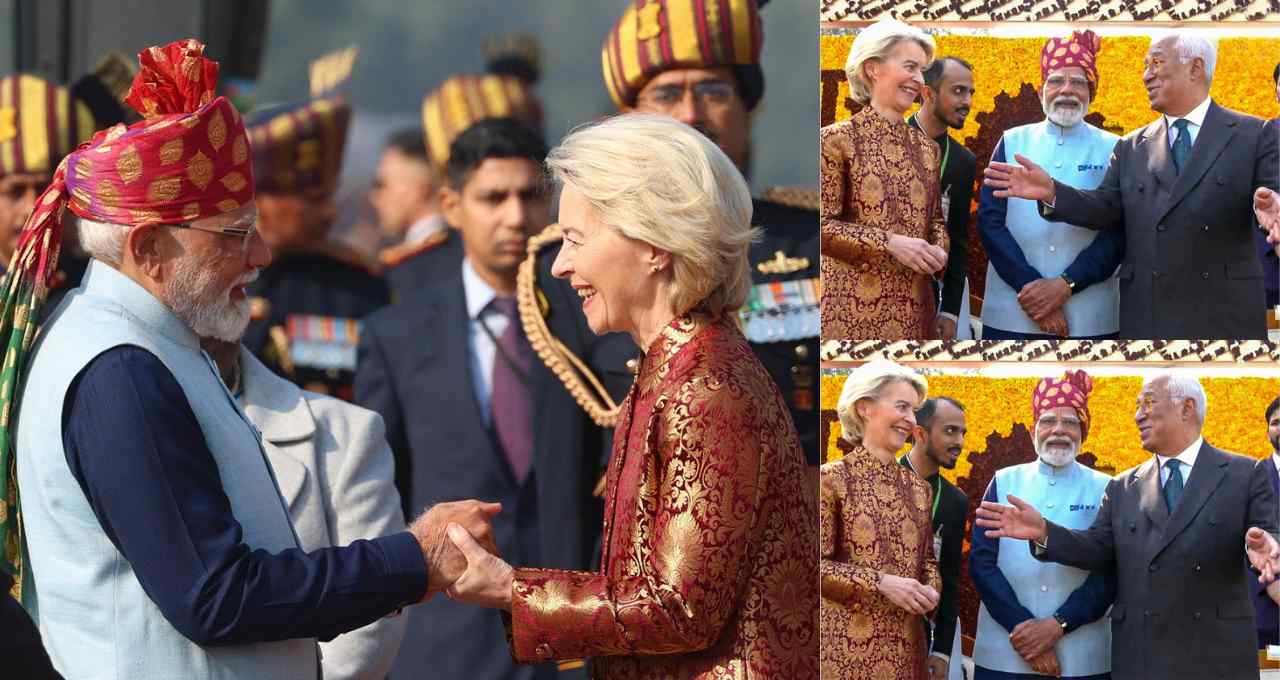
Under the agreement, tariff reductions are expected to make Indian products more competitive in European markets, while European companies will gain easier access to India’s large and rapidly expanding market. The long-pending agreement is also expected to facilitate higher investment flows, technology transfer, and employment generation.
Bilateral trade between India and the European Union currently stands at around USD 137 billion. India exports goods worth approximately USD 76 billion to the EU’s 27 member states and imports goods worth about USD 61 billion from Europe.
The European Union accounts for about 17 percent of India’s total exports, underscoring its position as a major trading partner. Following the implementation of the free trade agreement, bilateral trade is expected to increase by up to USD 50 billion.
Indian industry is expected to benefit from expanded market access, particularly in sectors such as textiles, pharmaceuticals, steel, petroleum products, and machinery. Tariff reductions are expected to improve the competitiveness of Indian products in European markets, supporting export growth and domestic manufacturing.
For European countries, the agreement is expected to lead to higher exports of automobiles, auto components, advanced machinery, wine, and spirits to India. European companies are also expected to gain improved access to India’s growing middle-class consumer market, alongside increased investment opportunities in manufacturing and green technology sectors.
Beyond economic considerations, the India–EU free trade agreement is being positioned as strategically significant. The deal is expected to reduce trade dependence on the United States for both sides and reinforce India–EU cooperation amid shifting global economic and geopolitical dynamics.