
India and Japan have announced their first joint defence technology development project, marking a new step in bilateral defence cooperation. Under the initiative, the two countries will jointly develop the UNICORN (Unified Complex Radio Antenna) advanced naval stealth antenna system. The project is aimed at strengthening the Indian Navy's communication capabilities, electronic warfare systems, and stealth technology.
The agreement marks a new phase in the India-Japan strategic partnership. According to experts, the project is expected to enhance defence cooperation and maritime security architecture between the two countries in the Indo-Pacific region.

The UNICORN system, also known as the NORA-50 Integrated Mast, is a modern integrated naval radio antenna system. Unlike conventional warships, where multiple communication and sensor antennas are installed externally, increasing the vessel's Radar Cross Section (RCS), the UNICORN system integrates these antennas and electronic systems within a dedicated protective radome.
This integrated design gives the warship a more streamlined external profile and reduces its radar signature, making detection and monitoring by potential adversaries more challenging.
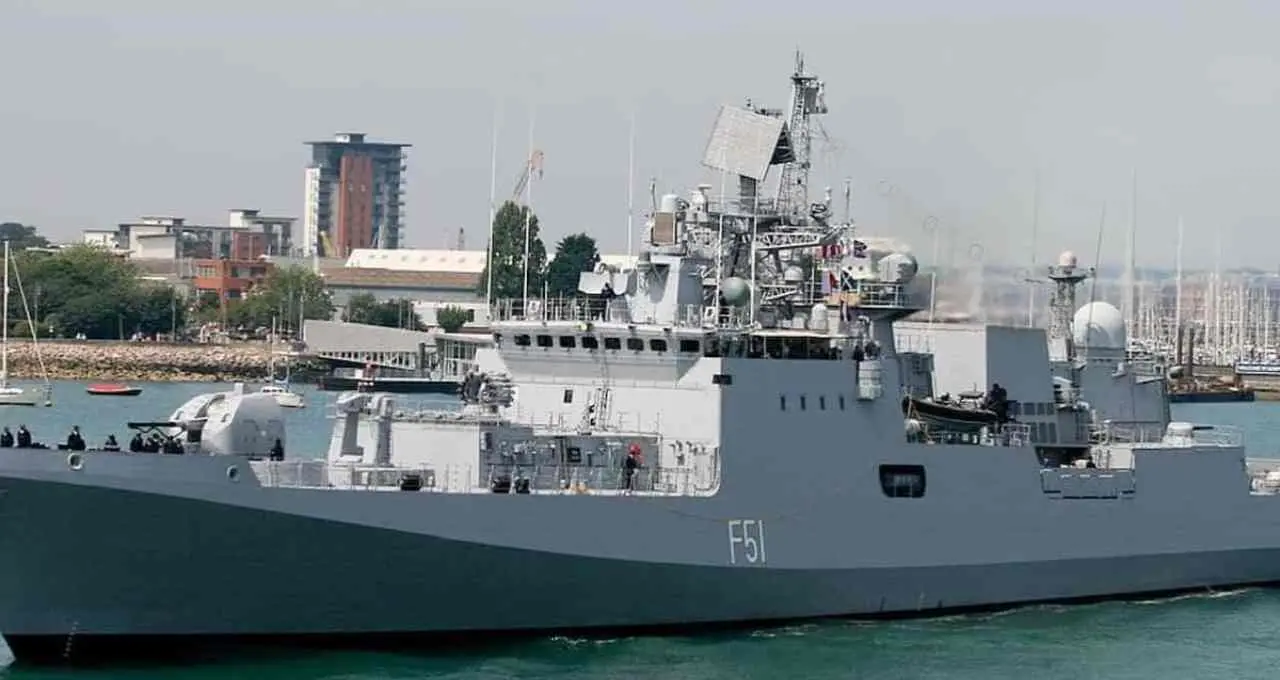
The UNICORN system incorporates several advanced naval and communication technologies, including Tactical Data Link, Tactical Air Navigation System (TACAN), modern communication systems, Identification Friend or Foe (IFF), and Electronic Support Measures (ESM). These capabilities enable warships to maintain secure communications, identify friendly and hostile platforms, and analyse electronic signals.
The UNICORN system was jointly developed by Japan's NEC Corporation, Sampa Kogyo K.K., and The Yokohama Rubber Company. The technology is currently deployed on the Japan Maritime Self-Defense Force's Mogami-class stealth frigates. Japan has already inducted several vessels of this class into service and continues to build additional ships.
Under the joint project, Bharat Electronics Limited (BEL) will be responsible for the co-production of the UNICORN system in India. Japan will provide advanced design and technical expertise, while India will play a key role in manufacturing, system integration, and domestic production. The initiative is also expected to strengthen India's defence manufacturing capabilities and support the domestic defence industry.
The foundation for the project was laid through a Memorandum of Implementation signed between India and Japan in November 2024. Earlier, political agreement on the initiative was reached during the India-Japan 2+2 Ministerial Dialogue held in 2022. With the launch of the joint development project, defence technology cooperation between the two countries is moving towards practical implementation.
The Indo-Pacific remains a key centre of global strategic competition. India and Japan continue to emphasise maritime security, freedom of navigation, and a rules-based international order. According to experts, advanced technologies such as the UNICORN system are expected to modernise the Indian Navy's operational capabilities, surveillance systems, and electronic warfare preparedness.