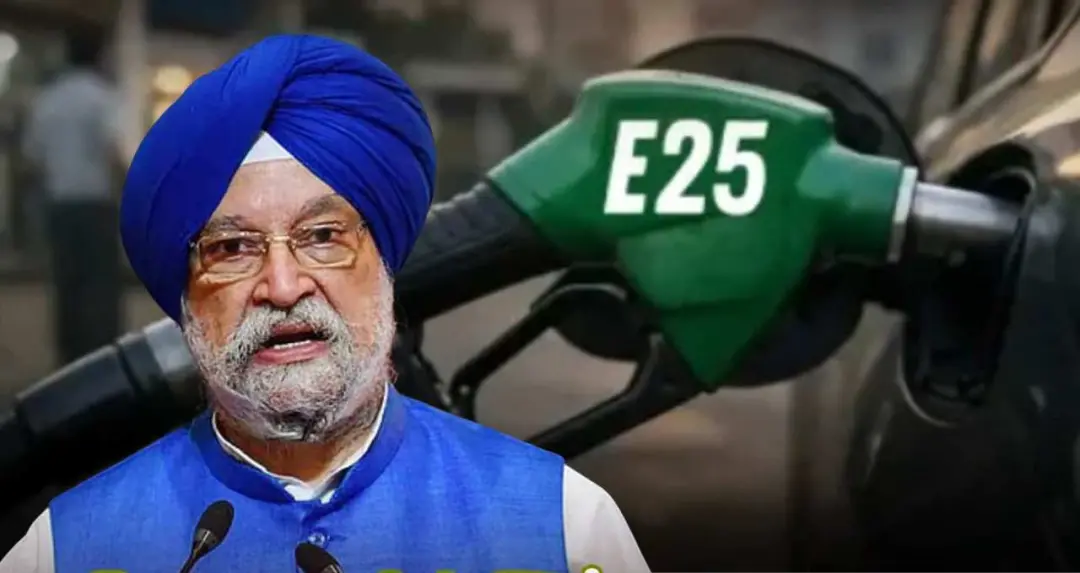
India's proposed introduction of petrol blended with 25% ethanol (E25) remains at the testing stage, and no final decision has been taken on its commercial rollout, Petroleum and Natural Gas Minister Hardeep Singh Puri has said.
The minister said the government will move forward only after completing scientific research, technical testing and extensive consultations with all relevant stakeholders.
The clarification comes amid increasing public discussion over ethanol-blended fuels. In recent weeks, several social media posts and videos have claimed that E20 petrol has caused technical problems in cars and scooters. At the same time, reports regarding a possible rollout of E25 petrol have led to discussions among consumers and the automobile industry.
According to Puri, E25 fuel is currently undergoing technical evaluation and testing at multiple levels. The objective is to assess how petrol blended with 25% ethanol performs across different types of engines, vehicles and climatic conditions.
He said no timeline has been fixed for the completion of the testing process. Consequently, no decision has been taken on when E25 will be made commercially available in the market.
Responding to concerns surrounding ethanol-blended fuels, Puri said investigations into previous claims that blended fuel had caused engine failures found that, in most cases, the technical issues were attributable to factors other than ethanol-blended petrol.
The government stated that the safety, quality and compatibility of any new fuel with vehicles are verified before it is introduced on a wider scale.
Union Minister for Road Transport and Highways Nitin Gadkari also commented on ethanol-blended fuel, stating that ethanol has a lower calorific value than conventional petrol, which may have a slight impact on vehicle mileage.
However, Gadkari said actual fuel efficiency does not depend solely on the fuel used. Road conditions, traffic, the vehicle's technical condition, driving style and maintenance are among the factors that also influence fuel efficiency. As a result, any difference in mileage may vary depending on the vehicle and its operating conditions.
The Government of India aims to promote the use of alternative fuels to reduce dependence on crude oil imports and encourage cleaner energy. As part of this strategy, it is working to promote flex-fuel vehicles.
Flex-fuel vehicles are equipped with engines capable of operating on fuels containing different proportions of ethanol blends. The government said consumers should, in the future, have the option to choose ethanol, methanol or other alternative fuels based on their requirements and local availability.