Former Prime Minister of Bangladesh and BNP Chairperson Khaleda Zia passed away in Dhaka at the age of 80. Prime Minister Modi expressed his condolences on her demise and recalled her contribution to the relationship between Bangladesh and India.
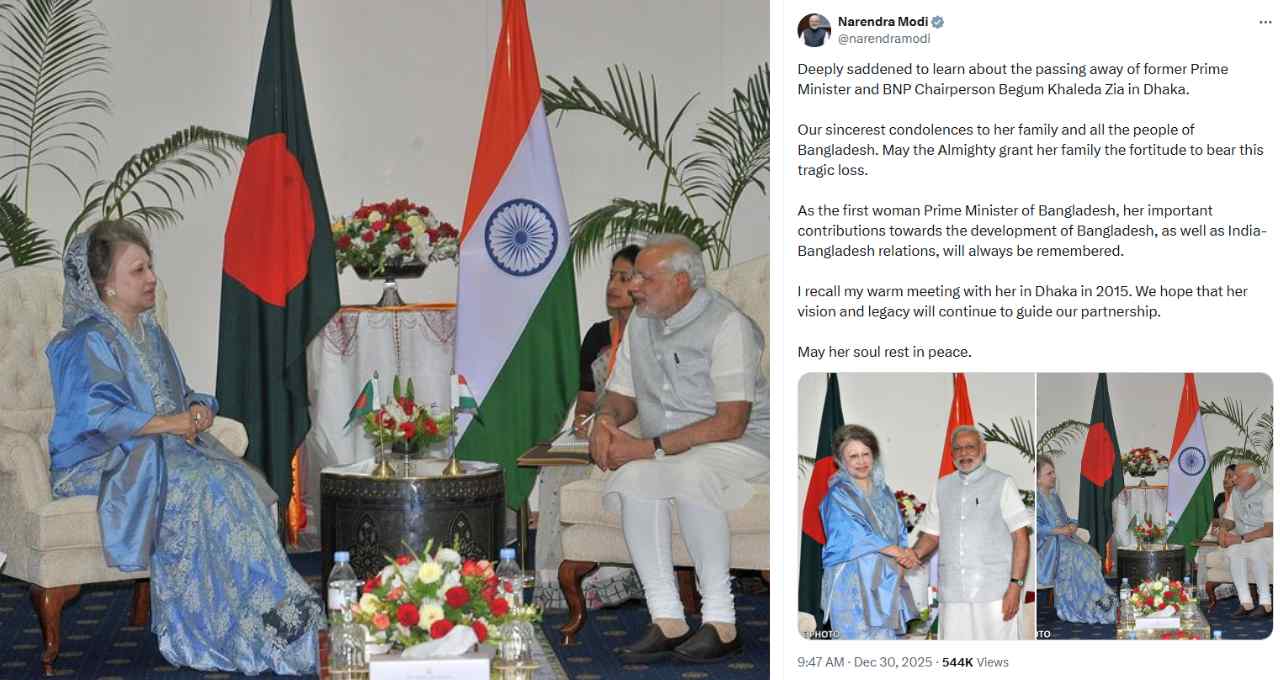
New Delhi: Prime Minister Narendra Modi expressed deep sorrow over the passing of Begum Khaleda Zia, former Prime Minister of Bangladesh and BNP Chairperson. Khaleda Zia passed away in Dhaka at the age of 80. Modi posted on X, stating his condolences to her family and the people of Bangladesh, and praying that God gives them the strength to bear this grief.
Contribution to India-Bangladesh Relations
Prime Minister Modi stated that as Bangladesh's first female Prime Minister, Khaleda Zia made significant contributions to both the country's development and the India-Bangladesh relationship. He recalled his meeting with her in Dhaka in 2015, stating that her thoughts and legacy will continue to guide India-Bangladesh relations. Modi said, “May her soul rest in peace.”



Khaleda Zia’s Political Life
Khaleda Zia was one of the leading figures in Bangladeshi politics. Born in 1945, she entered politics after the assassination of her husband, Ziaur Rahman. Following Ziaur Rahman’s murder during a military coup in 1981, Zia led a mass movement against the military dictatorship, which resulted in its fall in 1990. Subsequently, Khaleda Zia assumed the office of Prime Minister for the first time in 1991. She later took oath as Prime Minister again in 2001.
BNP and Rivalry with Sheikh Hasina
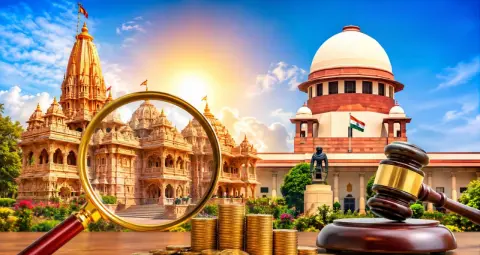
Khaleda Zia’s political party was the Bangladesh Nationalist Party (BNP). She engaged in intense political rivalry with the Awami League led by Sheikh Hasina for decades. This rivalry influenced Bangladeshi politics for a generation. During this period, several corruption cases were also filed against Zia, which she described as politically motivated. In January 2025, the Supreme Court acquitted her in the final corruption case against her, clearing the way for her to run in the February elections.
Khaleda Zia had been seriously ill for several days. According to her doctors, her condition was extremely critical. She was admitted to a specialized private hospital in the capital. Dr. Ziaul Haq, a member of the medical board, said that Zia was on life support and required regular kidney dialysis. Close family members, including her eldest son and BNP Acting Chairman Tarique Rahman, visited her at the Evercare Hospital in Dhaka.
Khaleda’s Personal Life
Khaleda Zia was married to the country's former President Ziaur Rahman. Following Ziaur Rahman’s assassination in 1981, Khaleda led a mass movement against the military dictatorship and played a vital role in restoring democracy in the country. Her political life experienced many ups and downs, but she consistently worked to serve the people and strengthen Bangladesh’s democracy.
Prime Minister Modi’s Memories
Prime Minister Modi recalled his meeting with Khaleda Zia in Dhaka in 2015. He said that this meeting will always be memorable to him. Modi expressed hope that Khaleda Zia’s thoughts and political legacy will continue to guide relations between India and Bangladesh.
Khaleda Zia’s Legacy
Khaleda Zia will be remembered as Bangladesh’s first female Prime Minister. Her contribution was significant not only in Bangladesh’s political and social life but also in strengthening India-Bangladesh relations. Her political foresight and determined leadership gave a new direction to Bangladeshi politics.
A wave of grief has swept through political and social circles following Khaleda Zia’s death. Her supporters and the opposition alike are remembering her contributions. Prime Minister Modi specifically recalled her contributions and the role she played in India-Bangladesh relations.