Magh Purnima 2026 will be observed on February 1 and is regarded in Hindu tradition as a highly meritorious date. Religious belief holds that bathing in sacred rivers, performing charity, and engaging in worship on this day lead to the destruction of sins and support spiritual progress. Scriptures describe the occasion as an opportunity associated with mental peace, happiness, and prosperity.
Magh Purnima falls on Sunday, February 1, 2026, and is observed during the Hindu month of Magh. The observance is associated with ritual bathing, charity, worship, and fasting throughout the month, which is traditionally considered a period of discipline and spiritual practice. Devotees travel to the banks of the Ganga, Yamuna, and other sacred rivers to perform rituals connected with purification and mental tranquility. Religious belief attributes lasting happiness, prosperity, and positive energy to observances performed on Magh Purnima.
According to the Hindu Panchang, the Purnima tithi of the month of Magh will begin at 5:52 am on February 1, 2026, and will conclude at 3:38 am on February 2, 2026. Based on Udaya Tithi, the festival of Magh Purnima will be observed on February 1.




The significance of the day is linked not only to the lunar date but also to the entire month of Magh, which is traditionally observed as a period dedicated to bathing, charity, and restraint. Magh Purnima is also regarded as the concluding day of the Magh month, which further enhances its religious importance.
Hindu scriptures describe Magh Purnima as a date associated with special religious merit. References in the Bhagavata Purana, Padma Purana, and other texts state that bathing in sacred rivers on this day leads to the destruction of sins and opens the path toward dharma, artha, kama, and moksha.
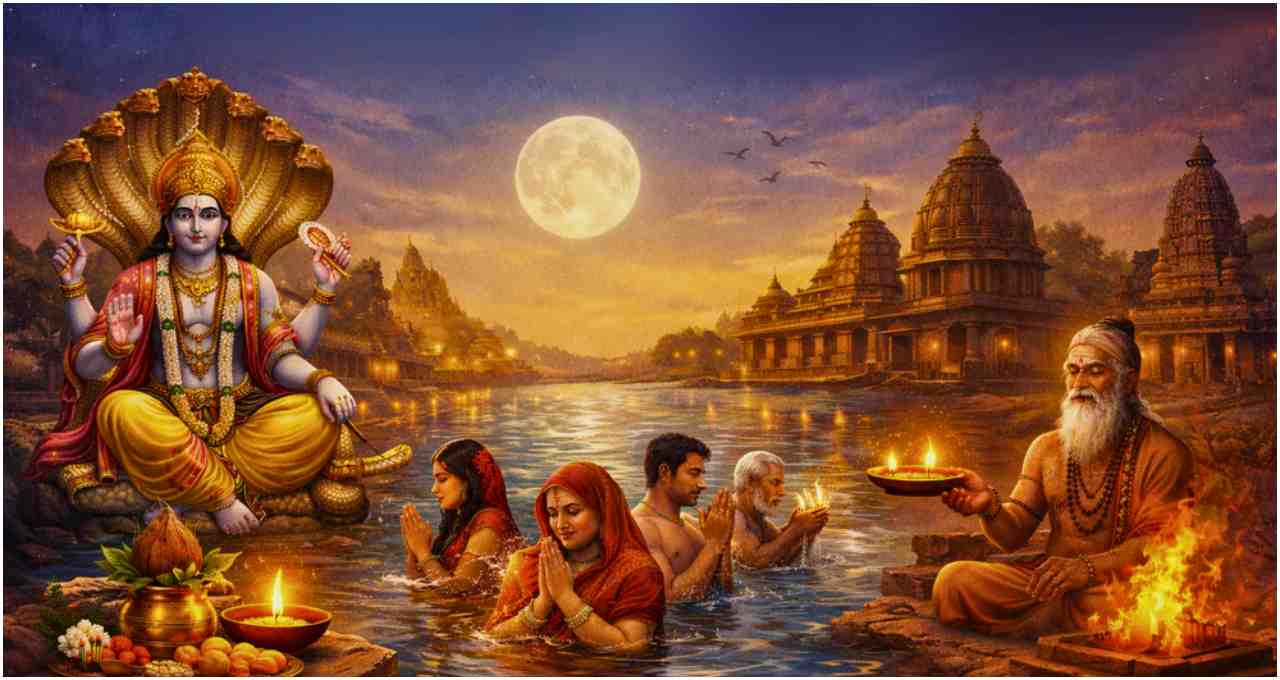
Traditional belief holds that the ritual bath on Magh Purnima purifies not only the body but also the mind and soul. Spiritual practices performed on this day are associated with mental calm, positive energy, and spiritual balance. Ascetics, saints, and practitioners are traditionally known to undertake special spiritual disciplines on this occasion.
Ritual bathing in sacred rivers is regarded as the most important observance of Magh Purnima. Scriptural references state that bathing in the Ganga, Yamuna, Saraswati, or any sacred river is believed to bring an end to sins accumulated over multiple lifetimes. It is traditionally believed that during the month of Magh, the Sun resides in the zodiac sign of Capricorn, which is associated with special medicinal and spiritual qualities in water. For those unable to reach rivers, bathing at home with water mixed with Gangajal is also practiced according to tradition.
Charitable acts hold particular importance on Magh Purnima. Scriptures state that donations made on this day yield multiplied merit. Donations of food grains, clothing, milk, fruits, sweets, and money are traditionally regarded as especially meritorious. Puranic texts mention that charity performed on Magh Purnima leads to the destruction of sins accumulated over long periods. Offering donations to the poor, the needy, and Brahmins is believed to support happiness, prosperity, and positive energy in life.
Worship and fasting are also significant aspects of Magh Purnima observance. Rituals such as havan, lighting of lamps, and aarti are performed either at home or on riverbanks. Worship of Lord Vishnu and Lord Shiva is traditionally considered particularly significant on this day. Religious belief states that lighting lamps symbolizes the removal of ignorance and the attainment of knowledge. Many devotees observe the Purnima fast while adhering to principles of truth, restraint, and devotion.
Several religious beliefs are associated with Magh Purnima. Traditional texts state that spiritual practices performed on this day help in the removal of disease, fear, and suffering. It is also stated in scriptures that observances carried out with discipline and faith on Magh Purnima can lead toward liberation. Devotees believe that bathing in the Ganga and performing charity on this day also leads to the reduction of karmic effects from previous births. As a result, large gatherings are traditionally seen at pilgrimage sites such as Prayagraj, Haridwar, Varanasi, and other sacred locations.
Magh Purnima is also regarded as an occasion for self-reflection and mental calm. Scriptural tradition associates worship performed with a peaceful mind on this day with inner strength. In contemporary life, the observance of Magh Purnima is viewed as an opportunity to return to discipline, service, and spiritual focus, contributing to its continued relevance.
Magh Purnima is considered highly meritorious due to the convergence of ritual bathing, charity, and spiritual practice on a single day. Scriptures state that religious observances performed with faith on this occasion lead to lasting happiness, peace, and prosperity. For this reason, Magh Purnima is regarded not merely as a calendar date but as an opportunity for spiritual progress and alignment in life.