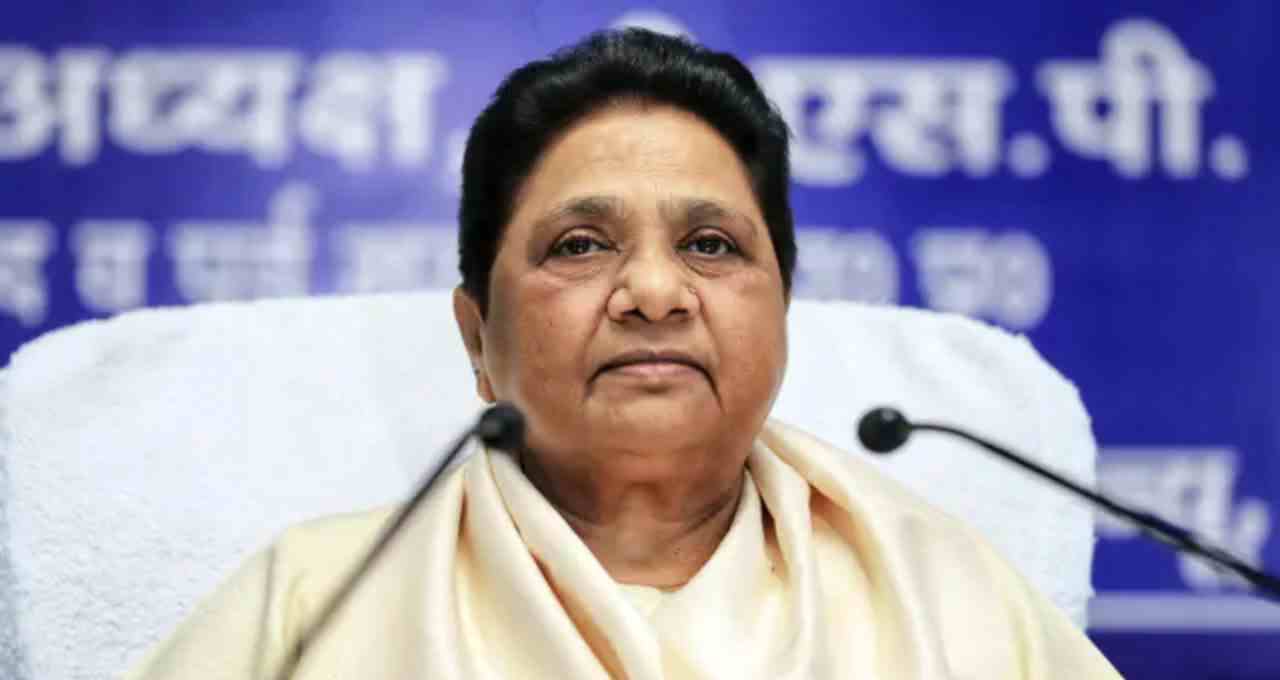
During the winter session of Parliament, on Tuesday, December 9th, amidst discussions on electoral reforms, BSP supremo Mayawati has outlined three key demands from her party to the Election Commission and the government.
Lucknow: As Parliament’s winter session continues on Tuesday (December 9th), with opposition parties raising concerns and arguments regarding the current Systematic Area Revision (SIR) process, BSP supremo Mayawati also presented her party’s three demands during the election reform discussions. These included extending the deadline for the SIR process in Uttar Pradesh, holding leaders accountable instead of parties for candidates with criminal backgrounds, and reverting to ballot paper voting instead of Electronic Voting Machines (EVMs).
Mayawati dismissed the Election Commission’s argument that using ballot paper would take longer, posting these three demands on her social media account X in the afternoon.
Mayawati’s Three Key Demands
1. Extension of the SIR Process Deadline
Mayawati stated that the BSP does not oppose the SIR (Special Intensive Revision) process currently in place across the country. However, she argued that the deadline for adding names to the voter list is excessively short, placing a significant burden on Booth Level Officers (BLOs). Many BLOs have even lost their lives due to work pressure and stress.
With approximately 15.40 crore voters in Uttar Pradesh, rushing to complete the SIR process could exclude many legitimate voters, particularly those who are away for work, violating their constitutional right. Therefore, extending the SIR deadline is necessary to ensure a smooth and just process for both BLOS and voters.
2. Holding Candidates Accountable, Not Parties
Mayawati emphasized that, according to the instructions of the Election Commission and the Supreme Court, candidates with criminal backgrounds must disclose their criminal history. However, often this burden is unfairly placed on political parties. The BSP maintains that candidates should be held accountable themselves, rather than the party. If a candidate concealed their criminal history, legal action and responsibility should fall upon them.
3. Returning to Ballot Paper Voting
The BSP supremo reiterated her concerns regarding the lack of trust in EVMs. She stated that consistent reports of irregularities and malfunctions with EVMs and VVPATs (Voter Verifiable Paper Audit Trail) are emerging. Therefore, to maintain public confidence in the electoral process, ballot paper voting should be reintroduced. If immediate implementation of ballot paper voting is not possible, at the very least, VVPAT counts should be combined with EVM votes at all booths to ensure complete transparency.
Mayawati stated that the Election Commission claims it would take more time, but she believes that even a few extra hours would not make a significant difference. This approach would increase the trust of the country’s citizens in the electoral process and dispel various doubts.