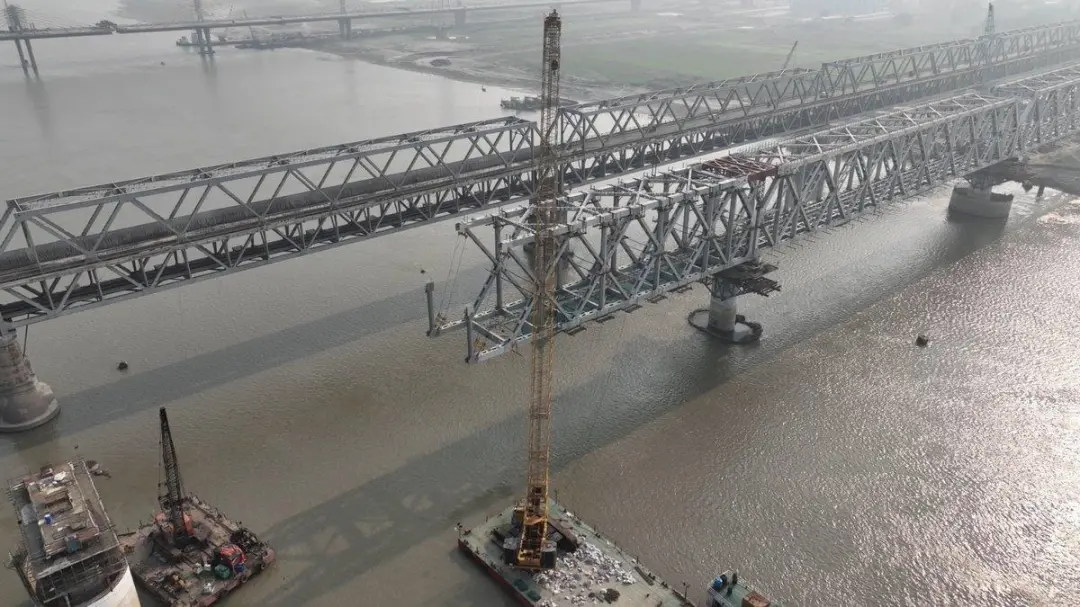
Preparations for starting train operations on the new rail bridge built parallel to the historic Rajendra Bridge over the Ganga in Mokama have entered the final stage. Pre-non-interlocking (Pre-NI) and non-interlocking (NI) works are being carried out to connect the new bridge with the existing railway network. As part of the preparations, East Central Railway General Manager Dimpy Garg visited Mokama on September 28 and inspected the new rail bridge and the connected railway sections. She reviewed the progress of ongoing works with railway officials and teams from the agencies concerned and directed them to complete the remaining work within the निर्धारित timeline.
The new rail bridge constructed parallel to Rajendra Bridge is an important project for Bihar's railway network. Rail traffic on the old Rajendra Bridge has been under significant pressure for a long period. Once the new double-line rail bridge becomes operational, the capacity of the railway section is expected to increase. It will provide additional rail infrastructure for train movement between North and South Bihar and may make it easier to handle increasing traffic in the future.
Completion of bridge construction alone is not sufficient to begin operations. The bridge has to be connected to the existing railway network, track and signalling systems have to be arranged, necessary yard modifications have to be completed, and technical safety procedures have to be carried out. Pre-NI and NI works are being undertaken as part of this process. Coordination among different railway departments is important during these works because track connections, signalling and yard-related works are being carried out simultaneously at multiple locations.
During GM Dimpy Garg's inspection, the cut-and-connection works underway between Garhara and Dinkar Gram Simaria were reviewed. Work related to relay removal near Level Crossing No. 2NB and yard remodelling was also inspected. Officials from the Danapur and Sonpur divisions, along with representatives of various agencies, were present during the inspection. The General Manager reviewed the progress and quality of the works and issued necessary instructions to the concerned officials.




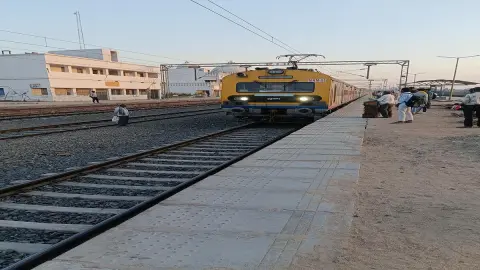
The railway plans to connect the new bridge with the existing network in a manner that will allow regular train operations to begin from the bridge. For this purpose, necessary connections and modifications are being carried out in the railway infrastructure linked to Rajendra Bridge, Upper Hathidah Junction, Tal Junction, Rampur Dumra and Dinkar Gram Simaria in the Mokama area. Works related to the mainline connection between Dinkar Gram Simaria and Barauni Junction are also part of the process.
Preparations for starting operations on the new bridge have resulted in large-scale traffic blocks and changes in train operations on the section since September. The railway has already announced the cancellation of several trains, route diversions for some trains and partial termination or origination of certain services for passengers. Several long-distance trains passing through Bihar have been affected.
Pre-NI and NI works being carried out from September 21 to October 4, 2026, have affected train operations on different dates. According to the railway, important work to connect Mokama's new bridge with the main railway network is being undertaken during this period. The programme issued earlier included information on the cancellation, route diversion or partial operation of hundreds of trains. The objective is to begin safe and व्यवस्थित rail operations through the new bridge over the longer term.
Passengers are currently facing inconvenience because of the works. Many passengers have to check their train status before travelling, while timings and routes of some trains have also been changed. The railway has issued lists of affected trains for different dates. On September 25, information was also issued regarding the cancellation of 51 trains and diversion of 31 trains because of the Pre-NI and NI works related to the Mokama rail bridge.
The current disruption for passengers is part of the process of preparing the new rail infrastructure for operations. Once the new bridge becomes operational, the old and new bridges together may provide greater capacity for rail traffic. The connectivity is particularly important for trains travelling towards and from North Bihar, South Bihar, Jharkhand and West Bengal. The Mokama rail section already connects several important railway routes, and the availability of an additional rail line is expected to provide greater operational capacity.
The new bridge is important not only for passengers in Mokama and surrounding areas but also for railway connectivity across a large part of Bihar. Several trains travelling from North Bihar towards Patna, Kiul, Jharkhand and West Bengal pass through the Mokama route. The route is also important for trains arriving from South Bihar and other states. Once the new double-line bridge begins operations, an additional capacity will be available in the railway network, which can be used in the future for increasing the number of trains or for more व्यवस्थित operations.
The key challenge for the railway is to complete the connection of the new bridge with the main network safely. Such work involves changes to signalling, interlocking, relay systems and yard arrangements along with track connections. Rail operations therefore have to be temporarily stopped or modified. The railway is carrying out Pre-NI and NI works in phases for this reason.
The construction project for the new bridge has been a subject of discussion among rail passengers and local residents in the Mokama area for a long time. In June 2026, the railway had also indicated that the new Ganga rail bridge was nearing operational readiness and information had emerged regarding final inspections and preparations for the required procedures. With Pre-NI and NI works reaching their final stage at the end of September, activities aimed at starting train operations on the bridge have accelerated.
One potential benefit of the project is that it may help reduce rail traffic pressure on the old Rajendra Bridge. The new bridge has been constructed with a double rail line. The availability of two lines can allow train operations in both directions to be organised more effectively. However, the actual operational capacity and any change in the number of trains will depend on the railway's operating plan, safety approvals and other technical procedures.
Before train operations begin on the new bridge, the railway will have to complete all prescribed safety procedures. Technical works related to the bridge and track, signalling arrangements, the interlocking system and connectivity will have to be checked before regular operations are permitted. Therefore, the project can currently be described as being in the final stage of operational preparations, while passengers will have to wait for the railway's official announcement and timetable for regular train services over the bridge.
An important aspect of GM Dimpy Garg's inspection was her emphasis on coordination among different departments and agencies. Several departments are working simultaneously to connect the new bridge with the main network. A delay in any one component could affect the timeline of the entire project. Railway officials are therefore monitoring the status of the works through on-site inspections.
The ongoing works in Mokama are currently affecting passenger travel, but the changes are part of the process of bringing the new rail bridge into operation. The railway has asked passengers to check their train status and route information before travelling, as changes to train operations may continue on different dates until October 4.
The new rail bridge built parallel to Rajendra Bridge could become an important long-term addition to Bihar's railway connectivity. Once operational, the bridge will provide additional capacity for rail operations in the Mokama area and offer an additional option for managing train movement between North and South Bihar. At present, the railway's priority is to complete all Pre-NI and NI works while adhering to safety standards.
Following the GM's inspection, the instructions issued to officials indicate that the railway is focusing on completing the remaining works expeditiously in accordance with the prescribed procedures. Once the connection between Garhara and Dinkar Gram Simaria, relay removal, yard remodelling and other technical works are completed, the new bridge will be fully connected to the railway network. The way for regular train operations over the new bridge will then be cleared after the required safety and technical approval processes are completed.
The wait for the new rail bridge built parallel to Rajendra Bridge in Mokama has therefore entered its final stage. For now, passengers are facing temporary disruptions, including train cancellations, route diversions and changes in operations because of the Pre-NI and NI works. Once these works are completed, the new bridge is expected to provide additional capacity for rail traffic. The final date for regular train operations over the bridge will be officially clarified only after the railway completes the required safety and technical procedures.