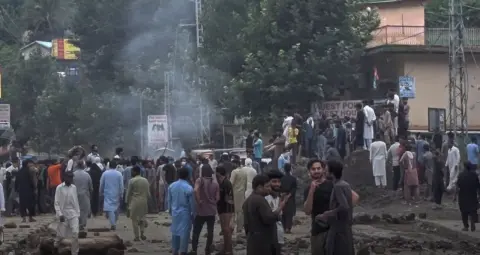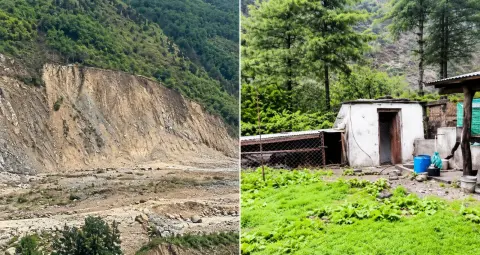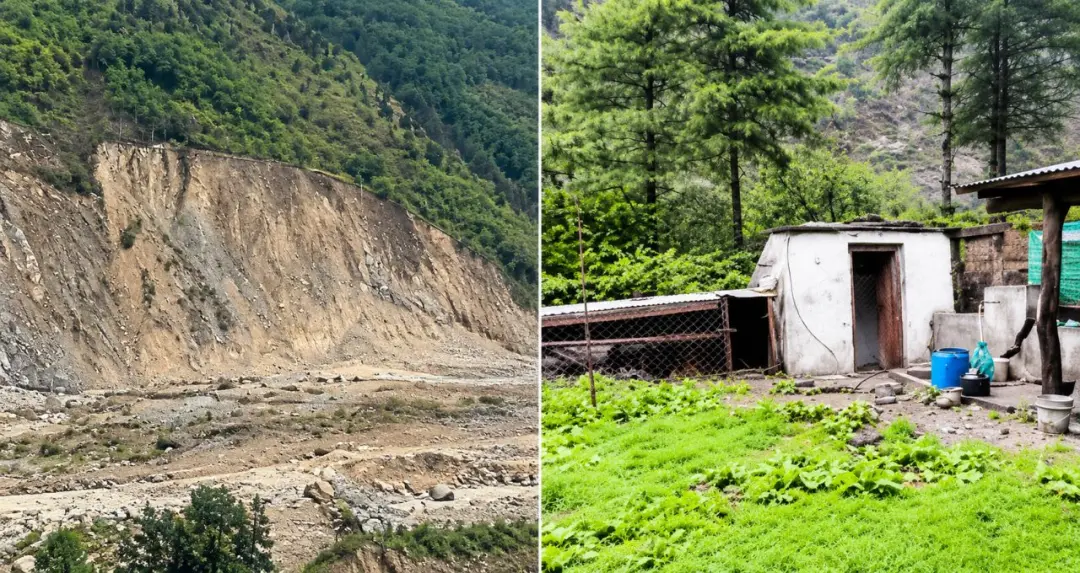
Heavy rain has worsened flood and landslide conditions across Nepal. In Mustang district, a large section of a mountain collapsed into the Kaligandaki River on Sunday, killing 14 people. Across the country, 272 disaster-related incidents were recorded in a 24-hour period.
According to the National Disaster Risk Reduction and Management Authority (NDRRMA), 272 incidents related to floods, landslides and heavy rainfall were recorded across different districts of Nepal during the past 24 hours.
A total of 21 people have died in these incidents, while four people are missing and 26 have been injured.
The figures show that 97 of the incidents were landslides. Landslide-related incidents accounted for 19 deaths, four missing people and four injuries.
A large section of a mountain collapsed during heavy rain in Mustang district on Sunday. A large mass of rocks and soil came down the slope and fell directly into the Kaligandaki River.
Videos linked to the incident show debris moving rapidly toward the river. Within seconds, a large amount of soil and rocks spread into the river.




The incident was reported to have killed 14 people. During prolonged rainfall in mountainous areas, weakening soil can increase the risk of landslides, potentially affecting roads, bridges and settlements along rivers.
Heavy rainfall has also affected water levels in Nepal's rivers. As the water level in the Narayan River rose, a cruise ship tied along the riverbank broke loose.
The rope securing the ship reportedly broke due to pressure from the floodwaters. The cruise ship was then carried approximately 100 metres downstream by the b current.
The ship subsequently collided with a bridge pillar. The incident highlights the risks posed by rising water levels and b currents to structures, boats and other water-transport facilities located along rivers during floods.
The flood risk also increased in Chitwan district on Sunday morning, with the water levels of the Narayani River and Riu River rising above their respective danger levels.
At Devghat, the Narayani River's water level was recorded at 9.23 metres, compared with a danger level of 9 metres.
Similarly, the Riu River reached 3.92 metres, against a danger level of 3.8 metres.
The rise in river levels has increased the risk of flooding in surrounding areas.
Continued rainfall in Chitwan district has led to several incidents of landslides and soil subsidence, disrupting multiple road routes.
Debris deposited on roads by landslides has affected vehicular movement. In mountainous areas, such incidents also pose a risk of disruption to road connectivity.
In Nepal's Karnali Province, landslides have also affected traffic on a highway. Debris on the road has obstructed the movement of vehicles.
Nepal is facing a serious flood situation for the second time within about a month. Earlier, on August 26, the Bhotekoshi River flooded.
According to the information provided, that incident resulted in 1,453 deaths, while more than 5,500 people were reported to remain missing.
Relief and rehabilitation challenges remained in several areas following the previous flood. Renewed heavy rainfall and flooding have increased the risks facing affected areas.
A large part of Nepal consists of hilly and mountainous terrain. During the monsoon, prolonged heavy rainfall increases the risk of soil and rocks sliding from mountain slopes.
The collapse of a mountain section into the river in Mustang and landslides in Chitwan and other areas reflect this risk. During continued rainfall, roads, bridges and settlements along rivers require particular caution.
The 272 disaster-related incidents recorded in 24 hours have created a challenge for relief and rescue agencies operating across multiple areas simultaneously. In landslide-affected regions, disrupted road connectivity can also affect the movement of rescue teams and essential supplies.
With river levels continuing to rise, the risk of flooding remains for people living in low-lying areas. Local administrations face the need to continuously monitor water levels, weather conditions and landslide-prone areas.
Amid continuing rainfall in Nepal, incidents reported from Mustang, Chitwan, Karnali and several other areas indicate that the risk of floods and landslides remains. Alongside relief and rescue operations, restoring road connectivity and public safety in affected areas remains a priority.