The 26 August floods and landslides in areas along the Nepal-Tibet and Nepal-China border have left around 2,500 people missing, while 586 bodies have been recovered so far. Hundreds of Indian citizens are stranded in affected areas, prompting India to send relief supplies, medical personnel and tunnel rescue specialists to Nepal.
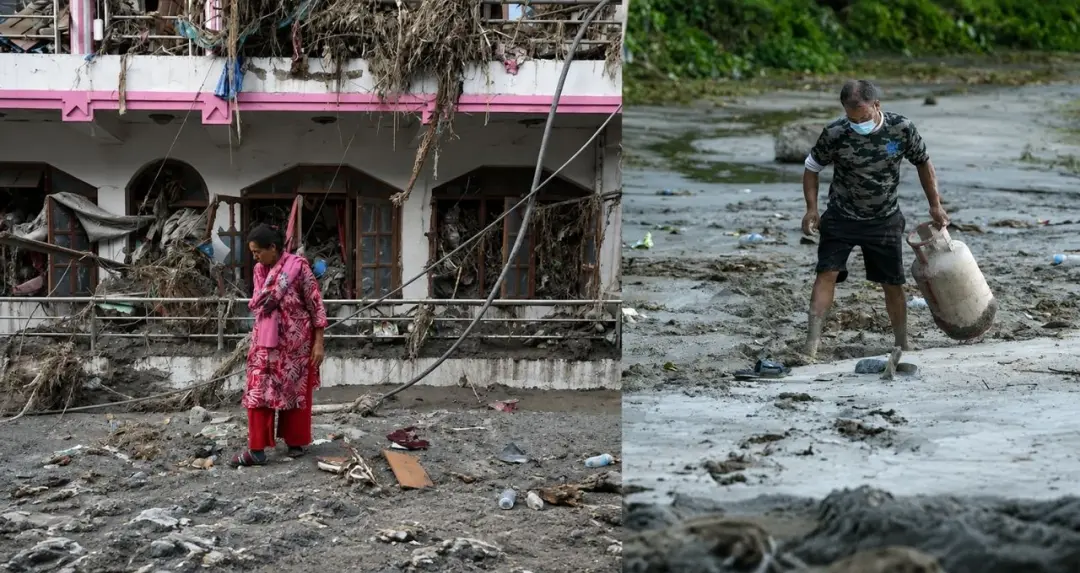
The disaster has had its greatest impact in Nepal’s Rasuwa, Nuwakot and Dhading districts and areas connected to the Nepal-China border. Fast-moving floodwaters carried large quantities of mud, sand, gravel and large rocks, damaging roads, bridges and several buildings. Rescue teams are facing difficulties reaching affected people in areas where communications have been disrupted.
According to India’s Ministry of External Affairs, concerns remain over several Indian citizens in Nepal. The source states that a large number of Indian citizens are stranded in affected areas of Nepal and Tibet. Some Indian citizens stranded on the Chinese side near the India-Nepal border were safely evacuated and brought to Kathmandu.
According to the Ministry of External Affairs, 53 Indian citizens reached Kathmandu on Friday. They included 37 people from Maharashtra who had been stranded in Tibet while returning from the Kailash Mansarovar pilgrimage. According to the Maharashtra government, around 395 citizens were still stranded at the time. Of these, 325 had been contacted and were reported safe.
Earlier, 84 Indian citizens were reported to have been safely evacuated under a joint relief operation by India and Nepal. They included 21 people from Tamil Nadu, while 63 workers employed at the Trishuli-1 hydropower project were also safely evacuated.
One of the main concerns following the floods is the possibility of people being trapped inside a tunnel in the hydropower project area. India has therefore sent a specialised rescue team to Nepal. The team is tasked with assessing the condition of people trapped inside the tunnel and assisting local rescue agencies in bringing them out.


An 11-member medical and tunnel rescue team arrived in Nepal on the third Indian Air Force aircraft. The team includes doctors, paramedical staff and tunnel rescue specialists. External Affairs Minister S. Jaishankar said the Indian team had reached the site and was assisting the relief and rescue operation.
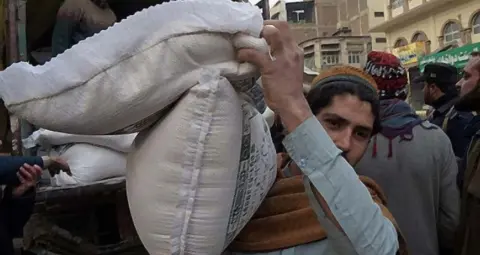
India has also sent emergency relief supplies to Nepal. A total of 57.5 tonnes of relief material has so far reached Nepal. Another consignment of 10 tonnes of relief material arrived in Kathmandu on Friday night, along with an 11-member team of doctors and paramedics.
The severity of the floods is also reflected in the large number of bridges washed away in Rasuwa, Nuwakot and Dhading. The destruction of bridges has severely affected the movement of people and vehicles. The Nepal government has sought assistance from India and China to build 42 Bailey bridges to restore transport links in the affected areas.
According to sources in Nepal’s Ministry of Foreign Affairs, the requirement for these bridges was assessed on the basis of a report by the National Disaster Risk Reduction and Management Authority. India has also said it is ready to provide all necessary assistance, including Bailey bridges if required.
Two new lakes have reportedly formed in the flood-affected area following landslides. Authorities are monitoring both water bodies because water is flowing out of one of them, while the water level in the other continues to rise.
The two lakes have formed near the Nepal-China border in the area where severe flooding occurred on Wednesday. Floodwaters carried debris and large rocks downstream. Authorities fear that a rapid rise in the water level of the second lake could trigger another flood or landslide.
Satellite imagery is currently being used to monitor the situation. Preparations are also underway to install cameras and sensors in lower-lying areas to detect sudden changes in water levels.
Rescue operations are underway on both the Nepal and China sides following the disaster. According to Chinese state media, the official death toll from the floods in Tibet has risen to seven, while 554 people are still reported missing. The figures may change as relief operations continue in the affected areas.
China’s President Xi Jinping sent a message of condolence to Nepal President Ram Chandra Paudel over the loss of life and property in the disaster. He said China was making every possible effort to search for missing people and provide treatment to the injured. Chinese Premier Li Qiang also sent a message to Nepal Prime Minister Balendra Shah.
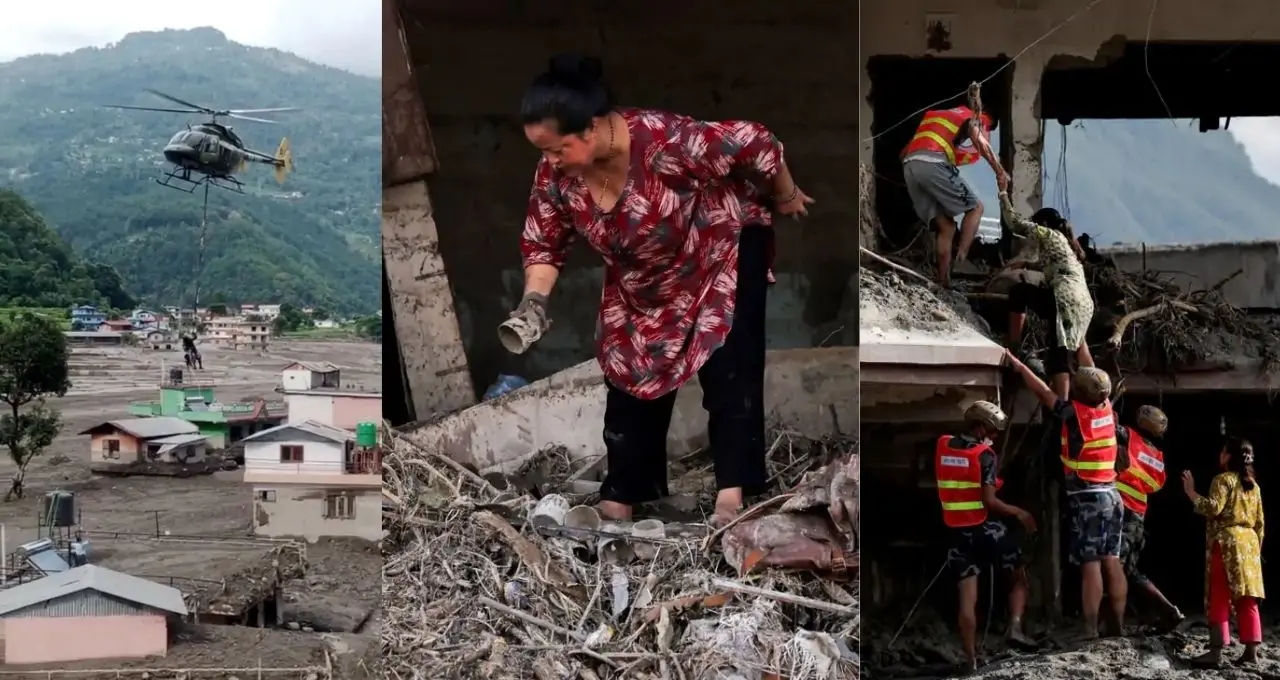
The Nepal government has launched a large-scale rescue operation. Around 13,295 security personnel have been deployed for rescue and relief work, including members of the Nepal Police, Nepali Army and Armed Police Force. According to the government, 3,253 people have so far been safely evacuated.
The rescue operation includes helicopter airlifts, evacuation of affected villages, searches through debris and medical assistance for the injured. Air operations are being given particular importance to reach people stranded in high-altitude mountainous areas and other inaccessible locations.
Locating thousands of missing people remains one of the main challenges following the disaster. Different agencies in Nepal have reported different figures for deaths and missing people, leaving the overall situation unclear. The numbers are continuing to change as relief and rescue operations remain underway.
The situation is more complex in Tibet because outside access to the affected areas is limited. As a result, independently confirming the extent of damage and the actual number of missing people there remains difficult. Authorities and relief agencies expect a clearer picture to emerge as rescue teams reach more affected areas.
The landslide-created lakes along the Nepal-Tibet border have increased concerns among relief agencies. If the dam-like section of either lake breaks or water levels rise suddenly, fast-moving water could reach areas downstream. Authorities have therefore increased monitoring and are proceeding with relief operations cautiously.
Meanwhile, agencies from India, Nepal and China are working to evacuate affected people and deliver essential relief. The deployment of India’s medical and tunnel rescue team is intended to assist operations in locations that are difficult to access locally.
The immediate priorities remain searching for missing people, safely evacuating stranded citizens, treating the injured and restoring communication links in affected areas.