The Winter Session of Parliament begins today and will run until December 19. During this period, the government is preparing to introduce a total of 10 significant bills related to the nuclear energy sector, higher education structural reforms, and corporate and stock market regulation.
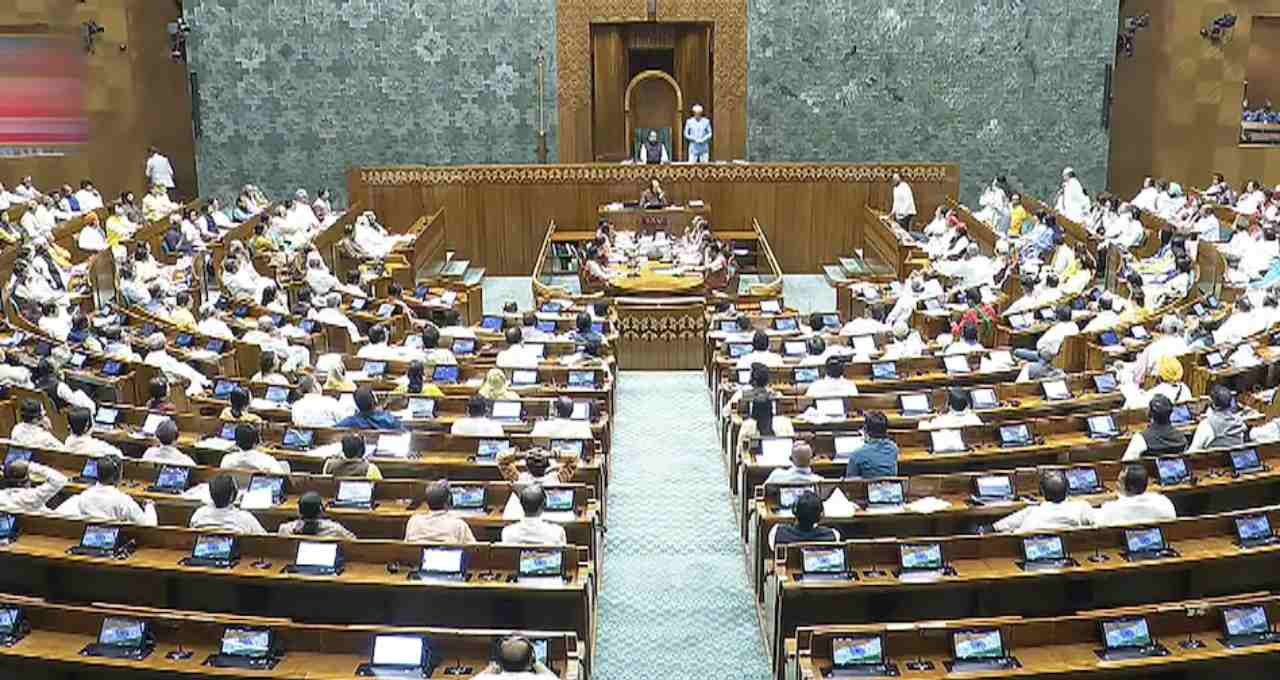
New Delhi: The Winter Session of Parliament has formally commenced today and will continue until December 19. In this session, the central government is set to introduce a total of 10 significant bills pertaining to nuclear energy, the insurance sector, higher education structural reforms, and corporate and stock market regulation. On the other hand, the opposition has formulated a complete strategy to corner the government on the issues of SIR (Special Intensive Revision) and alleged ‘vote theft’. As such, the prospects of sharp political confrontations and disruptions during the session are clearly visible.
Nine New Bills to be Introduced, Focus on Economic Reforms
The government has listed nine new economic and policy bills for this Winter Session. These include the Atomic Energy Bill-2025, amendments to insurance laws, changes in the tax regime for products like tobacco and pan masala, and bills related to a unified code for the securities market.

Additionally, the first batch of supplementary demands for grants for the financial year 2025-26 will also be presented before Parliament in this session. This is expected to lead to important discussions on the government's developmental priorities and the direction of financial resources.
Proposal for 100% FDI in Insurance Sector
One of the most anticipated bills of this session is the Insurance Laws (Amendment) Bill, 2025. Through this, the government proposes to increase the limit of Foreign Direct Investment (FDI) in the insurance sector from the existing 74 percent to 100 percent. The government believes that this step will boost capital investment in the insurance industry, promote technological innovation, and create new employment opportunities.
According to government data, approximately 82,000 crore rupees have already been invested in the insurance sector through FDI. With the implementation of the new limit, this figure is expected to grow even faster.
New Tax Provisions on Tobacco and Pan Masala
Finance Minister Nirmala Sitharaman is scheduled to introduce the Central Excise (Amendment) Bill, 2025, and the ‘Health Security to National Security Cess Bill, 2025’ in the Lok Sabha. These bills will impose excise duty on cigarettes and other tobacco products, replacing the existing GST compensation cess.
Currently, tobacco and pan masala are subject to a 28 percent GST, along with a compensation cess levied at varying rates. The new bill aims to simplify the tax structure and raise additional resources for public health and national security-related expenditures. The ‘Health Security to National Security Cess Bill’ also includes provisions to levy cess on machines and processes used to manufacture or produce specified harmful products.
Integrated Code for Securities Market
The government is also set to introduce the Securities Market Code Bill, 2025. Its objective is to integrate various laws related to the stock market, capital market, and other financial markets to create a uniform and simplified framework. This is expected to better protect investors' interests, increase transparency, and strengthen ‘ease of doing business’.
A day before the Winter Session, an all-party meeting was held on Sunday to ensure the smooth functioning of Parliament. Representing the government at this meeting were Defence Minister Rajnath Singh, Leader of the House in Rajya Sabha and Health Minister J.P. Nadda, Parliamentary Affairs Minister Kiren Rijiju, and Minister of State Arjun Ram Meghwal.
From the opposition side, prominent leaders including Congress's Pramod Tiwari and Kodikunnil Suresh, Trinamool Congress's Derek O'Brien, Samajwadi Party's Akhilesh Yadav, and DMK's Tiruchi Siva were present at the meeting. Discussions were held on the functioning of the House and important issues.
Opposition's Allegation: ‘Vote Theft’ and SIR to be Attacked
Before the all-party meeting, Congress leader Pramod Tiwari clearly indicated that the opposition would corner the government and the Election Commission on the issues of the electoral process and SIR during the Winter Session. He alleged that ‘vote theft’ is occurring due to the alleged ‘collusion’ between the ruling party and the Election Commission. Tiwari stated that this is not just ‘vote theft’ but ‘vote dacoity’ and poses a very serious threat to democracy. Opposition parties have stated that they will vehemently raise this issue both inside and outside Parliament.
Overall, this Winter Session of Parliament is considered highly significant, both in terms of political confrontations and major policy decisions. While the government is emphasizing economic reforms, investment, and changes in the tax system, the opposition is preparing to challenge the government on issues of democracy, electoral transparency, and the impartiality of institutions.