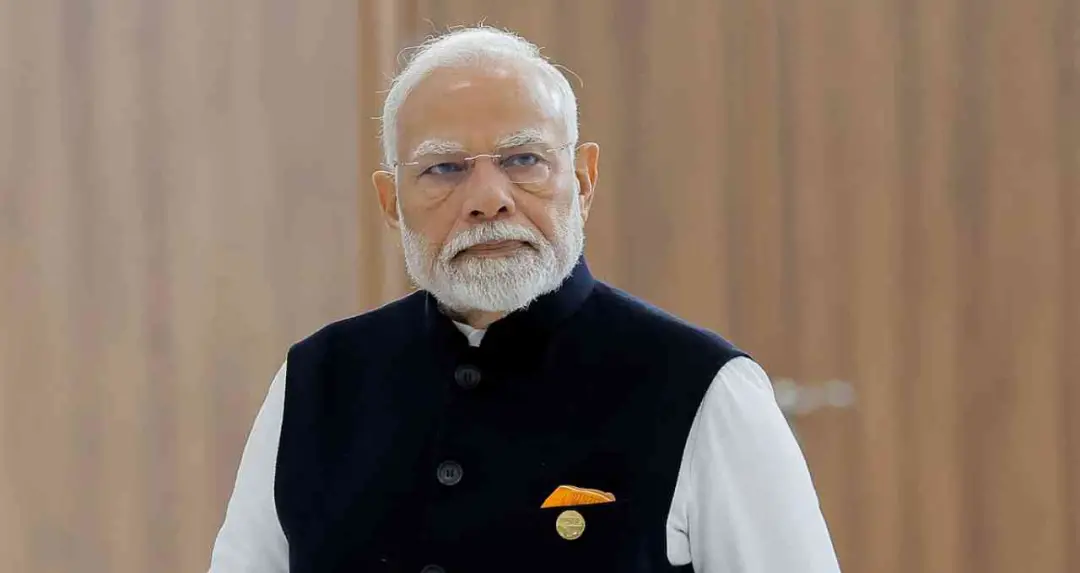
Prime Minister Narendra Modi, in Episode 135 of Mann Ki Baat, addressed a range of issues including national security, self-reliance, social security, scientific temper, sports, technology, Indian culture, environmental conservation and civic responsibility. His remarks focused on citizens, youth, farmers, families and local communities.
The Prime Minister said India achieved significant milestones in the defence and aviation sectors during June that strengthened the country's confidence. Referring to a naval programme held in Kolkata, he said INS Dunagiri, INS Sanshodhak and INS Agray were commissioned into the Indian Navy. He stated that the vessels were designed and built in India, describing them as an indication of the country's maritime strength and indigenous defence capabilities.
He also described the first flight of the C-295 aircraft as an important achievement, stating that the aircraft is being manufactured in India and that 40 such aircraft are being produced in the country. He linked the programme to the aviation sector, small and medium enterprises and employment opportunities.
The Prime Minister further referred to the successful test of DRDO's indigenous long-range land attack cruise missile, stating that India is becoming increasingly self-reliant in meeting its security requirements across maritime and aerial domains. He said indigenous defence manufacturing contributes not only to military capability but also to technology development, local industry, employment and the broader objective of an Atmanirbhar Bharat.
Referring to International Day of Yoga, the Prime Minister said yoga-related programmes were organised in several countries and that millions of people participated in events across India. He mentioned the World Yogasana Championship held in Ahmedabad and congratulated Indian athletes for winning medals. He described yoga as an important part of India's identity, health and lifestyle.
The Prime Minister also spoke about the role of citizens during periods of crisis, recalling his earlier appeals made in the context of tensions in West Asia. He said citizens' discipline and conduct are important during such situations. He referred to his appeals asking people to avoid purchasing gold for some time, postpone foreign travel, travel together wherever possible and encourage farmers to adopt natural fertilisers.

According to the Prime Minister, many families used existing gold instead of purchasing new jewellery for weddings, some citizens postponed overseas travel, more people opted for shared travel to save fuel, public transport usage increased, and farmers responded positively to natural fertilisers and chemical-free farming. He said such actions reflect responsible civic behaviour and contribute to the national interest.
The Prime Minister cited Bahadurpura village in Maharashtra's Nanded district while discussing social security initiatives. He referred to an initiative by the Pethkar family, which arranged accident insurance for villagers during a family wedding, providing insurance coverage of ₹1 lakh per person. He described the initiative as an example of linking a family celebration with community welfare.
He also referred to the Pradhan Mantri Suraksha Bima Yojana, stating that it offers accident insurance at a low annual premium and can provide financial support to ordinary families during difficult times. He appealed to people to spread awareness about the scheme among their families, villages and surrounding communities.
The Prime Minister additionally mentioned the Pradhan Mantri Jeevan Jyoti Bima Yojana, stating that it provides financial assistance to families in the event of a beneficiary's death. He said a small premium can provide financial protection to households.
The Prime Minister said superstition is harmful to society because it creates fear, which prevents people from accepting truth, logic and evidence. He stressed the importance of scientific temper for social development.
To illustrate the point, he referred to the Hargila bird in Assam, stating that although it helps maintain ecological balance, it had long been regarded as inauspicious in some places. He said people avoided the bird and even cut down trees containing its nests, causing harm to both the species and the environment.
The Prime Minister praised the efforts of biologist Purnima Devi Barman, saying she educated rural women about the ecological importance of the bird. He noted that more women gradually joined the campaign, which came to be known as the Hargila Army. He said the example demonstrates that access to accurate information can change long-held misconceptions and that women and local communities can play a significant role in conservation initiatives.
The Prime Minister referred to sports initiatives in Nagaland, including the Nagaland Baby League, which he said helps develop football skills among young children while promoting confidence, discipline, speed and teamwork.
He also mentioned the Nagaland Women's Futsal League, describing futsal as a faster and smaller format of football played indoors with fewer players on a smaller field. He said the league provides a platform for girls to showcase their abilities.
Speaking about technology and Indian knowledge systems, the Prime Minister referred to the revival of the Shastrarth tradition at Nalanda University. He said Shastrarth represents a tradition of reasoned dialogue, evidence-based discussion, patience and thoughtful deliberation rather than mere debate.
He also referred to an initiative by the Central Sanskrit University in Delhi to introduce a B.Tech programme in Artificial Intelligence and Data Science. He said the programme could help bridge modern technology with Indian languages, facilitate the development of technological tools for Indian languages and support the digital preservation of ancient texts.
The Prime Minister further mentioned the Brahmakamal Dominicana group in the Dominican Republic, stating that Spanish-speaking participants are studying Vedic literature and learning Vedic chants. He described it as an example of the global reach of Indian culture.
The Prime Minister discussed Meghalaya's living root bridges, describing them as examples of the relationship between nature and human creativity. He said the bridges are created by guiding the roots of rubber trees over many years instead of using iron or cement and that they continue to strengthen over time.
He said India has applied for the inclusion of Meghalaya's living root bridges in the UNESCO World Heritage network and praised local communities for maintaining the bridges and developing plant nurseries in surrounding areas. He said heritage conservation succeeds through community participation.
Referring to an initiative by women in Biaora in Madhya Pradesh's Rajgarh district, the Prime Minister said they have been collecting plastic waste and empty bottles to manufacture eco-bricks, which are being used to improve public spaces. He described the initiative as an example of converting waste into a useful resource.
Ahead of Ganesh Utsav, the Prime Minister appealed to citizens to use Ganesh idols made from natural clay by local potters and artisans and to avoid purchasing idols made of plaster of Paris. He said clay idols dissolve naturally after immersion and help protect rivers, ponds and the environment.
The Prime Minister also emphasised rainwater conservation, stating that every drop of rain should be saved and that the momentum of the Catch the Rain campaign should continue. He appealed to citizens to share information about positive initiatives taking place in their localities.
The Prime Minister said the themes of security, self-reliance, social security, scientific temper, sports, technology, culture and environmental conservation are interconnected, adding that responsible civic practices contribute to national progress alongside government initiatives.