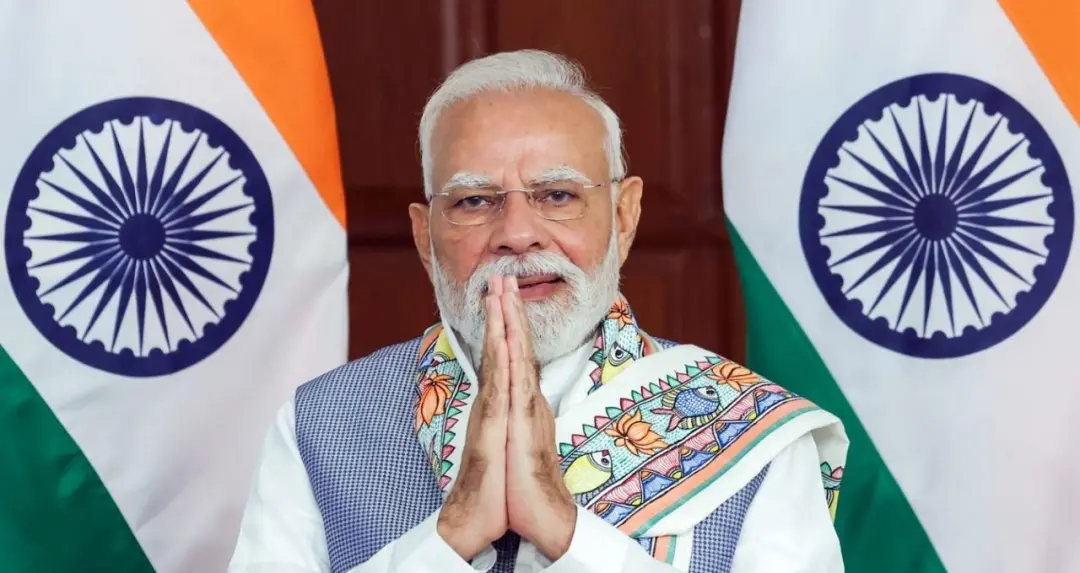
Prime Minister Narendra Modi departed on Saturday for a four-day visit to Uzbekistan and Kyrgyzstan. In Tashkent, he will hold bilateral talks with Uzbek President Shavkat Mirziyoyev before travelling to Bishkek to attend the 26th Shanghai Cooperation Organisation (SCO) Summit and meet leaders of member countries.
Modi’s visit to Uzbekistan is his fourth. After arriving in Tashkent, he will hold bilateral talks with President Shavkat Mirziyoyev to review cooperation between the two countries.
The discussions will cover areas including trade and investment, defence, energy, digital connectivity and education. The two sides will also discuss existing cooperation and possibilities for partnerships in new areas.
Trade and investment will be among the key issues in the Modi-Mirziyoyev talks. India has been working to strengthen economic ties with Central Asian countries, while Uzbekistan is an important country for regional and international trade.
The two sides may discuss expanding trade relations, exploring new investment opportunities and facilitating business contacts.


Defence cooperation will also receive attention during the visit. India and Uzbekistan have expanded contacts and cooperation in the defence sector, and the two sides will discuss security-related issues and possibilities for advancing their defence partnership.
Central Asia is strategically important for India in the context of the region’s changing security environment.
Digital connectivity and energy cooperation will also be among the subjects of discussion. India has focused on sharing its capabilities in digital technology and digital public infrastructure at the global level.
Energy is another area of cooperation between India and Central Asian countries. The two sides may discuss energy security, new opportunities and prospects for future cooperation.
Education and people-to-people exchanges will also feature in the bilateral discussions. Cooperation involving students, academics, professionals and cultural groups will be discussed as part of efforts to strengthen contacts between the two countries.
The visit comes as India focuses on broadening its relations with Central Asia, including cooperation with Uzbekistan in education, culture and human resources.
After his Uzbekistan visit, Modi will travel to Bishkek, the capital of Kyrgyzstan, where he will attend the 26th SCO Summit. Leaders of SCO member countries will discuss various issues of regional and international importance at the summit.
The SCO is a multilateral platform through which India engages with Central Asia, Russia and other member countries on political, economic and security-related issues.
During the SCO Summit, Modi will also hold separate meetings with leaders of member countries. These meetings will provide an opportunity to discuss bilateral relations with different countries.
The discussions may cover trade, investment, security, energy and regional connectivity.
Modi’s visit to Uzbekistan and Kyrgyzstan is part of India’s broader engagement with Central Asia. The region is important to India because of its geographical position, energy resources, trade potential and security considerations.
India has been working to strengthen political dialogue with countries in the region as well as cooperation in trade, investment, connectivity and technology.
India and Uzbekistan have growing possibilities for cooperation in the digital sector. The two countries may explore new areas of cooperation between India’s digital capabilities and Uzbekistan’s development priorities.
They may also consider new areas for investment and business partnerships, including greater private-sector participation and ber economic links.
During the four-day visit, India and Uzbekistan will review existing cooperation and discuss future priorities in areas including trade, investment, defence, energy, digital connectivity, education and people-to-people exchanges.
Modi’s participation in the SCO Summit in Bishkek will provide an opportunity for India to present its priorities on regional issues and strengthen dialogue with member countries.