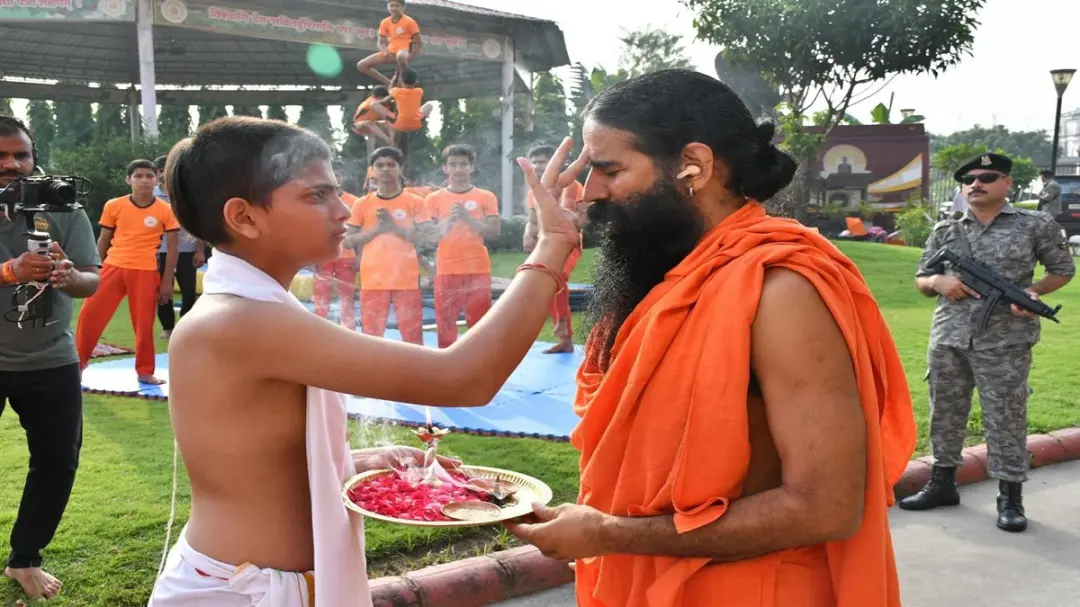
Uttarakhand witnessed a significant initiative in the field of education and Indian knowledge traditions on Wednesday, September 23, 2026, with Chief Minister Pushkar Singh Dhami inaugurating the Patanjali Ayurveda Gurukul in Haridwar. The institution is being presented as an initiative aimed at integrating Ayurveda, traditional Indian knowledge and modern education. Dhami attended the inauguration ceremony held in Haridwar on September 23.
The Gurukul education system operated by Patanjali is designed not to restrict students to traditional subjects but to combine Vedic and Indian knowledge traditions with modern subjects. According to the official information provided by Patanjali Gurukulam, the institution places emphasis on Sanskrit and Vedic texts alongside English, science and other modern subjects. The academic framework gives importance to the overall development of students.
The significance of the inauguration in Haridwar also stems from the city's established association with yoga, Ayurveda and Indian knowledge traditions. Several educational and Ayurvedic institutions associated with Patanjali are already operating in Haridwar. The Ayurveda-focused Gurukul is intended to expand this educational environment. On Wednesday, on the occasion of Ayurveda Day, Chief Minister Dhami also performed worship of Lord Dhanvantari before attending the inauguration of the Patanjali Ayurveda Gurukul in Haridwar.
According to the official website of Patanjali Gurukulam, its education system combines the ancient Vedic Gurukul tradition with modern education. The institution's vision includes developing traditional knowledge, modern understanding, leadership capabilities and a sense of responsibility towards society among students. Under this approach, Sanskrit, Vedic education and Indian knowledge traditions are taught alongside subjects such as science and English.



The background of the Gurukul system also dates back several years. According to Patanjali's official information, the first Patanjali Gurukulam was inaugurated in June 2017. Its educational activities subsequently expanded through separate campuses in Haridwar and Devprayag. The current system has separate educational arrangements for boys and girls in Haridwar, while a Gurukul for girls is also operated in Devprayag. These institutions are stated to be affiliated with the Indian Education Board.
The official description of Patanjali Gurukulam states that its education system focuses on the overall development of students. Its objective is not limited to preparing students for examinations and employment but also includes developing discipline, values, ethical principles and a sense of social responsibility. The Gurukul model seeks to connect everyday life with education so that students can understand modern circumstances alongside traditional knowledge.
A key aspect of the Ayurveda Gurukul initiative is the advancement of education related to India's traditional medical system. Ayurveda is among India's ancient systems of medicine, and institutional efforts are being undertaken across the country to connect its knowledge with modern education and research. Establishing such an educational system in a city such as Haridwar provides an opportunity to advance the study and training of Ayurveda-related subjects alongside an understanding of Indian knowledge traditions.
On the occasion of Ayurveda Day, Chief Minister Pushkar Singh Dhami described Ayurveda as being connected with India's ancient knowledge tradition and way of life. After worshipping Lord Dhanvantari, he wished for the health, happiness, prosperity and welfare of the people of Uttarakhand. His presence at the inauguration of the Patanjali Ayurveda Gurukul on the same day added significance to the event related to education and Ayurveda.
The inclusion of modern subjects in the Gurukul education system is also intended to prepare students for a changing world. The Patanjali Gurukulam website states that English, science and other subjects are given importance alongside Sanskrit and Vedic texts. According to the institution's vision, the education system seeks to provide students with a broad education by maintaining a balance between traditional and modern knowledge.
According to the official prospectus of Patanjali Gurukulam, education is available across its various branches from pre-nursery to different classes. Educational arrangements are operated through boys' and girls' campuses in Haridwar and for girls in Devprayag. The institution states that at the university level, students studying subjects such as grammar and philosophy can receive free education, including food and accommodation. For other subjects, the prospectus mentions education against a minimum contribution amount.
The education model also gives importance to yoga and Indian knowledge traditions alongside Ayurveda. Haridwar has already been a major centre for yoga and Ayurveda activities. The state government is also focusing on developing Rishikul and other institutions as specialised centres for Ayurveda, yoga and Indian knowledge traditions. In September 2026, the Chief Minister had spoken about developing Rishikul as a specialised centre for Ayurveda, yoga and Indian knowledge traditions.
The initiative can also be viewed in the context of the expansion of traditional knowledge-based education in Uttarakhand. The state already has institutions associated with yoga, Ayurveda, Sanskrit and Indian knowledge traditions. The effort to connect Gurukul education with modern curricula and facilities provides students with an additional educational option.
Patanjali's education system has already been developing a model that incorporates modern science alongside Vedic studies. Its official details state that students are taught English and science along with Sanskrit and Vedic scriptures. The institution states that the objective of this combined education system is to prepare students who understand traditional values while also being able to work according to the requirements of modern society.
Following Wednesday's inauguration programme in Haridwar, further activities in the fields of Ayurveda and Gurukul education may develop. Such institutions can provide training in subjects related to Ayurveda, yoga, Sanskrit and Indian knowledge traditions while continuing the study of modern subjects. This can provide students with exposure to both traditional and contemporary areas of knowledge.
The effort to connect education in Uttarakhand with local culture and Indian knowledge traditions is not new. However, advancing a Gurukul model centred on Ayurveda represents an initiative in this direction. The inauguration of the Patanjali Ayurveda Gurukul in the presence of Chief Minister Dhami forms part of this broader effort and has brought renewed attention to integrating Ayurveda, yoga and traditional Indian knowledge with education.
The inauguration of the Patanjali Ayurveda Gurukul in Haridwar marks a new initiative in Uttarakhand's education and Indian knowledge tradition sector. The Gurukul system's combination of Vedic and traditional knowledge with modern subjects seeks to provide students with a broad educational environment. Patanjali's existing Gurukul system already incorporates subjects such as Sanskrit, Vedic education, English and science. The Ayurveda-focused initiative is intended to take this model forward.