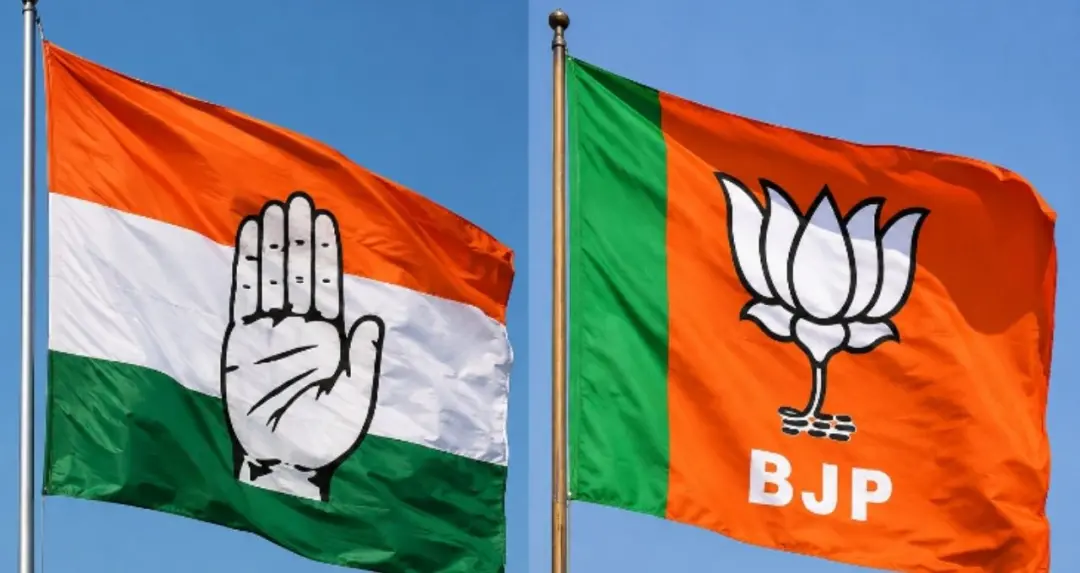
Rajasthan’s municipal elections have entered the final stage of candidate selection, with the Bharatiya Janata Party and Congress adopting different approaches to ticket announcements in some areas. The BJP is considering directly handing authorised candidates the party’s election symbol instead of publicly releasing candidate lists in several municipalities, while the Congress is considering a similar approach in wards where disputes have emerged.
The BJP has begun working on a strategy to provide candidates with the party’s authorised election symbol directly rather than publicly announcing their names. In divisions where the consultation process on candidates has been completed, municipal election in-charges have reportedly been sent to the concerned areas with blank symbols bearing the signature of the state president.
Once candidate names are finalised at the party headquarters, the information will be sent by email to the concerned district president and MLA. The district president and MLA will then inform the authorised candidate and hand over the election symbol.
The arrangement is intended to limit possible discontent and public disputes during ticket distribution. However, according to the available information, whether this formula will be applied mandatorily in every municipality will depend on local circumstances and the party’s final decision.
The Congress has also adopted a similar strategy in some locations. The party is sending election symbols to several district presidents. District presidents have been given a role in selecting and announcing councillor candidates in view of local political circumstances and political equations.
In wards where disputes or opposition over tickets have emerged, the Congress may avoid publicly releasing candidate lists and instead directly deliver the party symbol to the candidate or returning officer. However, the Congress has not made this arrangement mandatory for all wards.

The strategy could allow the party to limit open opposition over tickets at the local level. Instead of publicly announcing a candidate’s name, providing the symbol at the last moment gives the party leadership greater scope to take decisions according to local equations.
The BJP has held discussions on ticket distribution for municipalities in the Ajmer and Udaipur divisions. During consultations in the Deoli, Tonk and Nagaur municipalities of the Ajmer division, disputes over ticket selection have reportedly emerged.
Differences developed between local MLAs and district presidents over securing tickets for preferred candidates. The matter was also presented before Chief Minister Bhajanlal Sharma and state president Madan Rathore. Efforts were subsequently made to finalise candidate names through mutual agreement.
The BJP faces the challenge of managing local equations in wards where several contenders are in a b position. The possibility of rebellion or candidates contesting as independents if they do not receive tickets has also emerged as a concern for the party.
Amid ticket distribution, BJP Mahila Morcha district president and former chairperson Manju Chechani in Bhilwara has demanded tickets for women workers. According to the report, she threatened to commit self-immolation by Saturday afternoon if the demand was not fulfilled.
The development has highlighted internal discontent within the party during ticket distribution. At the local level, the demand for representation of women workers has long remained an issue for political parties. The BJP now faces the task of managing potential opposition alongside candidate selection.
The case of former chairman of Ajmer’s Kekri Municipal Board, Kamlesh Sahu, has also emerged amid the dispute over tickets and local politics. Two days after joining the BJP, Sahu appeared in a social media video claiming that he was with the Congress.
According to Sahu, he had not resigned from the Congress and had previously been with the party and remained with it. He alleged that he was threatened and pressured into joining the BJP.
Earlier, on August 26, Sahu was reported to have joined the BJP in the presence of MLA Shatrughan Gautam. The MLA had welcomed him at the time. Sahu’s latest statement has now created a fresh dispute in local politics.
For both major parties, preventing rebellions has emerged as a challenge alongside ticket distribution. In Dholpur’s Rajakhera Municipal Board, brothers Munendra and Shrikant have reportedly filed nominations from Ward 22.
In Ajmer, former mayor Dharmendra Gehlot, who resigned from the BJP’s primary membership, is preparing to field his wife Hemlata Gehlot as an independent candidate. Similarly, Gyan Saraswat, who had rebelled against the BJP and contested the Assembly election, and his daughter Harshita have taken forms to contest as independents.
These developments indicate that during the final stage of ticket distribution, the parties face the task not only of selecting candidates but also of managing dissatisfied leaders and workers.
BJP municipal election co-in-charge and Maharashtra government minister Chandrashekhar Bawankule has outlined the party’s priority regarding ticket distribution. He said the party had received more than 50,000 applications and that Chief Minister Bhajanlal Sharma, state president Madan Rathore and senior leaders were jointly deliberating on candidate names.
According to Bawankule, tickets will be awarded on merit and recommendations will not influence the selection of any candidate. The party is working on a strategy of prioritising candidates with the ability to win.
He described the Rajasthan municipal elections as important and said the party was also considering giving more young people an opportunity. He claimed that the BJP would put up a b performance in these elections.
The BJP is also continuing discussions on candidate selection for all 80 wards of the Udaipur Municipal Corporation. According to the report, the party may consider releasing the list of candidates for all 80 wards together instead of issuing separate lists.
Some prospective candidates have reportedly been contacted by phone by the party and asked to keep preparations complete. The party is considering giving opportunities to new faces alongside senior leaders in ticket distribution.
Some mandal presidents and Mahila Morcha office-bearers may be fielded in elections for the first time. The names of senior leaders and former councillors have also been discussed. In some wards, the possibility of changing candidates at the last moment remains because consensus has not been reached.
The Rajasthan municipal elections are an opportunity for both major parties to assess the strength of their local organisations. Unlike Assembly and Lok Sabha elections, municipal elections place greater importance on local equations, individual influence, ward-level politics and a candidate’s personal standing.
For this reason, both the BJP and Congress are proceeding cautiously with ticket distribution. Where consensus exists, candidate names may be publicly announced, while in disputed wards the parties are adopting the option of directly providing election symbols.
The BJP faces the challenge of managing the large number of contenders within the party and controlling possible rebellions. The Congress also faces the challenge of managing local factionalism and dissatisfaction over tickets. As the nomination process progresses in the coming days, the picture regarding ticket distribution and rebel candidates for both parties is expected to become clearer.