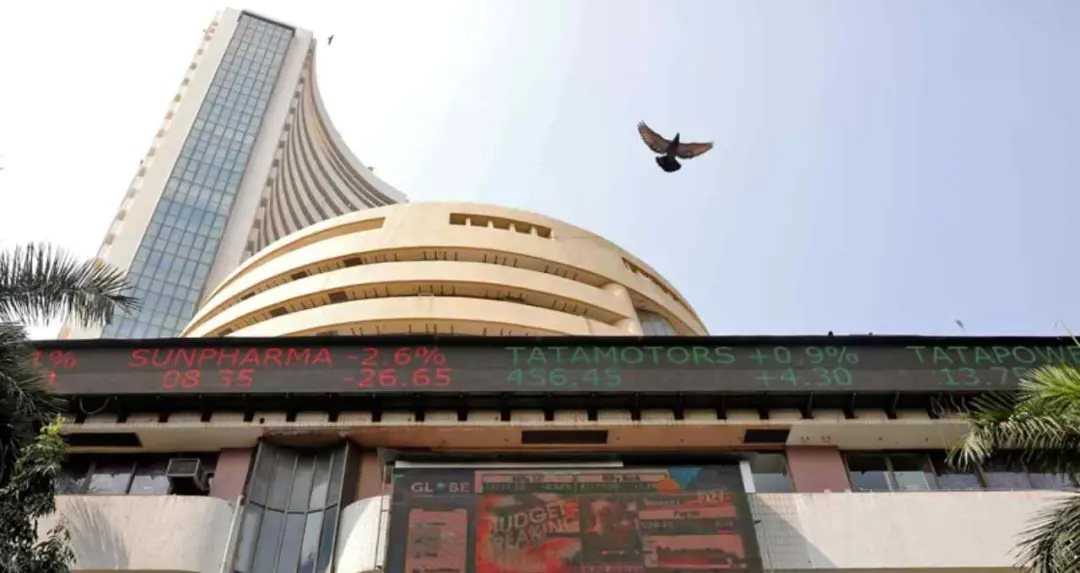
Indian equity markets opened the week under significant pressure on Monday, 2 March 2026, amid escalating tensions between the United States and Iran. The Sensex declined by around 1,100 points at the opening, while the Nifty slipped below the 24,900 mark.
Market weakness followed rising geopolitical tensions in the Middle East in recent days, which had already increased volatility across global markets. Reports of a joint military action by the United States and Israel prompted investors to reduce risk exposure, with the impact reflected in Indian equities.
At 8:10 am on Monday, Gift Nifty futures were trading 124 points lower at 25,161, indicating a weak start for the Nifty-50. Indian markets opened under pressure in line with declines across Asian equities.
Selling was visible in banking, IT and metal stocks during the initial minutes of trade. Market volatility increased, prompting traders to adopt a cautious approach.




According to reports, Iran’s Supreme Leader Ayatollah Ali Khamenei and several senior officials were killed in a joint military action by the United States and Israel. The development has the potential to further intensify regional tensions.
US President Donald Trump stated that the deaths of American soldiers in Iran’s retaliatory action would be avenged. The statement heightened market uncertainty, with investors assessing the potential implications of a prolonged conflict for the global economy.
Major Asian equity markets recorded sharp declines on Monday morning. Japan’s Nikkei 225 fell approximately 2.7 percent, while South Korea’s Kospi Index declined up to 2.43 percent.
US equity futures also weakened on Sunday, falling more than 1 percent. The S&P 500 and the Dow Jones Industrial Average both closed 1.11 percent lower. During Asian trading hours, Dow Jones futures were down 0.6 percent and S&P 500 futures declined 0.54 percent.
Global weakness weighed on Indian equities, with foreign investor selling adding to the pressure.
Geopolitical tensions had a pronounced impact on commodity markets. Brent crude oil prices surged 13.76 percent to $82.37 per barrel, marking the highest level since January 2025.
Concerns intensified over supply disruptions in a key oil-producing region. The Strait of Hormuz, through which nearly 20 percent of the world’s oil supply passes, remained a focal point. Although the maritime route has not been closed, several tankers were reported to be halted on both sides amid fears of potential attacks.
Reports indicated that some vessels could face difficulties in obtaining insurance coverage. Any disruption to supply chains could result in further increases in oil prices, with implications for oil-importing countries such as India.
Rising crude prices have a direct bearing on Indian equities, as higher oil costs can increase corporate input expenses and potentially exert pressure on profitability.
Sectors such as automobiles, aviation and paints may be particularly affected. Higher oil prices also raise the possibility of inflationary pressures, which in turn could influence interest rates.
Investors are factoring in these developments amid ongoing market volatility.
Despite the broader market decline, activity in the primary market continued. The Striders Impex IPO entered its third and final day of subscription on Monday. The issue is a book-built offering worth Rs 36.29 crore, comprising fresh shares as well as an offer for sale. The company’s shares are expected to be listed on 6 March.
Meanwhile, the Assetek E-Commerce IPO entered its second day of subscription. The issue is valued at Rs 48.95 crore and consists entirely of fresh shares. Its listing is expected on 9 March.
Amid current market volatility, investors should assess risks before investing in IPOs.