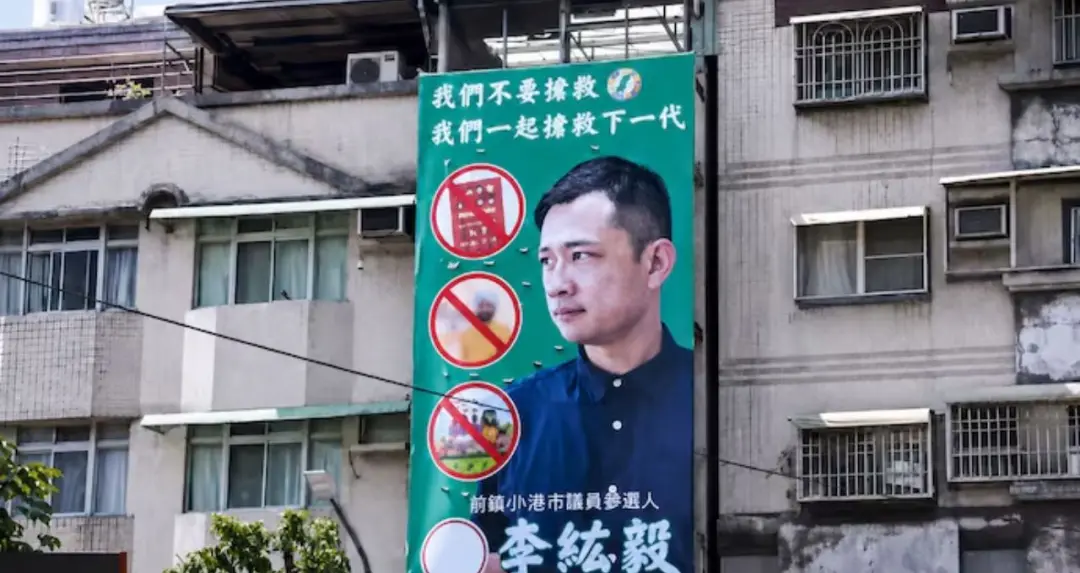
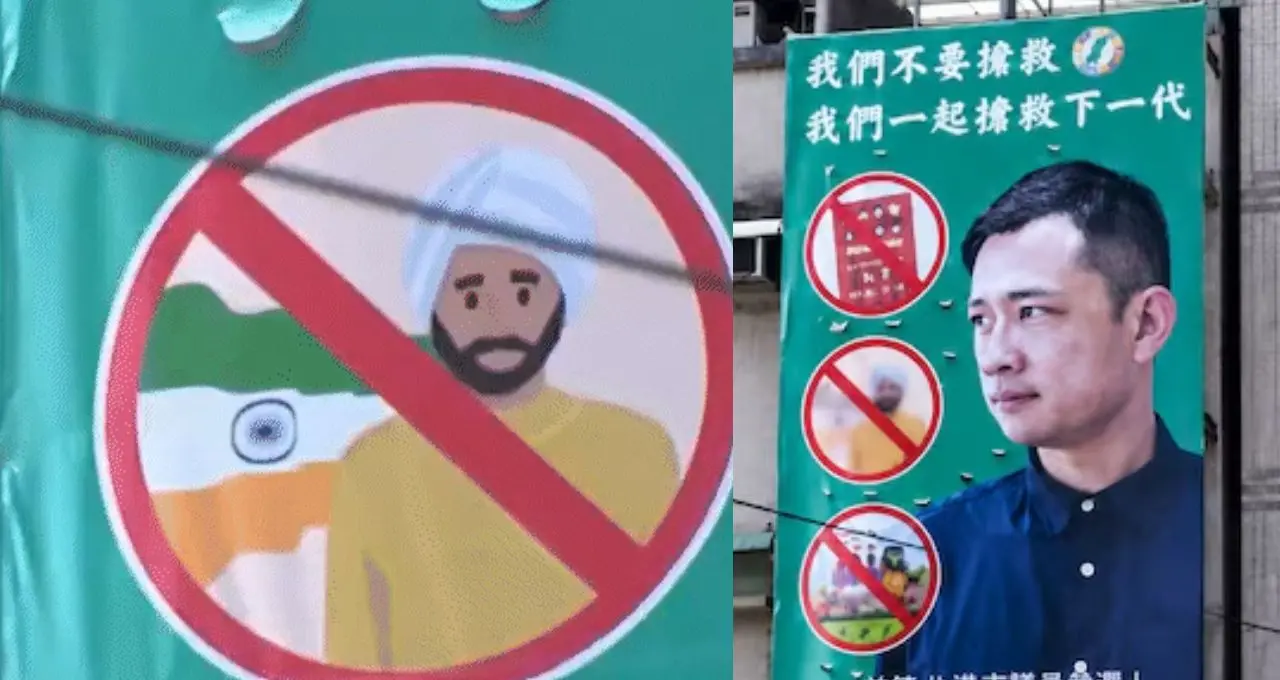
Taiwan’s local elections have triggered controversy after posters opposing Indian migrant workers were displayed by an independent candidate, prompting allegations of racial discrimination and criticism on social media. One poster featured an image of a Sikh man wearing a turban marked with a large “No” symbol and argued against allowing Indian workers into Taiwan, claiming they could contribute to crime.
The issue has emerged as Taiwan prepares to receive Indian workers under a labour cooperation agreement between Taiwan and India. The controversy has intensified debate over Taiwan’s migrant labour policies, domestic politics and allegations of racial discrimination.
During local elections in Taiwan, some political groups and leaders have raised concerns over Indian migrant workers. Critics of the posters said religious and cultural symbols associated with the Indian community were being targeted, describing the messaging as racial and cultural discrimination.
Some leaders from the opposition Kuomintang (KMT) have also expressed concerns about Indian workers. Legislator Huang Chien-pin cited crime statistics from India and said stricter security and monitoring measures were necessary before foreign workers were permitted entry. He referred to figures related to crimes against women in India and argued that Taiwan should seriously consider potential security risks. His remarks drew criticism, with several experts stating that national crime statistics should not be used to characterise an entire population or migrant community.


Indians living in Taiwan and several social activists criticised the posters as racially discriminatory. One Indian professional wrote on social media that opposing a government policy or labour agreement may be a democratic right, but targeting a community’s religious identity and cultural symbols was unacceptable.
Approximately 7,000 Indians live in Taiwan, many of whom work in high-technology, semiconductor and engineering sectors. Several Indian professionals are employed at global companies including Foxconn and TSMC.
New Power Party leader Wang Yi-heng also criticised the poster, stating that placing a prohibition symbol over a Sikh turban reflected ignorance and hurt religious sentiments. He said the turban represented honour and faith rather than merely clothing.
In 2024, India and Taiwan signed a labour cooperation agreement aimed at addressing Taiwan’s labour shortage and creating employment opportunities for Indian workers. Taiwan has faced a labour shortage for several years due to declining birth rates and an ageing population, resulting in workforce gaps in construction, agriculture, manufacturing and elderly care sectors.
Taiwan has previously recruited workers from Indonesia, Vietnam, the Philippines and Thailand and has now added India to the list. Under the agreement, around 1,000 Indian workers are expected to arrive in Taiwan by the end of this year, with the possibility of expansion if the arrangement proves successful and industrial demand increases.
Debate over Indian workers in Taiwan has extended beyond cultural concerns. Taiwan already faces issues involving so-called “fugitive workers”, migrant workers who legally enter the country for employment but later leave designated jobs and work elsewhere illegally. Some political groups argue that weak monitoring could create challenges for national security and law enforcement.
Leader Ko Wen-je of the Taiwan People's Party has also stated that strict oversight of foreign workers is necessary, arguing that Taiwan is already dealing with problems linked to illegally employed foreign labour. Labour experts, however, said such issues are not unique to Indian workers and are associated with migrant workers from several countries, making it inappropriate to target one nationality.
Taiwan has previously faced controversy regarding Indian workers. Former labour minister Hsu Ming-chun suggested that workers from India’s north-eastern states could initially be recruited because their “skin colour, food habits and cultural practices” were more compatible with Taiwanese society. The remarks were criticised on social media and by human rights organisations, which described them as racist and discriminatory. Taiwan’s foreign ministry later issued a public apology after criticism intensified.
The episode highlighted the political and social sensitivity surrounding foreign workers in Taiwan.
Experts said the controversy could affect growing economic ties between India and Taiwan. Cooperation between the two sides has expanded in recent years across trade, technology and semiconductors. India aims to strengthen its role in the global semiconductor supply chain, while Taiwan seeks skilled workers and technology investment. The labour cooperation agreement is considered strategically important for both sides.
Experts also said political rhetoric and racial remarks could affect perceptions of the partnership, adding that Taiwan would need transparent and balanced labour policies to address economic needs and social sensitivities.
The Taiwan controversy has also been cited as an example of growing migration-related politics globally. In several countries, debates over foreign workers have intensified amid economic pressures, employment competition and security concerns. Human rights organisations said discussion of labour policy is part of democratic processes but warned that linking communities, religions or cultures with crime and insecurity could deepen social divisions. Experts said both India and Taiwan would need to implement labour cooperation transparently while avoiding racial discrimination and cultural prejudice.