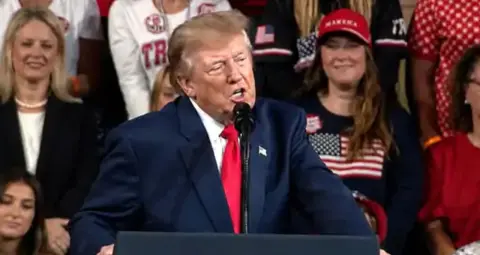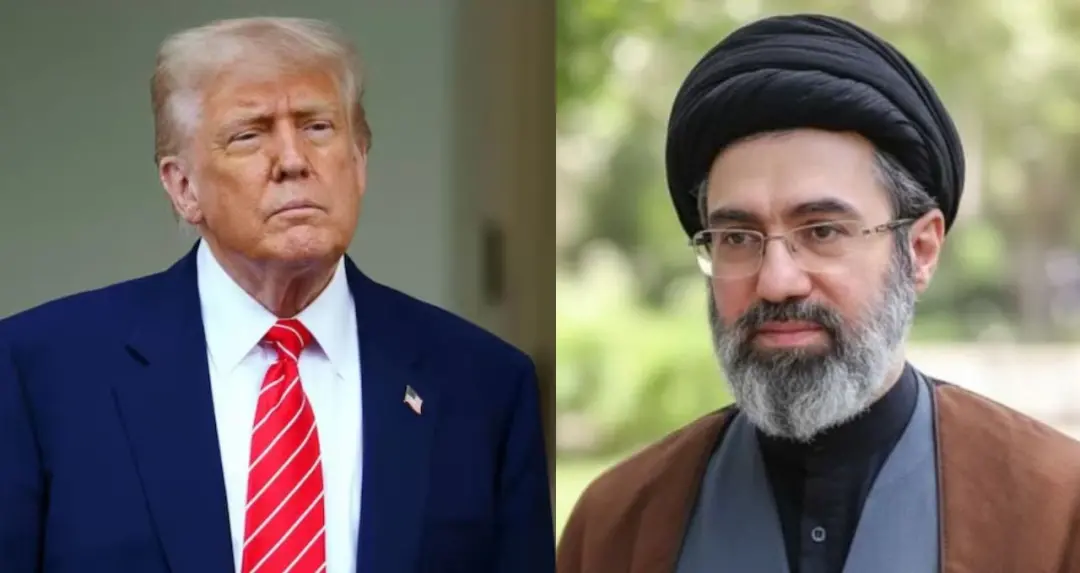
United States President Donald Trump said the ongoing conflict with Iran would end “very soon” and claimed Tehran was seeking an agreement, while reiterating that the United States would not allow Iran to develop nuclear weapons. Speaking to lawmakers at the White House, Trump said Iran appeared ready for negotiations and an agreement, but the United States would prevent it from acquiring nuclear weapons under any circumstances.
Trump’s remarks came amid rising tensions and military activity in the Middle East, with international attention focused on United States-Iran relations, security in the Strait of Hormuz and developments in global oil markets.
During the White House event, Trump said the United States had been preparing major military steps against Iran but had paused them to allow diplomatic engagement. He said countries including Qatar, Saudi Arabia and the United Arab Emirates had urged Washington to exercise restraint and continue talks. According to Trump, Iran had become fatigued by a prolonged conflict and was seeking an agreement. He also reiterated that the United States would not permit Iran to obtain nuclear weapons and indicated military action remained an option if talks failed.

Differences have emerged in United States politics over the possibility of war with Iran. Discussion has advanced in the United States Senate on a “War Power Resolution,” under which Congress approval would be required for a president to continue a prolonged war.
Democratic lawmaker Seth Moulton said in Congress that the United States strategy lacked clarity and argued the situation appeared to suggest the country was losing the conflict. He questioned the objective of the conflict if a nuclear agreement could not be reached and the Strait of Hormuz could not be fully secured. United States military officials rejected the allegations, stating that the country had achieved its strategic objectives and remained prepared for all scenarios.
The Strait of Hormuz remains one of the world’s most significant maritime trade routes, through which a substantial share of global oil supply passes. Iran recently established a new control mechanism called the “Persian Gulf Strait Authority,” under which vessels transiting the Strait of Hormuz are required to obtain prior approval. Iran stated that ships passing without permission would be considered illegal, raising concerns among international shipping companies and oil markets.
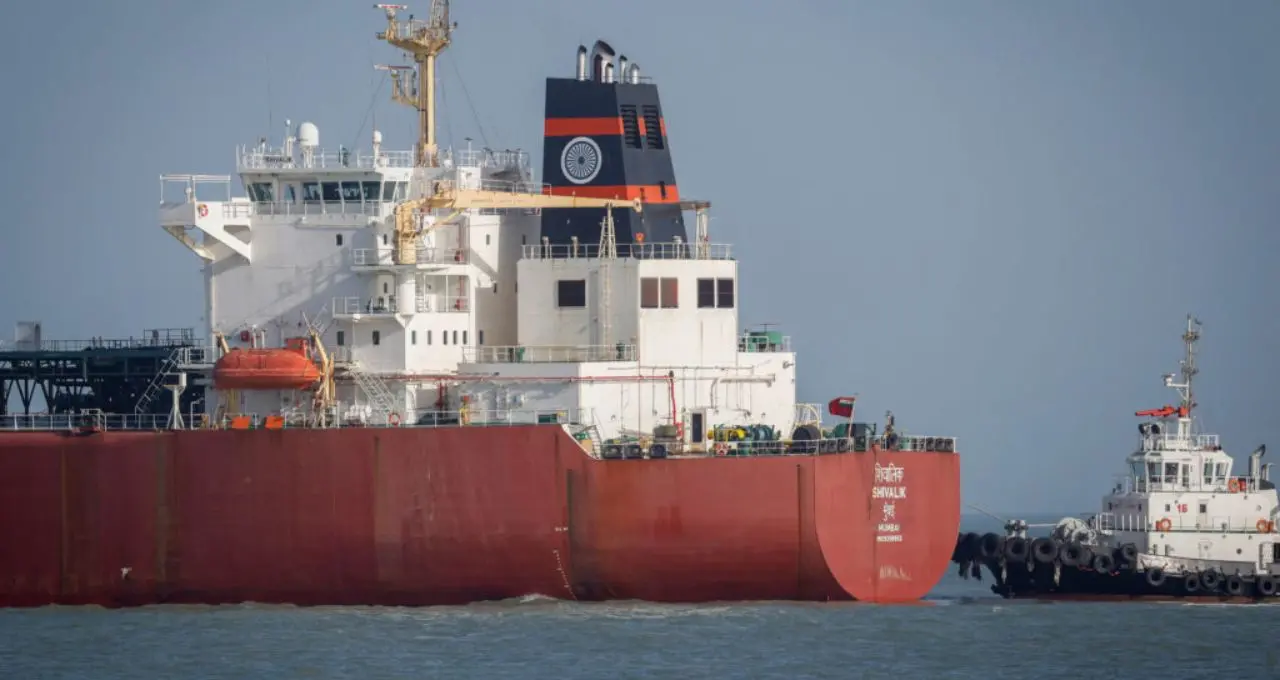
Amid heightened tensions, two Chinese supertankers exited the Persian Gulf after nearly two months, reportedly carrying about four million barrels of crude oil.
South Korea claimed that an operated vessel came under attack in the Strait of Hormuz, resulting in an explosion and fire onboard. According to an investigation report, two unidentified airborne objects struck the vessel, causing the blast. South Korean authorities blamed Iran for the incident, while Tehran denied the allegations. South Korea said it was engaged in serious discussions with Iran and would determine further action after the investigation concluded.
Iran said it would not yield to pressure on uranium enrichment. Iranian President Masoud Pezeshkian said negotiations could continue, but Iran would not retreat from its nuclear rights. Iranian Foreign Minister Abbas Araghchi warned that the United States could face “bigger surprises” in the event of another war and claimed Iranian forces targeted a United States F-35 fighter aircraft during the conflict. The United States has not officially confirmed the claim.
A proposal discussed in the Iranian Parliament referenced offering substantial rewards to individuals carrying out violent action against Trump and Israeli Prime Minister Benjamin Netanyahu. The proposal prompted international discussion, with several countries expressing concern that such language and proposals could heighten regional tensions.
The United States imposed new economic sanctions on Iran, targeting an Iranian currency exchange network and several associated companies. The United States administration alleged the companies were facilitating international financial transactions for Iranian banks and oil trade. Sanctions were also imposed on 19 vessels allegedly used to export Iranian oil and petrochemical products. Reports said United States restrictions had forced Iran to store oil in ageing tankers stationed at sea, increasing the number of oil-laden vessels in the Persian Gulf.
Rising tensions in the Middle East have affected global oil prices, although Trump said prices would decline in the future. Experts said any escalation in tensions in the Strait of Hormuz or disruption to maritime trade could affect global oil supply and have economic consequences for Asia, Europe and the United States.
The United States and Iran are simultaneously pursuing negotiations and pressure tactics. While Trump indicated the possibility of talks, he also kept open the option of military action. Experts said the coming weeks could determine the direction of the conflict, with the possibility of reduced tensions if agreement is reached on nuclear negotiations and regional security, or wider regional escalation if talks fail.