Uttar Pradesh has witnessed a sharp change in weather conditions during the final days of September, with several areas facing rain, waterlogging, rising river levels and fog at the same time. After continuous rainfall, water levels in rivers have risen in several districts, while riverbank erosion has intensified. In Barabanki, the b current of the Saryu River has affected religious sites and houses along the riverbank, while in Badaun, the rise in the Sot River has led to water flowing over roads and connecting routes. Meanwhile, parts of western Uttar Pradesh witnessed sudden dense fog in the morning after the rain, giving people a sense of January-like cold and haze at the end of September.
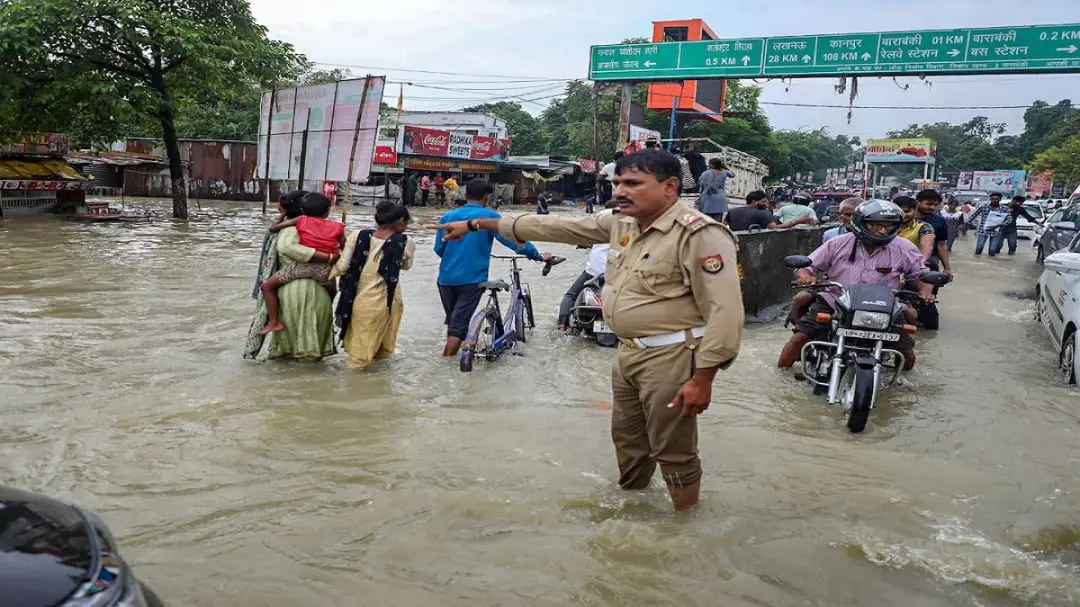
Several parts of Uttar Pradesh have been receiving continuous rainfall over the past few days. Heavy rain has resulted in waterlogging from cities to villages. Roads have been submerged in several places, water has reached houses in low-lying areas, and the risk of damage to standing crops in fields has increased. Reports of extensive damage caused by excessive rainfall and storms over the past around 60 hours have also emerged across the state. According to available reports, 56 people were reported dead, 46 injured and 1,021 houses damaged during this period.
The second major change in weather after the rain was observed in Badaun. Dense fog suddenly covered the district on Tuesday morning. Local residents were surprised to see such haze during the final days of September. At around 6 am, visibility fell considerably in the city and surrounding areas. Drivers had to switch on their headlights to proceed on the roads. The fog developed amid increased moisture in the atmosphere and changes in morning temperatures following continuous rainfall.
The impact of the fog was not limited to the city, with haze also visible across fields, roads and open areas in rural regions. Normally, most parts of Uttar Pradesh experience heat and humidity during the final week of September, but continuous rainfall has changed the weather conditions this time. People in Badaun also experienced slight coolness during the morning. Drivers had to exercise additional caution because of low visibility.




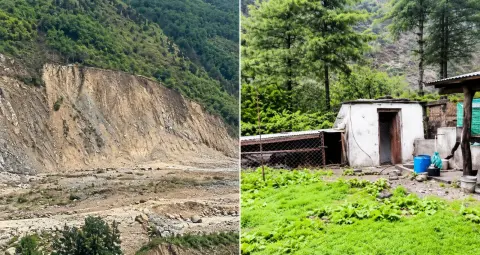
Amid the rain, conditions have become serious in Barabanki as the water level and flow of the Saryu River have increased. Rapid riverbank erosion has affected religious sites and several houses along the river in the Hetampur area. According to a Live Hindustan report, a mosque, a Shiva temple and around 10 houses were swept into the river. Other reports have also provided information about religious sites and a large number of houses being affected by river erosion.
The rapid pace at which the river is cutting into the bank has increased concerns among people living nearby. Villagers have been forced to remove belongings from their homes and move towards safer locations. Erosion is continuing to advance between agricultural fields and populated areas. The immediate challenge for the administration is to keep families living along the river safe and provide relief in areas facing the risk of further erosion.
Officials in Barabanki reached the site and assessed the situation. According to reports, ADM Nirankar Singh, SP Arpit Vijay Vargiya, ASP Vivek Tiwari and other officials reached Hetampur. The SDM and tehsildar were also present at the site. Administrative teams are continuously monitoring the river flow and erosion conditions.
The release of water from barrages has also been cited as one of the reasons behind the rising river level. According to the executive engineer of the Barabanki Flood Division, as cited in the report, water was being discharged from the Girja Barrage and Sharda Barrage, resulting in a rise in the water level of the Ghaghra-Saryu River and a ber current. Administrative and irrigation department teams are engaged in rescue operations along the riverbank.
River erosion in Barabanki has affected rural settlements along with religious sites. After several houses were swept into the river, local residents are facing difficulties in finding places to live. Villagers said the river continues to cut into the land and that if erosion continues at the same pace, the risk to other houses and religious sites in the surrounding area could increase. The administration is continuing monitoring and rescue operations at vulnerable locations.
In Badaun, rainfall and the rising river level have also affected road connectivity. The rise in the water level of the Sot River has made movement on the Bisauli-Sahaswan Road difficult. According to reports, near Ranet intersection on the Shahabad-Kachhla highway, river water was flowing over the alternative diversion route of the Bilsi-Islamnagar road. This made crossing the route risky for commuters.
Badaun district had already witnessed extensive waterlogging due to continuous rainfall. Reports said 138 millimetres of rain was recorded over two days. Rainwater had accumulated on major roads as well as lanes in residential areas. Damage to Kharif crops has also been reported. Electricity supply was affected at several locations, while fallen trees blocked roads.
Continuous rainfall in Badaun caused water accumulation in low-lying areas of the city, creating difficulties for residents. Waterlogging was reported in areas including Jogipura, Gandhi Ground Road, Nekpur, Panwadi, Shivpuram and Jawaharpuri. In several places, overflowing drains affected the drainage of rainwater. The risk of trees falling also increased because of heavy rainfall and increased moisture in the ground.
During the rain in Badaun, several trees fell one after another on DM Road, affecting traffic movement. Fallen trees also affected electricity lines, disrupting power supply in some areas. Trees falling onto the road created difficulties for motorists and forced the route to remain closed for some time. Amid continuous rainfall, teams from the administration and relevant departments worked to clear roads and restore traffic movement.
Rainfall and rising river levels have also increased concerns in other parts of Uttar Pradesh. In Kushinagar, flooding has developed in the Narayani, or Gandak, River after water was released from Nepal. In the Prayagraj region, the impact of continuous rainfall and rising water levels in rivers coming from Madhya Pradesh has been observed. Rising water levels in the Ken, Betwa and Tons rivers have also been reported to be increasing pressure on the Yamuna.
Rainfall has also affected traffic movement in Varanasi. Waterlogging was reported at several locations on National Highway-19 between Akhri and Bhikharipur. Accumulated water and potholes at several places created difficulties for motorists. Poor drainage of rainwater also increased the risk for two-wheeler and auto-rickshaw drivers travelling on the road.
According to the latest weather department update, several districts of Uttar Pradesh are expected to receive rain and thunderstorms on September 29. Several districts in both western and eastern parts of the state have been placed among areas likely to receive rainfall. Rain is expected in several districts, including Meerut, Badaun, Aligarh, Bareilly, Moradabad, Varanasi, Prayagraj, Gorakhpur, Ayodhya, Deoria and Kushinagar. Rainfall activity in eastern Uttar Pradesh is also expected to continue until September 30.
However, there are also indications that weather activity may gradually weaken. According to a weather report, rainfall activity in Uttar Pradesh is expected to decrease after September 29, with temperatures likely to rise. Water levels are therefore expected to recede in waterlogged areas over the coming days, although conditions related to riverbank erosion and water levels in areas along rivers continue to require monitoring.
The spell of rain has also increased concerns among farmers. Continuous rainfall amid existing moisture in the fields could affect paddy and other Kharif crops. The risk of crop damage is higher in areas where water remains accumulated in fields for an extended period. The administration and agriculture department will also face the task of assessing crop losses and providing relief to affected farmers.
At present, conditions in several districts of Uttar Pradesh have not fully returned to normal following the rainfall. In some places, river water is flowing over roads, while water remains accumulated in fields and riverbank erosion continues to remove land. The erosion of the Saryu in Barabanki and the rise of the Sot River in Badaun indicate that the risk of flooding and erosion does not immediately end after rainfall subsides. Administrative teams continue to monitor vulnerable areas, while people are being urged not to take unnecessary risks on waterlogged roads or routes with b water flow.