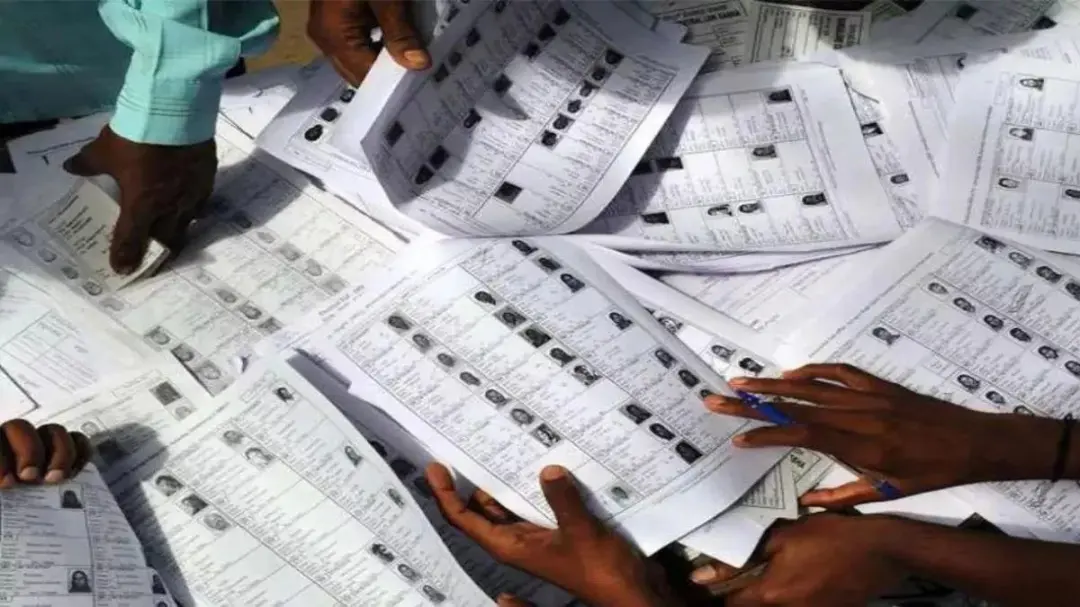
Uttarakhand’s electoral roll Special Intensive Revision (SIR) has brought attention to the pattern of objections filed seeking deletion of names from voter lists. Available data show that in five assembly constituencies, the individuals who filed the highest number of objections have been reported to be associated with the Bharatiya Janata Party, with Kichha in Udham Singh Nagar recording 4,857 objections, including 4,855 filed by a single person.
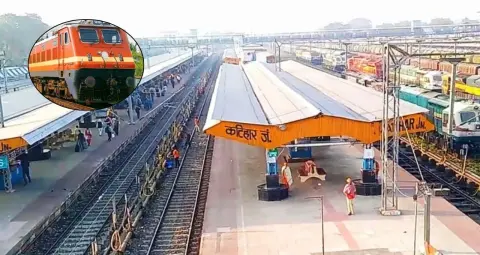
In Kichha, 4,857 objections were filed seeking deletion of voter names. Of these, 4,855 applications were filed by Rajesh Tiwari, who has been described as a BJP booth-level agent. The voters whose names were sought to be deleted in these objections have been reported to be Muslim voters. In several applications, the stated basis was that the names were already registered at another location.
Kichha falls in Uttarakhand’s Udham Singh Nagar district and is located along the Uttar Pradesh border. The transfer of voters and registration of names in voter lists of other states are therefore also under scrutiny. Former BJP MLA Rajesh Shukla has claimed that an internal review found thousands of names that were also recorded in the voter lists of Bareilly, Pilibhit and Rampur districts of Uttar Pradesh.
Some affected voters have questioned the claims. The case of Kichha resident Rais Ahmed has also emerged. An objection was reportedly filed against his name on the basis of a transfer, while he claims that he was born there and has also contested a local election. Such cases can be decided only after examination of documents and the prescribed hearing process.
Gadarpur assembly constituency in Udham Singh Nagar recorded 1,370 objections, of which 670 applications were filed by a single person, Chankit Huria. According to the report, Huria’s public profile mentions several positions associated with the BJP, and he has said that he worked as a BJP booth-level agent. He said the applications were filed after identifying duplicate voter entries.




Khatima assembly constituency recorded 394 applications, including 392 filed by Amit Kumar Pandey. According to the available report, he has been described as a BJP district vice-president and booth-level agent. The voters against whom objections were filed have been reported to be Muslim voters.
Khatima has been a traditional constituency of Chief Minister Pushkar Singh Dhami. In the 2022 assembly election, Dhami lost the seat to Congress candidate Bhuvan Chandra Kapri.
Nanakmatta assembly constituency also recorded a case in which one person filed a large number of objections. A total of 391 Form-7 applications were filed, of which 353 were attributed to Kishore Joshi. According to the report, Joshi identifies himself as a BJP booth-level agent. Most of his objections cited the voter having moved elsewhere, or being “shifted”, as the basis.
Across these figures, a pattern has emerged in which a small number of people filed a large proportion of objections in five Uttarakhand assembly constituencies. The report states that all five individuals who filed the highest number of objections across these seats have been described as being associated with the BJP.
Filing an objection and deletion of a voter’s name are separate processes. After an objection is filed under Form-7 or another prescribed procedure, the concerned election officials examine the case, and the voter is given an opportunity to present their position. A decision is taken on the basis of documents and the prescribed process. Therefore, the number of objections alone does not establish that the same number of voter names will be deleted.
The claims and objections stage of the SIR process has been completed, with the available report stating that the stage ended on August 13. The notice and hearing process is to follow, while the final electoral roll is stated to be scheduled for September 15.
The report also refers to changes in Election Commission rules governing the filing of large numbers of applications. According to the 2023 voter list manual, a booth-level agent was initially subject to a limit of no more than 10 applications in a day. Under certain circumstances, the limit was later increased to 50 applications per day. According to the report, a letter sent to the Chief Electoral Officer of West Bengal in January this year stated that the limit had been removed completely.
The change has become relevant amid the filing of thousands of objections in Uttarakhand. While permission to file a large number of applications can make the filing of thousands of objections technically possible, questions remain over how the evidence supporting each objection is verified.
The 4,855 applications filed by one person in Kichha have become a central point in the discussion. If a large number of the voters concerned are found to be registered elsewhere as well, the cases could indicate duplicate entries in electoral rolls. If a large number of objections are found to be incorrect, questions could arise over monitoring of the SIR process and accountability in filing objections.
Uttarakhand is scheduled to hold assembly elections in 2027. The electoral roll revision is therefore taking place ahead of the election, with constituencies including Kichha, Khatima, Gadarpur and Nanakmatta under attention.
A large number of objections against Muslim voters has also emerged as part of the reported pattern. However, maintaining or deleting a voter’s name cannot be based on religion. Each case requires examination of actual residence, duplicate registration, transfer or another legal basis.
Voters whose names are challenged have the right to file claims and objections under the prescribed process. Similarly, duplicate registration must be addressed through the applicable procedure. The final outcome will depend on the disposal of claims and objections by election officials.
The Election Commission and district administration also face the task of completing the verification of the large number of objections within the prescribed timeline. Verification may involve voter records, addresses, transfers and other documents at the level of BLOs, EROs and other election officials.
The notice and hearing process will determine the status of the challenged names. If a voter establishes that they are a valid voter in the concerned assembly constituency, the name may remain on the roll. If a claim of duplicate registration or transfer is established, the electoral record may be changed according to the rules.
The BJP may defend the process on the grounds of cleaning electoral rolls and removing alleged duplicate names, while the Congress and other opposition parties may seek greater transparency over the large number of objections.
For now, the 4,855 applications filed in Kichha by one person remain the most discussed figure. The final outcome of these objections is not yet available, and it cannot yet be determined how many voter names will actually be deleted. The final electoral roll scheduled for September 15 is expected to establish how many names are ultimately removed or retained.