Shaped by Nordic privacy principles and tested at scale in India and Nepal, ZKTOR reflects a rare attempt to embed dignity and restraint into social media architecture at a moment when Europe’s dependence on American platforms feels increasingly fragile.
A Special Research-Based Feature from the Helsinki Bureau…
Helsinki: In recent months, Europe’s sense of digital certainty has begun to fracture in ways that go beyond regulation or market share. The unease is not abstract. It is geopolitical, psychological, and increasingly personal. When former US President Donald Trump publicly revived talk of exerting control over Greenland, European capitals did not interpret it as an isolated provocation. It landed as a reminder that strategic dependencies built over decades can suddenly feel fragile. The episode reinforced a broader anxiety already present in Europe’s digital sphere: the realisation that much of its online public life rests on infrastructures governed elsewhere, under legal, political, and cultural assumptions that Europe does not control.
Social media sits at the centre of this discomfort. For years, European regulators have attempted to civilise American technology platforms through rules, fines, and codes of conduct. The General Data Protection Regulation became the world’s most influential privacy law, not because it was the first to speak about data rights, but because it articulated a distinctly European idea of human dignity in the digital age. Yet despite GDPR, Europe’s citizens continue to live much of their online lives inside systems designed far from European public scrutiny. The platforms comply, adapt, negotiate, but they are not European in temperament. Their economic logic remains rooted in behavioural extraction, attention optimisation, and data-driven persuasion.
This gap between law and lived experience is now more visible than ever. Artificial intelligence has accelerated it. What once felt like abstract concerns about data harvesting have become concrete fears about image misuse, automated profiling, deepfakes, and irreversible loss of control over personal digital traces. Nowhere is this more visible than in the everyday digital vulnerability experienced by ordinary users. Across Europe, concerns about online safety have shifted from abstract policy debates to lived anxieties: parents worried about their children’s images circulating beyond control, women confronting the persistent threat of non-consensual redistribution of private media, and citizens uneasy about how invisible algorithms shape opinion, emotion, and behaviour. These are not marginal issues. They touch the core of Europe’s post-war social contract, which places individual dignity above unchecked market logic.
At the same time, Europe finds itself navigating a paradox. It has produced the world’s most rigorous privacy frameworks, yet remains structurally dependent on platforms whose economic survival depends on practices those very frameworks seek to restrain. Enforcement can punish excesses, but it cannot easily change architecture. This tension has led some policymakers and technologists to ask a more fundamental question: whether true digital sovereignty can ever be achieved by regulating systems that were never designed with European values at their core.
It is within this unsettled landscape that a quiet and unexpected story has begun to surface, one that does not originate from Brussels, Berlin, or Paris, but from a far more improbable intersection of places and experiences. Its contours link Finland’s deeply ingrained culture of privacy and trust with the social realities of South Asia, and its implications reach beyond any single market or regulatory regime.
As digital power concentrates around artificial intelligence, the real divide is no longer between platforms and users, but between systems that must observe people to function and those designed to function without observing them at all.
The story begins not with a corporation seeking European entry, but with an individual whose life has unfolded across sharply different whose life has unfolded across sharply different worlds. Sunil Kumar Singh arrived in Finland nearly two decades ago as an immigrant, carrying with him neither institutional backing nor corporate ambition, but a long curiosity about how societies organise trust. Finland, with its understated civic culture and uncompromising respect for personal boundaries, offered a contrast to the digital environments taking shape elsewhere. Privacy there was not framed as a feature or a right to be negotiated, but as an assumption built into everyday systems, from public services to digital identity.
Over the years, Singh absorbed these values not as abstract ideals but as operational realities. He observed how technology in Nordic societies tended to recede into the background, enabling social life rather than extracting from it. At the same time, his ties to India, particularly to the eastern states of Bihar and Jharkhand, kept him grounded in a very different digital truth. In much of South Asia, millions of users enter the online world with limited literacy, little bargaining power, and no realistic ability to understand or refuse complex terms of service. Consent, in practice, often becomes a ritual rather than a choice.




This contrast shaped a growing conviction. If privacy is added after systems scale, it remains fragile. If dignity depends on policy alone, it is easily eroded. What was required, Singh concluded after years of research and observation across Europe, India, and the United States, was a structural alternative: a social platform designed so that misuse is not merely punished, but made technically difficult or impossible from the outset.
For Europe, the question is no longer whether data should be protected, but whether trust itself can remain a public value in a digital world largely built elsewhere.
That conviction eventually took form as ZKTOR, an all-in-one social and communication platform whose architecture reflects a distinctly Nordic interpretation of digital responsibility, filtered through the realities of South Asia. Instead of behavioural tracking, it relies on zero-knowledge principles. Instead of centralised data lakes, it enforces jurisdiction-bound storage. Media shared on the platform does not travel via public URLs and cannot be extracted through external tools, a design choice that directly addresses the most common pathways of image misuse, particularly affecting women.
What makes this experiment unusual is not only its philosophy but its proving ground. Rather than launching first in Europe or North America, ZKTOR entered public beta in India and Nepal, environments where digital stress tests are unforgiving. High population density, linguistic diversity, uneven connectivity, and acute risks of online abuse offer little margin for theoretical solutions. According to people involved in the rollout, this mass beta is not a marketing exercise but a deliberate attempt to expose the architecture to real-world pressure before any wider expansion.
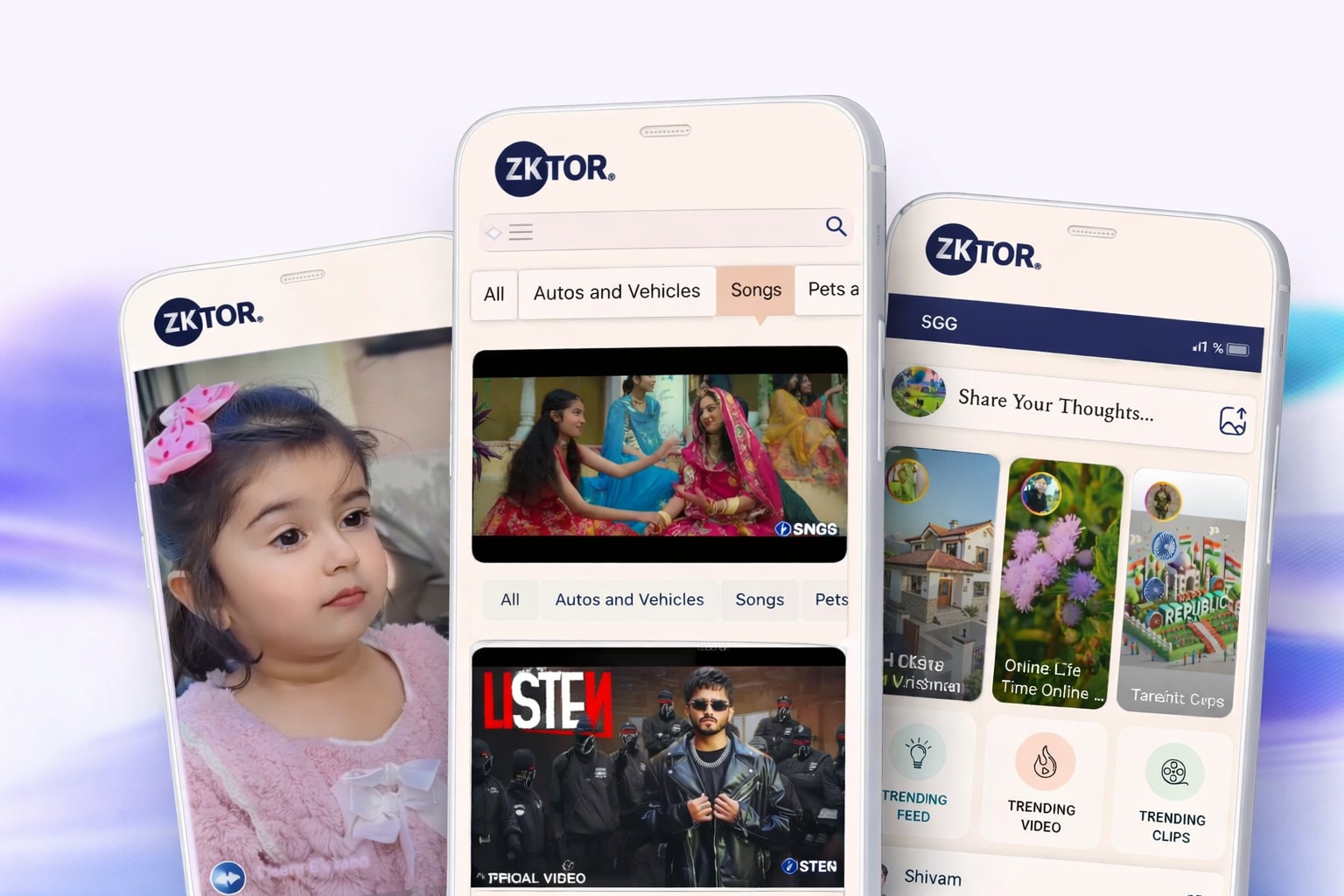
For Europe, the implications are subtle but significant. Here is a platform shaped by Finnish social values, led by a long-term resident of Finland, yet refined in some of the world’s most demanding digital conditions. At a moment when trust in American social media companies has weakened and geopolitical uncertainty has sharpened concerns about dependency, the emergence of such a model invites reflection rather than proclamation.
The question it raises is not whether ZKTOR will replace existing platforms , but whether the assumptions that have governed social media for two decades are as inevitable as once believed. Surveillance-driven growth, behavioural profiling, and viral amplification have often been presented as technical necessities rather than design choices. ZKTOR’s development challenges that premise by suggesting that alternative architectures are possible when economic incentives are deliberately restrained and trust is treated as infrastructure rather than branding.
This restraint is visible not only in design but also in financing. The platform has been developed without venture capital backing and without government grants, an unusual stance in a sector where external funding often dictates timelines and compromises. Those close to the project describe this decision as essential to preserving architectural integrity. Without pressure to maximise engagement metrics or monetise behavioural data, the system could be built around slower, region-by-region growth, prioritising stability and social acceptance over scale at any cost.
For Europe, this approach resonates with a deeper historical instinct. European integration itself has long favoured gradual institution-building over rapid consolidation. The idea that digital infrastructure should mature cautiously, with accountability embedded early, aligns with how Europe has approached everything from monetary union to consumer protection. ZKTOR’s emphasis on jurisdictional data boundaries, for example, reflects a respect for legal pluralism that mirrors European governance traditions. User data remains within its legal region, encrypted in a manner that even platform operators cannot meaningfully access, limiting both misuse and overreach.
The platform’s no-URL media architecture further underscores this philosophy. In an era where images and videos can be extracted, replicated, and repurposed by automated systems within seconds, the decision to prevent external redistribution is not merely technical. It is normative. It signals that certain forms of virality are incompatible with human dignity. For women, who bear a disproportionate share of digital harm globally, such structural safeguards may prove as consequential as any regulatory intervention.
At the same time, ZKTOR does not present itself as a moral crusade. Its designers have been careful to frame the platform as an option, not an imposition. Users can create content, form communities, communicate through encrypted messaging, and participate economically through transparent creator monetisation, without being nudged or profiled. Growth, in this model, emerges from trust and relevance rather than manipulation.

In an era where images travel faster than consent, safety is no longer a policy problem. It is an architectural choice.
Whether Europe will embrace such alternatives remains an open question. American platforms retain enormous network advantages, and no single entrant can dismantle entrenched ecosystems overnight. Yet moments of geopolitical uncertainty have historically accelerated reassessments of dependency. Just as energy security debates reshaped Europe’s infrastructure priorities, digital sovereignty is now forcing similar conversations about resilience, autonomy, and values.
ZKTOR’s trajectory is still unfolding. Its creators have not announced European or American launches, nor have they sought political patronage. The project advances quietly, testing assumptions in South Asia while refining systems that echo European civic ideals. For Finland, the symbolism is hard to miss. An immigrant who absorbed Nordic principles of privacy and restraint has translated them into a technological form that may speak back to Europe at a time of doubt.
In that sense, ZKTOR is less a product than a mirror. It reflects the possibility that Europe’s values, often articulated defensively through regulation, can also be expressed proactively through architecture. Whether this model gains traction or remains a thoughtful outlier will depend on choices yet to be made by users, institutions, and governments alike. But its existence alone suggests that the future of social media need not be bound to watching its users to understand them. It need not be bound to extracting value from human vulnerability to remain viable. The deeper significance of ZKTOR lies precisely here: it reframes the conversation away from regulation chasing technology, toward technology internalising restraint as a first principle.
For European policymakers and institutions, this reframing arrives at a sensitive moment. The continent is grappling with how to maintain openness without surrendering autonomy, how to encourage innovation without replicating models that erode public trust. American platforms remain powerful, but they are no longer perceived as neutral utilities. Their governance is shaped by corporate priorities and political currents beyond Europe’s influence. In contrast, ZKTOR’s emergence suggests a different alignment, one in which civic values precede market dominance, and architectural limits replace discretionary promises.
Finland’s role in this story is not incidental. Nordic societies have long treated privacy, transparency, and proportionality as social infrastructure rather than ideological preferences. These values rarely announce themselves loudly; they function quietly, through systems designed to minimise harm before it occurs. ZKTOR carries this sensibility into the digital public sphere. That it does so through a founder who is both an immigrant and a long-term participant in Finnish society adds a layer of meaning that resonates deeply with Europe’s own narrative of integration and contribution.
The platform’s choice to be built for India and South Asia first should not be misread as peripheral to Europe. On the contrary, it functions as an accelerated laboratory. If privacy-by-design can withstand the pressures of scale, diversity, and risk in some of the world’s most demanding digital environments, its relevance to Europe only strengthens. The planned extension of testing into Sri Lanka and Bangladesh further underscores this intent to validate systems before ambition.
There is also a broader economic and social dimension that Europe cannot ignore. ZKTOR’s hyperlocal architecture is designed to support decentralised participation, enabling local creators, moderators, and service roles without centralised surveillance. In regions where digital opportunity has historically been concentrated in a few global hubs, such models hint at alternative pathways for employment and cultural expression. For Europe, facing its own regional imbalances and youth anxieties, this approach offers lessons beyond social media.
None of this guarantees success. Trust must be earned over time, and no architecture is immune to misuse or unforeseen challenges. But the seriousness of intent matters. ZKTOR’s refusal to rush, its avoidance of venture capital pressure, and its insistence on structural safeguards mark it as an experiment conducted in good faith rather than a speculative bet.
In an era when geopolitical shocks remind Europe of the costs of overdependence, the appearance of a platform shaped by European values yet tested far beyond Europe’s borders is more than coincidence. It is an invitation. An invitation to imagine digital public spaces where dignity is not an afterthought, where sovereignty is embedded rather than asserted, and where technology serves society without needing to watch it.
What if the future digital economy does not depend on knowing users better, but on knowing less and building systems b enough to respect that restraint?
Whether Europe chooses to engage with that invitation remains to be seen. But as debates over digital trust intensify, the story unfolding from Finland to South Asia suggests that the next chapter of social media may be written not in the language of disruption, but in the quieter grammar of responsibility.
For Europe, that grammar has often been its quiet strength. Long before digital platforms existed, European societies learned that trust is not produced by scale alone, but by limits. That systems endure not because they can do everything, but because they deliberately refuse to do certain things. ZKTOR’s architecture reflects that lesson in code rather than rhetoric. By constraining how data can move, how media can be reused, and how power can be exercised within the platform itself, it transforms ethical intent into technical fact.
This is why the platform’s emergence resonates beyond its current geography. It does not arrive in Europe with the language of conquest or disruption. It does not promise to replace existing networks overnight. Instead, it poses a quieter, more unsettling question: if such systems can be built, tested, and sustained elsewhere, why should Europe continue to accept architectures that contradict its own values?
Sunil Kumar Singh’s journey gives this question a human dimension. As an immigrant who made Finland his home, absorbed its social norms, and then carried those norms into a technological form shaped by global research, he embodies a reciprocal idea of integration. Europe did not merely host him; it shaped the principles that now return in the form of a platform reflecting its best instincts. For Finland, in particular, this is a moment of understated pride. It demonstrates how societal values, when lived rather than proclaimed, can travel far beyond national borders.

As artificial intelligence reshapes power in the digital world, the defining question for Europe may not be how advanced its platforms are, but whether it is ready to stand behind technologies that protect dignity even when surveillance would be easier.
ZKTOR may or may not become a dominant global platform. That outcome is secondary. Its greater significance lies in what it proves possible. That privacy need not be a feature toggled on and off. That dignity can be defended through design, not just enforcement. That social media can exist without continuous observation of its users. In an age of accelerating technological power and geopolitical uncertainty, these are not small propositions.
As Europe debates its digital future amid shifting alliances and eroding certainties, the rise of a platform shaped by Nordic restraint and tested in the crucible of South Asia offers a rare reference point. It suggests that the path forward may not require louder regulation or faster innovation alone, but deeper alignment between values and systems.
In that sense, ZKTOR’s story is not about Finland, India, or Europe in isolation. It is about a shared moment of reckoning. About whether the digital public square can still be rebuilt on foundations of trust. And about whether the societies that first articulated those ideals are willing to recognise them when they return, quietly, in working form.
As artificial intelligence reshapes power in the digital world, the question may no longer be how much platforms can know about us, but whether societies are finally ready to build systems that are b enough not to watch us at all.