The results of the 2026 legislative assembly elections in five Indian states have altered the political landscape, with changes in government in West Bengal, Tamil Nadu and Kerala, while the National Democratic Alliance (NDA) retained power in Assam and Puducherry. The elections also reflected shifts in long-standing political alignments across multiple states.
In West Bengal, the Bharatiya Janata Party (BJP) secured a majority by winning 206 of 293 seats, defeating the Trinamool Congress (TMC) and clearing the way to form its first government in the state. The TMC was reduced to 81 seats, and Chief Minister Mamata Banerjee, along with several senior party leaders, lost their seats. The BJP recorded an approximate strike rate of 70 percent, with significant gains across regions including North 24 Parganas, Hooghly, Purba Medinipur and Jangalmahal. The party contested the election without declaring a chief ministerial candidate, and discussions are ongoing regarding the leadership, with several names under consideration.

Prime Minister Narendra Modi and Home Minister Amit Shah led the BJP’s campaign. Modi addressed rallies and roadshows across 242 constituencies, of which the party won 184. Shah implemented the ‘panna pramukh’ strategy, with the party categorising more than 44,000 booths for micro-level management.
In Tamil Nadu, actor Vijay’s party, Tamilaga Vettri Kazhagam (TVK), won 108 seats, emerging as a new political force in the state. This marks the first instance since 1967 that a government is expected to be formed by a party other than the Dravida Munnetra Kazhagam (DMK) or the All India Anna Dravida Munnetra Kazhagam (AIADMK). Chief Minister M K Stalin lost his seat, along with several ministers, while Udhayanidhi Stalin retained his constituency. TVK performed bly in northern and coastal regions, with support from youth, middle-class and urban voters.
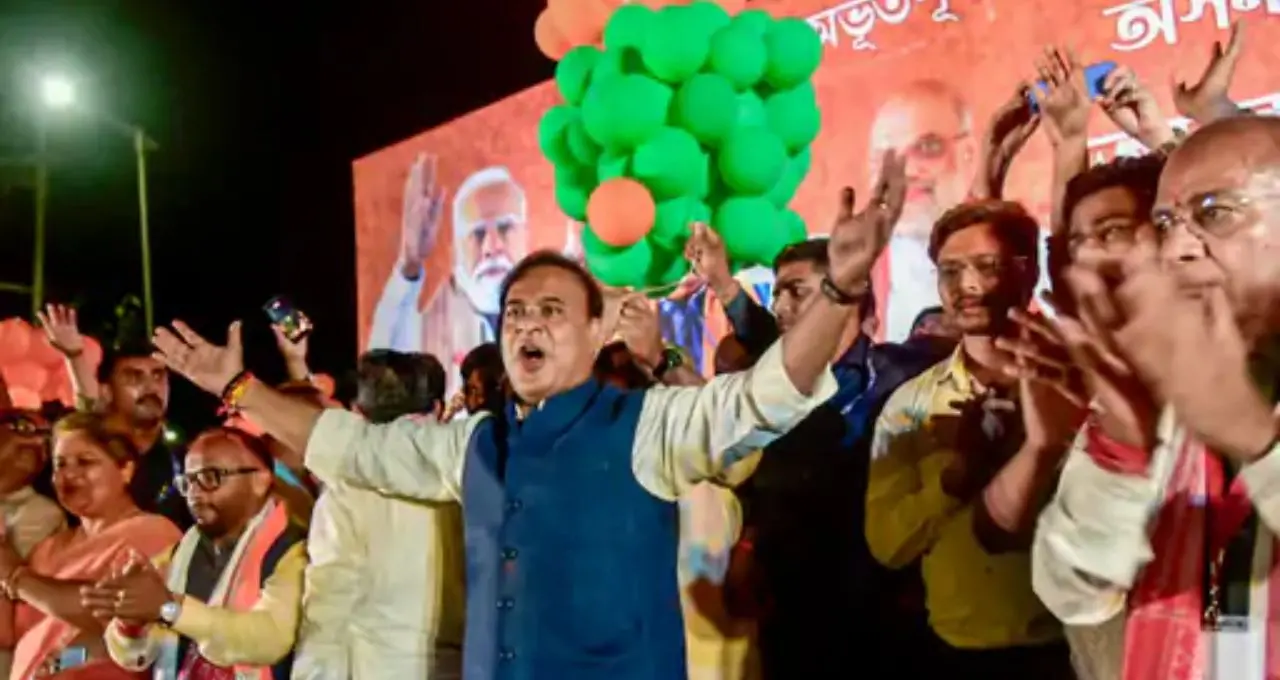
In Assam, the BJP won 82 seats, securing a third consecutive term in office. No minister from the incumbent government lost their seat. The party performed bly in Upper Assam and the Barak Valley, while the Congress remained largely confined to Lower Assam. The NDA also registered gains in Bodoland and other tribal regions, with the BJP recording a strike rate exceeding 92 percent.
In Kerala, the Congress-led United Democratic Front (UDF) returned to power after 10 years. Chief Minister Pinarayi Vijayan retained his seat, but his party and its allies faced losses, with 13 of 21 ministers defeated. The Congress recorded gains across northern and southern Kerala, with the Indian Union Muslim League (IUML) also winning multiple seats. Discussions are underway within the Congress regarding the chief ministerial candidate, with several leaders named as potential contenders.
In Puducherry, the NDA alliance comprising the All India NR Congress (AINRC) and the BJP retained power. N Rangasamy is set to assume office as Chief Minister for a fifth term. The AINRC won 12 seats, while the BJP secured four seats.
The election outcomes indicate shifts in political alignments, with the BJP forming its first government in West Bengal, the emergence of a new political formation in Tamil Nadu, and a change of government in Kerala. Following these results, the BJP is in power with a majority in 11 states and is part of coalition governments in 11 others.