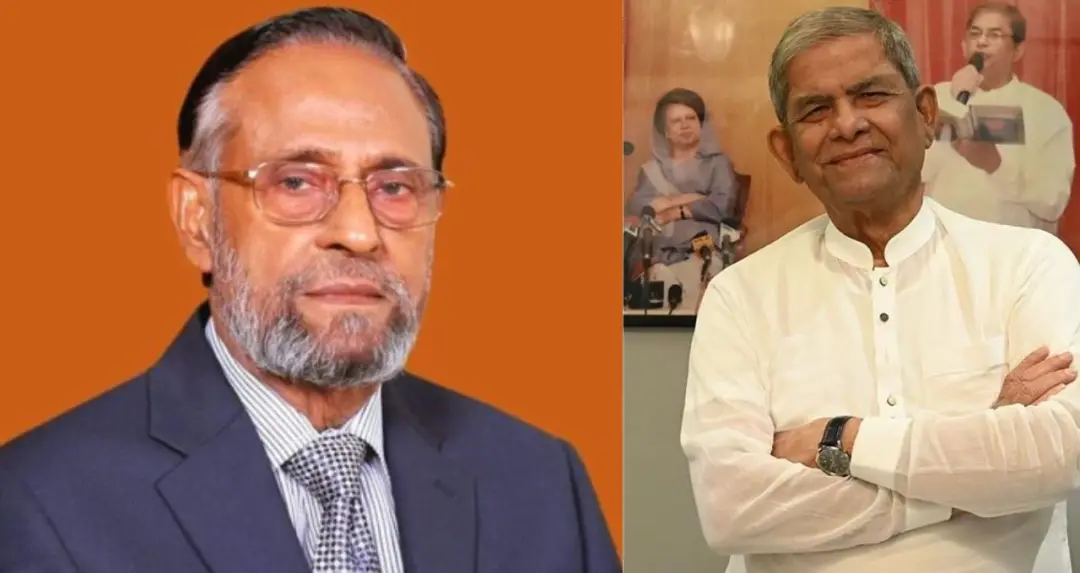
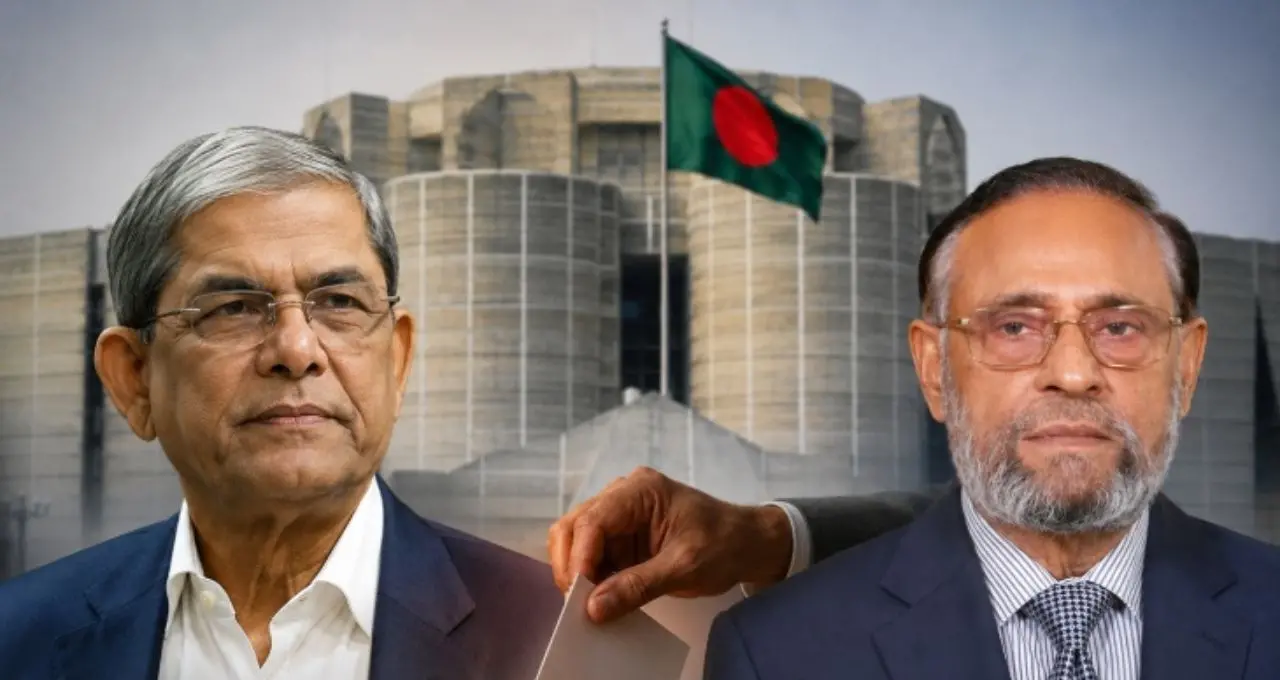
Bangladesh will vote on Thursday, August 20, 2026, to elect its president, with 349 members of parliament eligible to vote. The election features two candidates, BNP leader Mirza Fakhrul Islam Alamgir and Liberal Democratic Party president and former military officer Colonel (Retired) Oli Ahmed, making it the first contested presidential election in 35 years.
Bangladesh’s president is elected by members of parliament rather than directly by voters. A total of 349 MPs will vote this time because one parliamentary seat is vacant.
Of the 349 MPs, 247 belong to the ruling Bangladesh Nationalist Party (BNP), while 77 are from Jamaat-e-Islami. Members of the National Citizen Party, independents and other parties are also part of the electoral college.
BNP’s parliamentary majority gives its candidate, Mirza Fakhrul Islam Alamgir, a b numerical position. The official result, however, will be determined only after voting and counting are completed.
The ruling BNP nominated its senior leader and then-secretary general, Mirza Fakhrul Islam Alamgir, for the presidency. The 11-party opposition alliance led by Jamaat-e-Islami nominated Liberal Democratic Party president and former military officer Colonel (Retired) Oli Ahmed.
The Election Commission declared the nomination papers of both candidates valid. The contest was confirmed after the deadline for withdrawing nominations expired.

The decision to nominate Fakhrul was taken at a meeting of the BNP’s top leadership in the presence of Prime Minister and BNP chairman Tarique Rahman. After his nomination, Fakhrul resigned as the party’s secretary general and from the standing committee.
According to the Election Commission’s schedule, MPs will vote from 2 pm to 5 pm on Thursday in the session room of the National Parliament Building.
MPs will receive ballot papers at their designated seats instead of going to separate voting booths. Each ballot paper will contain a counterfoil for records and a main section for voting.
Before receiving the ballot, an MP must record their name and signature according to the prescribed procedure. The MP will then write their name and sign opposite the name of their preferred candidate. Three transparent ballot boxes will be placed in the session room
The Election Commission has arranged for the voting process to be broadcast live. Counting will begin immediately after voting ends and will also be covered by the broadcast.
After voting concludes, the ballot papers will be sorted and counted. Chief Election Commissioner and Returning Officer for the presidential election AMM Nasir Uddin will announce the number of valid and invalid votes and the votes received by the two candidates.
The Election Commission Secretariat will then issue the official result through a gazette notification.
The issue of MPs voting independently has also been discussed in connection with the election. Bangladesh’s Chief Whip Nurul Islam Moni has said that Article 70 of the Constitution will also apply to the presidential election.
Under the provision, MPs cannot vote against their party’s decision. Voting contrary to the party line can affect their parliamentary membership.
The provision makes BNP’s parliamentary numbers particularly important for Fakhrul’s candidacy. With a clear majority in parliament, the BNP candidate has a b numerical basis for winning.
Bangladesh’s presidential election history is central to the significance of the 2026 contest. After the parliamentary system was restored in 1991, the president began to be elected by members of parliament. In 1991, two candidates contested the presidential election.
Presidential elections were subsequently held without a contest for a long period. The 2026 election is therefore the first presidential election in 35 years to feature more than one candidate.
The presidency in Bangladesh is primarily constitutional and ceremonial, while executive power rests with the prime minister. The current election has drawn attention because the ruling BNP has nominated one of its senior leaders for the position.
The presidential election became necessary after former President Mohammed Shahabuddin resigned on July 24, 2026. He cited serious health problems as the reason for his resignation.
Following his departure, Parliament Speaker Hafiz Uddin Ahmed assumed the responsibilities of acting president. Under the Constitution, a new president must be elected within the prescribed period after the office becomes vacant.
Following Shahabuddin’s resignation, the Election Commission began the presidential election process and set August 20 as the election date. After the nomination, scrutiny and withdrawal processes were completed, only Fakhrul Islam Alamgir and Oli Ahmed remained in the contest.
On August 19, a day before the presidential election, BNP MPs held an important meeting chaired by Prime Minister Tarique Rahman. Presidential candidate Mirza Fakhrul Islam Alamgir also attended.
The MPs were given directions related to the party’s strategy for the presidential election and the voting procedure.
Voting will take place on Thursday afternoon, followed by the counting of votes from 349 MPs. After the counting is completed, Bangladesh will have its 23rd president. The final result will be determined through the Election Commission’s official counting and announcement.