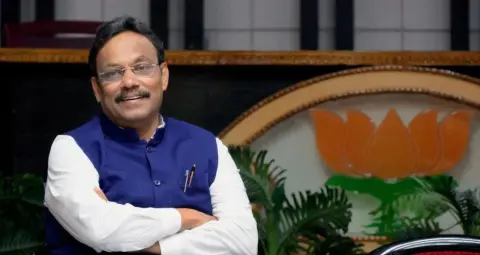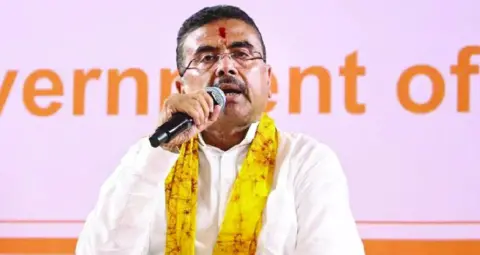
Bihar Chief Minister Samrat Choudhary outlined government plans and targets covering education, environment, energy and waste management at an event held at Bapu Tower in Patna on the occasion of Gandhi Jayanti. He said students at all 38 engineering colleges in Bihar have been charged a fee of ₹10, while the government has set a target of generating around ₹50 crore in revenue through scientific management of Patna’s waste.
Choudhary said a fee of ₹10 has been fixed for students at all 38 engineering colleges in Bihar. The Bihar government had previously referred to the same arrangement. Information issued by the Chief Minister’s Office in April 2026 said the annual fee for engineering studies in Bihar was ₹10, while diploma students were charged ₹5 for one year.
The stated fee relates to the prescribed academic fee. Students studying at engineering colleges may also incur expenses related to hostel accommodation, food, books, travel, examinations and other personal requirements.
Information issued by the Chief Minister’s Office in August 2026 also stated that engineering education in Bihar was being provided at a fee of ₹10 per year. Discussions at the time also covered student facilities and hostel-related issues at engineering colleges.



The Chief Minister said the government has set a target of earning around ₹50 crore by scientifically managing waste generated in Patna. The plan involves using useful components of waste as resources instead of limiting waste management to collection and disposal.
The waste generated in the city includes organic material as well as plastic, paper, metal and other recyclable materials. Segregation at source followed by scientific processing can enable reusable and recyclable material to be recovered.
The revenue target is linked to activities including recovery of useful material, recycling and other processing operations. The actual revenue will depend on the implementation of waste collection, segregation, transportation, processing, recycling and final disposal systems.
Choudhary also referred to the solarisation of agricultural feeders. He said the state government is providing a grant of ₹5,500 crore for agricultural feeders. The government has linked the initiative with improving electricity availability for farmers and reducing expenditure in the energy sector.
Agricultural feeders supply electricity primarily to agricultural pumps and irrigation-related systems. The government has said that connecting these feeders with solar energy will help provide uninterrupted electricity to farmers and reduce expenditure on conventional energy sources.
The Chief Minister also referred to Bihar’s Green Hydrogen Policy and the state’s efforts to promote clean energy options. The policy was mentioned in the context of initiatives in the energy sector and the use of renewable energy for clean energy production.
On education, Choudhary said Bihar has 700 model schools where around 3.5 lakh students are studying. He said these students have access to a 24-hour online tutor through the ‘Vidyarthi Sathi App’.
The initiative is intended to provide students with digital academic assistance outside regular school hours.
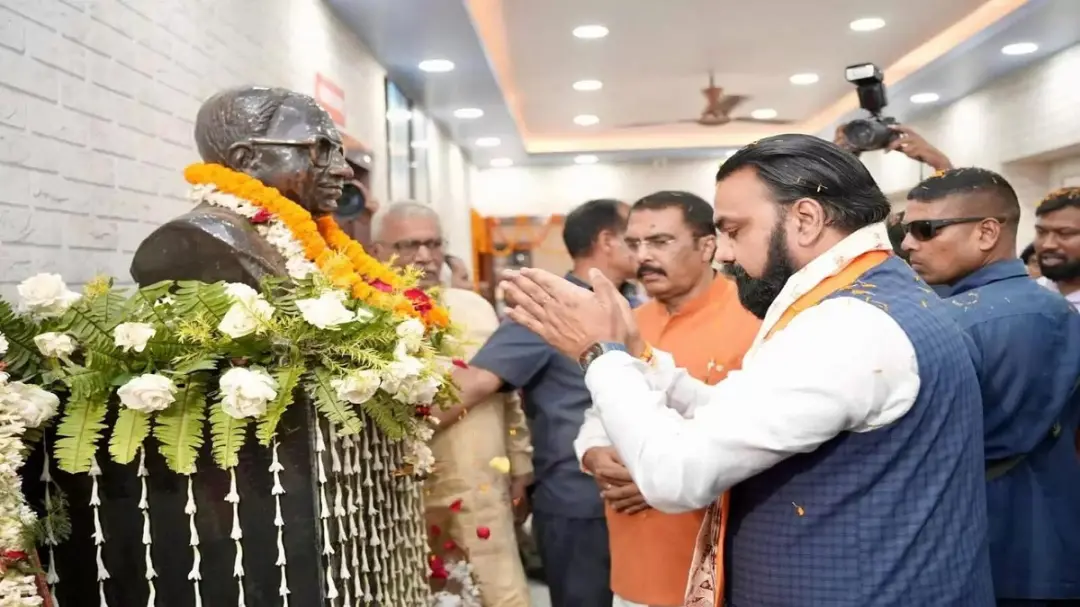
The programme was organised to mark Mahatma Gandhi’s 157th birth anniversary and the second foundation day of Bapu Tower. During the event, Choudhary unveiled a bust of Mahatma Gandhi on the ground floor of Bapu Tower. The bust was created by Padma Shri recipient and ceramic artist Brahmadev Pandit.
An online ticketing system for visitors to Bapu Tower was also launched, and the ‘Satyagraha’ magazine was released.
The Chief Minister referred to Mahatma Gandhi’s ideals of truth, non-violence and service and spoke about adopting them in the present time. He also paid tribute to former Prime Minister Lal Bahadur Shastri on his birth anniversary.
Bapu Tower has been developed to present Mahatma Gandhi’s life, ideas and episodes associated with the freedom movement through modern technology.
The issues highlighted in the Chief Minister’s address included education, sanitation, waste management, solar energy, environmental protection and clean energy. The announcements included a ₹10 fee at 38 engineering colleges, a target of ₹50 crore in revenue from Patna’s waste, a ₹5,500 crore grant for agricultural feeders and the state’s Green Hydrogen Policy.