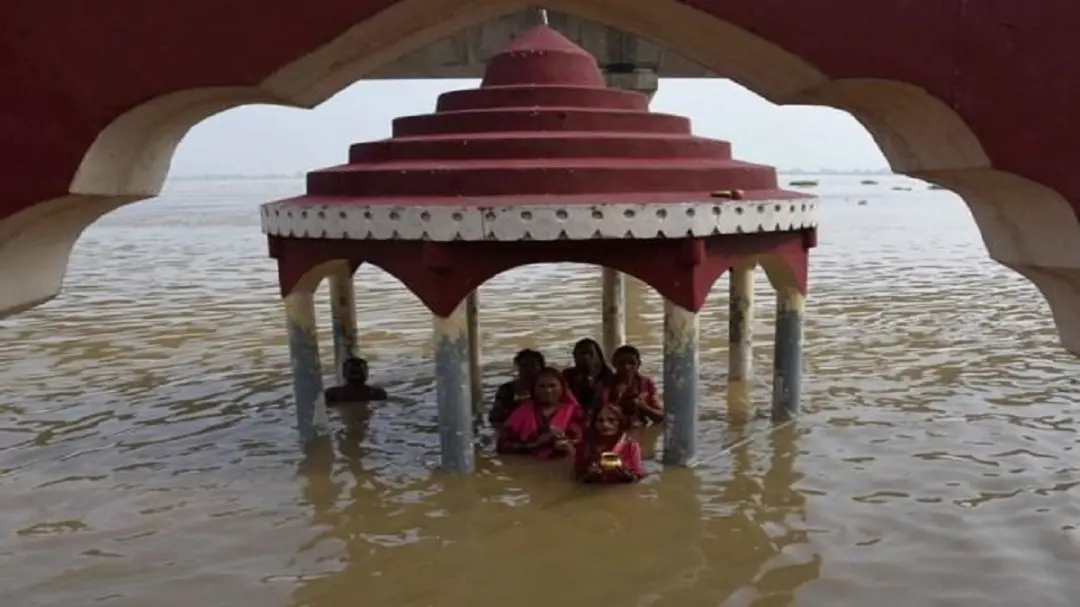
Bihar is facing flood and waterlogging conditions in several districts amid continuous rainfall and rising river levels. In Kishanganj, people had to wade through chest-deep floodwater while carrying a funeral bier, while heavy rain led to the closure of Guptadham in Kaimur and rising Ganga levels caused a nearly 100-year-old temple in Bhagalpur to submerge in the river.
Flooding and waterlogging have severely affected normal life in Kishanganj. Roads and routes in several areas have been submerged, making movement difficult.
Amid the conditions, a family had to cross floodwater while carrying a funeral bier for the last rites. The water was deep enough to reach people's chests. Despite the difficult conditions, local residents worked together to take the bier to a safe location.
Several rural and low-lying areas of Kishanganj continue to experience rapid water spread following rainfall. Routes that are normally used easily by pedestrians and vehicles have become difficult to navigate because of waterlogging.
The situation has created particular difficulties for elderly people, children and sick people. Residents are also facing problems bringing essential supplies and travelling from one place to another.
Rainwater has also accumulated in agricultural fields, with crops in several places facing the possibility of damage. If continuous rainfall persists, conditions in waterlogged areas could become more difficult.
In Kaimur, Guptadham has been closed amid heavy rainfall. The decision has been taken with the safety of devotees in view of the rainfall and increased water flow.

The Guptadham area is associated with hilly and natural terrain, where water flow can increase suddenly during heavy rainfall. Devotees have therefore been stopped from going to the site as a safety measure.
A large number of devotees visit Guptadham because of religious faith. During rainfall, however, roads in hilly areas can deteriorate, slipperiness can increase and water flow can become ber. Devotees have been advised to avoid visiting the site until weather conditions return to normal.
In Bhagalpur, rising water levels in the Ganga have increased concern among people living along the river. Several structures near the river have come under the impact of rising water levels.
During this period, a nearly 100-year-old temple also submerged in the Ganga. The temple had been located along the Ganga for a long time and was associated with local religious faith.
The temple's structure weakened because of the rising river level and erosion before eventually being swept into the Ganga. Local residents described the incident in connection with the increasing impact of the river.
Authorities are monitoring the Ganga's water level and erosion conditions in Bhagalpur. People living in low-lying areas are being advised to keep watch on the situation and move to safer locations if necessary.
Several major rivers in Bihar are experiencing fluctuations in water levels because of rainfall. Rainfall in Nepal and the catchment areas of Bihar can lead to increased water levels in rivers in north Bihar.
Authorities have to maintain particular vigilance in areas located around rivers including the Gandak, Kosi, Bagmati, Kamla Balan and Mahananda.
Following the heavy-rainfall alert, people have been advised to monitor weather information. Those living near rivers and canals need to exercise caution if water levels rise. Entering fast-flowing water can be extremely risky.
The weather department has issued a heavy-rainfall alert for 14 districts of Bihar. The alert comes as rainfall and rising river levels continue to affect different parts of the state.
Heavy rainfall can lead to rising river levels, waterlogging on roads and flooding in low-lying areas. Rainfall conditions and river levels will continue to be monitored in the coming days.
There is also a risk of lightning during rainfall. People in rural areas have been advised to avoid standing in open fields, under trees or near electricity poles. Farmers have also been advised to exercise caution while working in fields during changing weather conditions.
The administration faces the task of ensuring the safety of people in vulnerable areas. During flood conditions, relief teams may need to remain prepared, boats may need to be arranged and essential supplies may need to be made available. Local authorities need to remain alert so that rescue operations can begin quickly in an emergency.
In flood-affected areas, people are being advised to follow local instructions issued by the administration. If water levels are rising rapidly in an area, residents should move to safe locations and follow instructions from rescue teams. Administration and disaster-management teams may conduct rescue operations as required to evacuate people trapped in water.
The Kishanganj incident also shows how religious and social activities can be affected during floods. Even the necessary process of carrying out a funeral required people to move through floodwater.
In Bhagalpur, rising Ganga levels have also increased the risk of erosion. When river currents rapidly erode the soil along the banks, nearby land and structures can be damaged. The submergence of the old temple highlights the impact of rising water levels and erosion.
People living along the river need to exercise particular caution during such conditions and maintain distance from weak or erosion-affected locations.
In Kaimur, stopping the movement of devotees to Guptadham is also part of the precautionary measures. When natural water flow increases, crowds at religious or tourist sites can increase the risk of accidents, particularly on hilly routes where water flow can rise suddenly.
The rainfall and flood situation is taking different forms across Bihar. River levels are rising in some areas, while rainwater has accumulated on village and city roads elsewhere. Erosion has increased the risk at some locations, requiring authorities to monitor the different situations at separate levels.
With the heavy-rainfall alert for 14 districts, people in affected areas need to remain alert over the coming days. Residents of low-lying areas and those living near rivers should monitor information issued by the local administration.
During floods, children should be kept away from water. Entering water accumulated around homes or attempting to cross routes with b currents can be dangerous. Open drains and pits in rural areas may not be visible under floodwater, increasing the risk of accidents.
Authorities need to keep relief and rescue arrangements ready and seek cooperation from residents. In an emergency, people should inform local control rooms or the concerned administrative officials.
The incidents in Kishanganj, Kaimur and Bhagalpur have highlighted the effects of rainfall and flooding in Bihar. In Kishanganj, people had to carry a funeral bier through chest-deep water; in Kaimur, Guptadham was closed for the safety of devotees; and in Bhagalpur, a nearly 100-year-old temple submerged in the Ganga amid rising water levels and erosion.
The rainfall situation and river levels will remain under watch in the coming days. With heavy rainfall alerts issued for 14 districts, monitoring in vulnerable areas is required. Residents have also been advised to avoid entering floodwater without necessity, stay away from riverbanks and follow warnings issued by the weather department and administration.