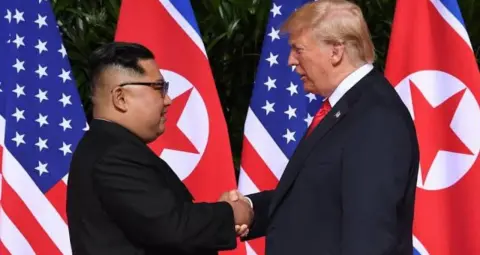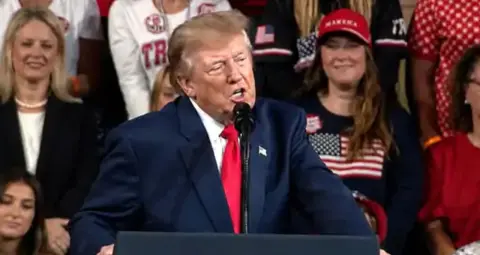
Former US President Donald Trump said he could remain in office for another “eight to nine years,” reviving debate in the United States over the possibility of a third presidential term despite constitutional restrictions that make such a move highly difficult.
Speaking at a public event, Trump said there was still “a lot of work left” to complete. Audience members initially laughed at the remark, after which Trump clarified that he was not joking.
The statement has renewed discussion in the United States about presidential term limits and the possibility of constitutional amendments related to the presidency.
Under the US Constitution, no individual can be elected president more than twice. In January 2025, Republican Congressman Andy Ogles introduced a proposal in the United States House of Representatives seeking a constitutional amendment that would allow Trump to run for a third term.
The proposal stated that a person who had not served two consecutive presidential terms could again seek election. However, the proposal did not advance further.


Amending the US Constitution is widely regarded as a difficult process. It requires approval by a two-thirds majority in both chambers of Congress — the Senate and the House of Representatives — followed by ratification by at least 38 of the 50 US states.
Under the current political balance, Republicans do not hold the required level of congressional support, and sufficient backing from states is also not evident.
Political and constitutional experts therefore consider any such amendment highly unlikely at present.
The limit of two presidential terms was formally established in 1951 through the Twenty-second Amendment to the United States Constitution.
Before that amendment, there was no formal constitutional restriction on the number of presidential terms. George Washington voluntarily stepped down after serving two terms, creating an informal precedent followed by later presidents.
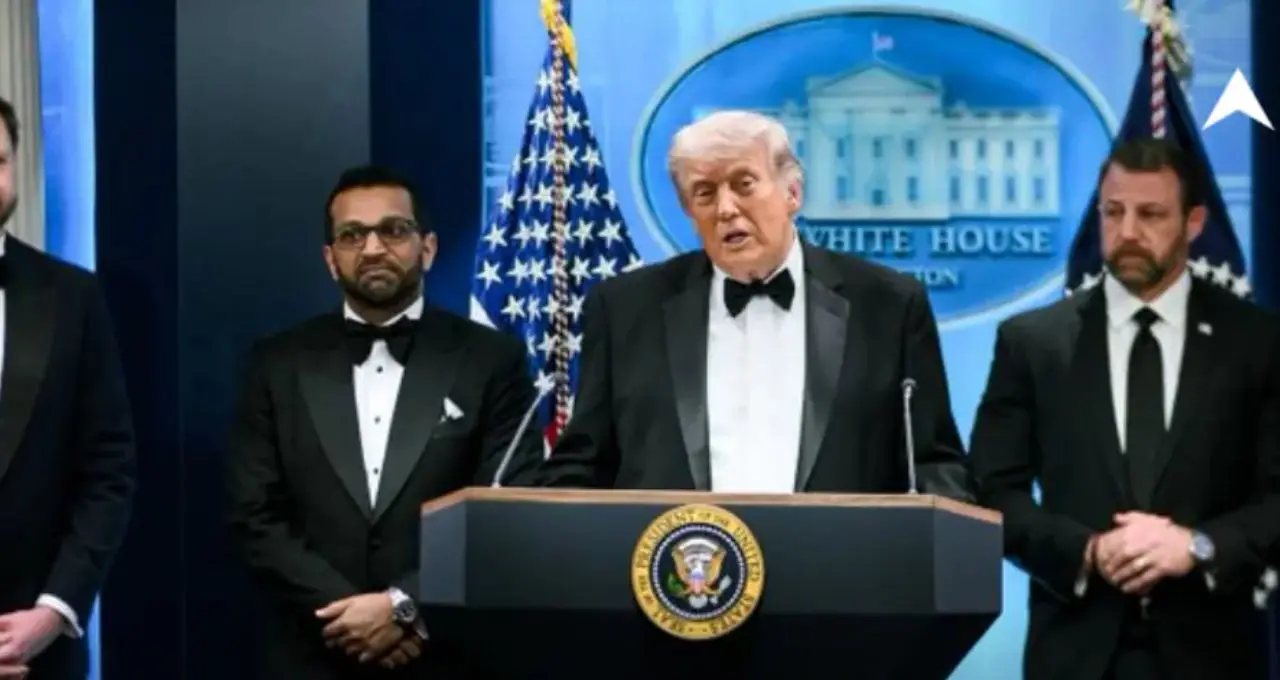
That precedent was broken by Franklin D. Roosevelt, who served four terms as president. Concerns over prolonged concentration of power subsequently contributed to the adoption of the two-term constitutional limit.
According to experts, a third presidential term for Trump would face significant legal and political barriers. Such a move would require support from 67 percent of Congress and approval from 38 states.
Analysts have also discussed alternative political strategies that could allow Trump to remain influential in national politics without returning to the presidency.
Among the possibilities being discussed are a vice-presidential run in 2028, backing an allied presidential candidate while maintaining influence behind the scenes, or promoting a family member as a political successor. However, these scenarios remain speculative political analysis.
Some analysts have compared the discussion surrounding Trump’s future political role with developments in Russia, where Vladimir Putin served as president from 2000 to 2008 before becoming prime minister while his ally Dmitry Medvedev assumed the presidency. Putin later returned to the presidency.
Analysts note, however, that the constitutional and political systems of the United States and Russia differ substantially, including the separation of powers within the US system.
Trump’s remarks have intensified political debate in the United States. Supporters have argued that Trump’s leadership remains important for the country, while critics have described the comments as an attempt to pressure democratic institutions.
The issue has also generated debate across social media platforms and political forums.
Constitutional term limits are widely regarded in the United States as an institutional safeguard intended to preserve democratic stability and prevent concentration or misuse of power.
Some political analysts also view Trump’s remarks as a strategic political message aimed at energizing supporters and sustaining public and political attention around his leadership and future role.