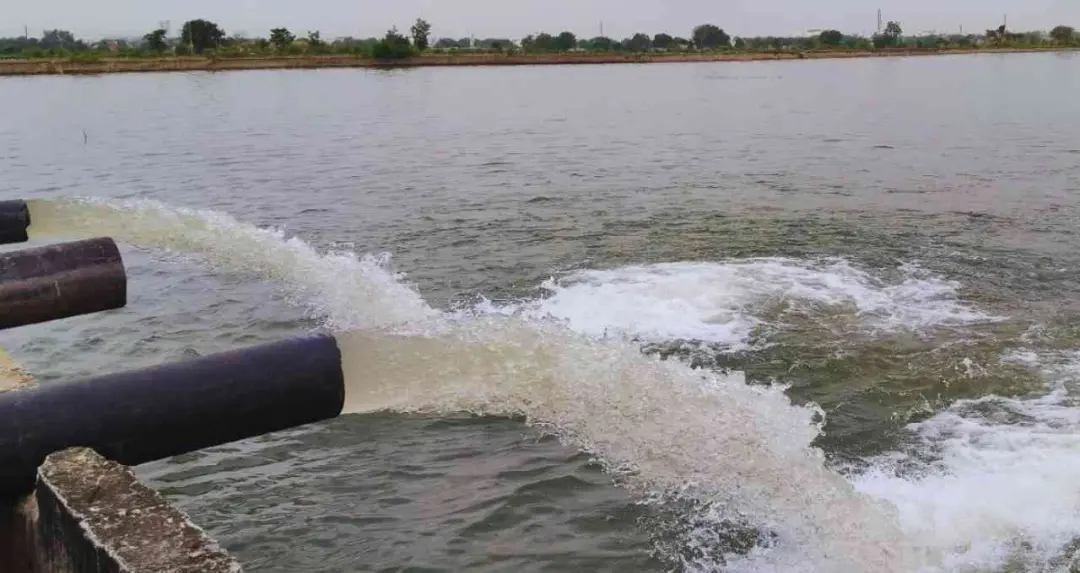
Faridabad has launched a large-scale water conservation initiative under a Haryana government plan aimed at improving groundwater levels and reducing future water shortages. The programme includes the construction of new water reservoirs in villages and the installation of rainwater harvesting systems in urban areas during the monsoon.
The Haryana government has prepared a comprehensive water conservation plan for Faridabad. Under the initiative, five new water reservoirs will be constructed in every village, while rainwater harvesting systems will be installed at community centres and parks across the city. The objective is to improve groundwater levels, enhance the use of rainwater and address future water shortages.

In view of the continuously declining groundwater levels in Faridabad, the government has initiated the programme to maximise groundwater recharge through rainwater. According to officials, work under the campaign will begin during the monsoon.
In rural areas, five new water reservoirs will be developed in each village. These reservoirs will collect rainwater, which will gradually seep into the ground and help improve groundwater levels. They will also be used for irrigation and other local requirements. The maintenance of these reservoirs will be entrusted to the respective village panchayats.
In urban areas, 50 community centres have been identified in the first phase for the installation of rainwater harvesting systems. Preparations are also underway to install similar systems in around 300 parks across the city. The Municipal Corporation will appoint a nodal officer for each project to ensure the systems remain functional through regular maintenance.
Groundwater levels in several parts of Faridabad have fallen below 500 feet. The Municipal Corporation operates around 1,690 tubewells for water supply across the district, but approximately 200 tubewells have become non-functional due to declining groundwater levels. In such cases, new tubewells have to be installed at different locations, increasing costs and placing additional pressure on resources.
The city's growing population has led to a continuous rise in water demand. The district currently requires around 330 MLD of water per day, while the available supply is about 280 MLD. At the same time, the Municipal Corporation is treating more than 100 MLD of water through two sewage treatment plants as part of efforts to improve the utilisation of water resources.
The government said the rainwater conservation initiative is intended not only to improve groundwater levels but also to help reduce waterlogging during the monsoon. Urban Local Bodies Minister Vipul Goel also appealed to the public to make water conservation a people’s movement and incorporate water saving into daily life.