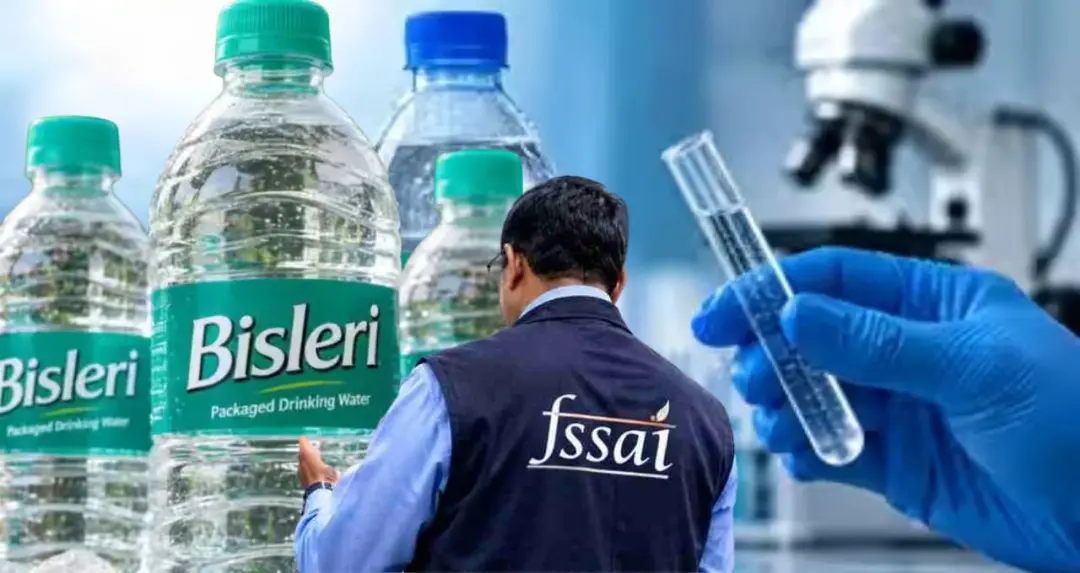
Water samples collected from Bisleri’s plant in Jalpaiguri district of West Bengal have failed to meet quality standards after coliform bacteria were detected in the samples. The Food Safety and Standards Authority of India (FSSAI) has approved prosecution against Bisleri International over the alleged violation of food safety regulations.
Bisleri operates a plant in Telepara village in Jalpaiguri district. Water samples collected from the facility were found to contain coliform bacteria. Following the initial laboratory examination, the sample was sent to a referral laboratory, which also confirmed the presence of the bacteria.
Based on the test results, FSSAI had prohibited the sale of batch number PB 201 on August 12.
The authority has now approved prosecution against the company over violations of food safety regulations. This is the second such action against Bisleri this week.




The presence of coliform bacteria in water may indicate deficiencies in water quality or sanitation systems. Possible causes include sewage leakage, damaged pipelines and problems in the water supply system.
However, the detection of coliform bacteria alone does not establish that the water was contaminated with sewage. The actual cause of contamination at the West Bengal plant remains unclear.
Before the West Bengal case, irregularities were detected in a water sample collected from Bisleri’s plant in Goa. An initial laboratory examination found bromate levels exceeding the prescribed limit, following which the sample was declared unsafe for drinking.
The company appealed against the report, prompting a re-examination of the sample. The referral laboratory subsequently detected polycyclic aromatic hydrocarbons (PAHs). The sample was also declared unsafe in the second examination.
Following the findings, proceedings to prosecute the company under the Food Safety and Standards Act, 2006, were initiated.
On Monday, Bisleri had stated that its products were safe for consumption. The company also said it would work with the food regulator to address the issues identified during the investigation.

FSSAI has intensified monitoring of packaged drinking water and mineral water across the country. According to the authority’s CEO, Rajit Punhani, water samples are being collected from various parts of the country, with laboratory testing expected to be completed within the next one to two months.
Food safety commissioners in the states and regional directors have been instructed to inspect plants and send as many samples as possible for laboratory testing.
Authorities have also been directed to take action against companies found violating prescribed standards. Materials used in the packaging of food products are also expected to be brought under the inspection process.
In a separate food safety-related matter, the Supreme Court has granted FSSAI four months to formulate rules for nutritional warning labels on packaged food products. Companies have been given one year to implement the proposed rules.
The proposed framework includes red hexagonal warning labels on food packets containing high levels of sugar, salt and saturated fat. The system is intended to help consumers understand the nutritional content of products while making purchasing decisions.