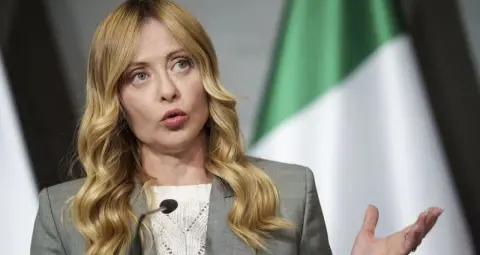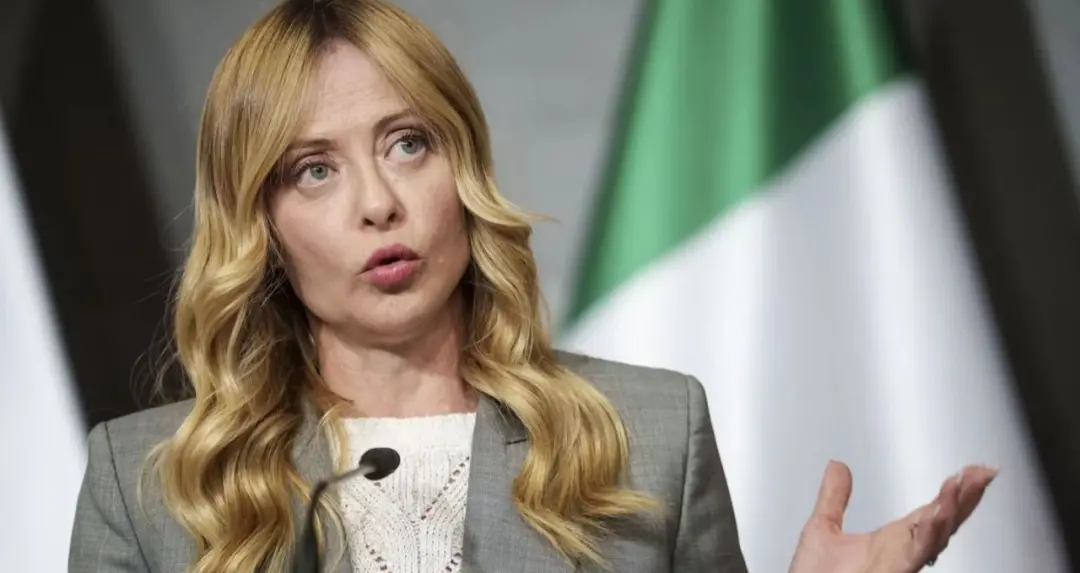
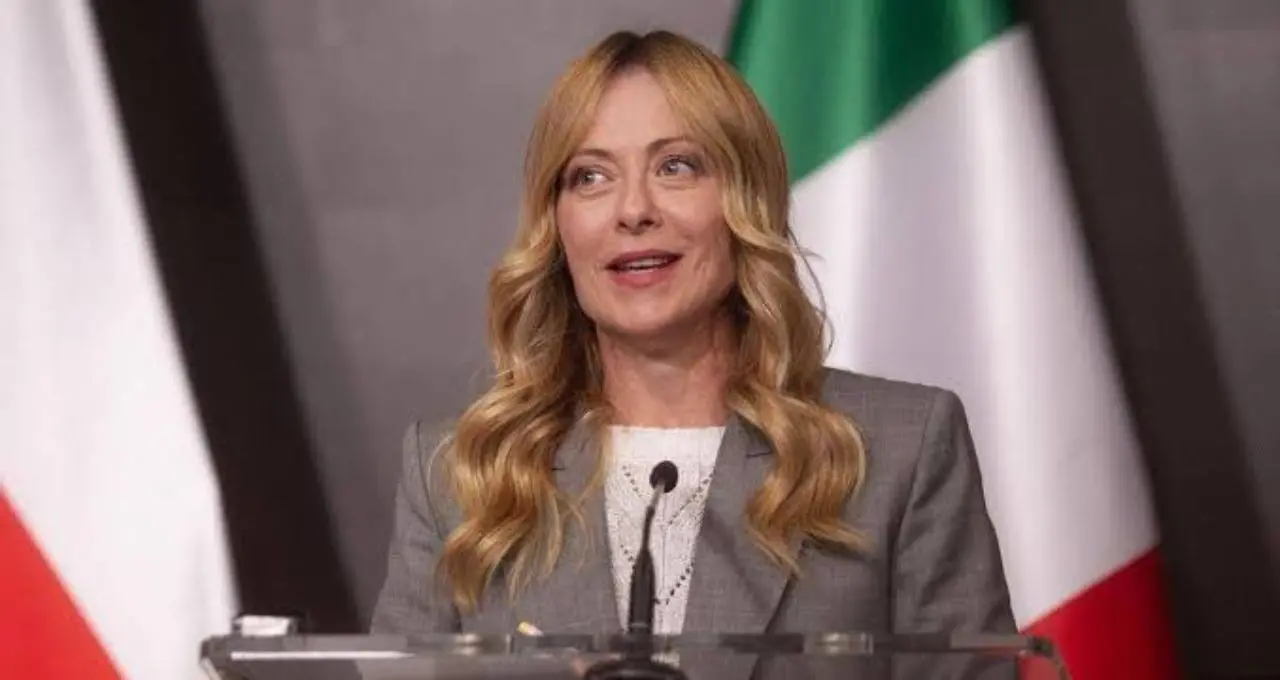
Italy’s Prime Minister Giorgia Meloni has filed a trademark application with the European Union Intellectual Property Office (EUIPO) covering her voice, in a move aimed at protecting against its potential misuse and AI-generated deepfake content. The application includes an audio recording of about four seconds in which she introduces herself in Italian.
According to the report, the application seeks legal protection against fake content created by using AI technology to imitate Meloni’s voice. The move comes as artificial intelligence has made it easier to replicate a person’s voice, face and speaking style.
Meloni’s trademark application contains an audio sample of about four seconds. In the recording, she introduces herself twice in Italian.
The introduction is more than a generic statement. “Io sono Giorgia,” meaning “I am Giorgia,” is also associated with Meloni’s political identity. The phrase is the title of her autobiography, published in 2021, and has long been used in her political campaigning.
The attempt to protect her voice through a trademark reflects the growing importance of digital identity for public figures beyond names and photographs.
AI-based voice-cloning technology can analyze available audio recordings of a person to identify characteristics of their voice, including speaking speed, pronunciation, intonation and the spacing between words.



AI models can then generate speech in a similar voice containing statements that the person never actually made. This has raised concerns over the misuse of the voices of politicians, artists, businesspeople and other public figures.
In many cases, only a relatively short recording is required to imitate a person’s voice. However, higher-quality and larger amounts of audio generally help produce a more natural and realistic result.
One of the main risks associated with AI voice imitation is misinformation and fraud. A fabricated statement can be produced in a politician’s voice even though the politician never made it. Similarly, an imitation of a businessperson’s or family member’s voice can be used to request money, issue instructions or seek sensitive information.
The risk can be particularly significant in the political sphere. During elections or major political developments, audio created using a fake version of a politician’s voice can spread rapidly and cause confusion.
Meloni’s trademark application comes amid this broader debate over digital security.
Meloni’s initiative is not an isolated case. As AI use expands, artists in several countries are seeking legal protection over the commercial use of their voices, images and identities.
US actor Matthew McConaughey has also filed an application for trademark protection related to his image and voice. The issue is significant for artists because AI companies and other digital platforms can use voice imitation to create content without necessarily obtaining permission from the original artist.
In the UK, several artists have also called for clear legal rights governing the use of their voices and identities. More than 80 artists had appealed to then-Prime Minister Andy Burnham to introduce legislation in this area.
US pop star Taylor Swift has also taken steps toward trademark protection related to her identity and voice. According to reports, she filed three trademark applications in the US. One application was related to her image, while two concerned her voice.
In the voice-related samples, Swift can be heard introducing herself. The legal protection of such audio samples linked to her identity reflects concerns within the entertainment industry over the potential misuse of AI-based voice cloning.
The issue of AI deepfakes is not new for Giorgia Meloni. Previously, her images were used to create fake pornographic content.
In 2024, Meloni took legal action over such content and reportedly sought €100,000 in damages. The case illustrated how AI and digital editing technologies can be used to misuse the image of public figures.
Meloni did not view the issue solely as a matter of personal harm. She had said deepfake technology could be used to deceive a person, damage their reputation or target them.
In May this year, Meloni also expressed concern over deepfake technology. At the time, reports emerged that fake AI-generated images using her face were circulating online.
Meloni said she could deal with such cases using her own resources, but ordinary people do not always have access to legal or technical resources. Her concern was that AI deepfake technology is not limited to prominent figures and that ordinary citizens can also become victims of fake images, videos or audio.
Meloni’s attempt to trademark her voice highlights the changing landscape of intellectual property rights in the age of AI. Previously, identity-related rights primarily involved names, photographs, logos or artistic works. Voice is now also becoming an important component of digital identity.
Legal experts and technology companies face questions over how the imitation of a person’s voice, AI training and the commercial use of content generated from such technology should be regulated.
Meloni’s application is an example of this changing legal and technological landscape. If personal identity elements such as voice receive trademark protection, other public figures could also pursue similar measures in the future.