The life and contributions of Guru Gobind Singh are remembered on his birth anniversary. Born as Gobind Rai in Patna, he established the Khalsa Panth as the tenth Guru of the Sikhs. He gave a new direction to Sikh history by conveying messages of courage, equality, and the protection of faith.
Guru Gobind Singh Jayanti 2025: The birth anniversary of Guru Gobind Singh Ji, the tenth Guru of the Sikhs, is being celebrated with devotion on the seventh day of the Paush month. Gobind Rai, born in Patna, the capital of Bihar, in 1666, established the Khalsa Panth at Anandpur Sahib on Baisakhi in 1699. During a time of religious persecution and intolerance, he organized the Sikh community and gave them the courage to stand up against injustice. The five Ks of the Khalsa and the message of "Wahe Guru Ji Ka Khalsa" still represent his ideals.
Birth in Patna, From Gobind Rai to Guru Gobind Singh
Guru Gobind Singh Ji was born in Patna, the capital of Bihar, in 1666. He was then named Gobind Rai. He was the only son of the ninth Sikh Guru, Guru Tegh Bahadur Ji, and Mata Gujri. It is believed that he spent some of his childhood in Patna, where Takht Sri Harmandir Sahib is now established as his birthplace.

Gobind Rai was endowed with extraordinary talent from childhood. He had knowledge of both scriptures and weaponry. He was well-versed in Sanskrit, Persian, and Braj Bhasha, and had a deep interest in poetry and music. Later, he composed many religious and heroic texts, which are still considered treasures of Sikh literature.
After the sacrifice of Guru Tegh Bahadur Ji, Gobind Rai assumed the Guru Gaddi at a young age and became the tenth Guru of the Sikhs. At that time, the country was experiencing religious intolerance and oppression. In such times, Guru Gobind Singh not only organized the Sikh community but also gave them the courage to stand up against injustice.
Baisakhi 1699 and the Establishment of the Khalsa Panth
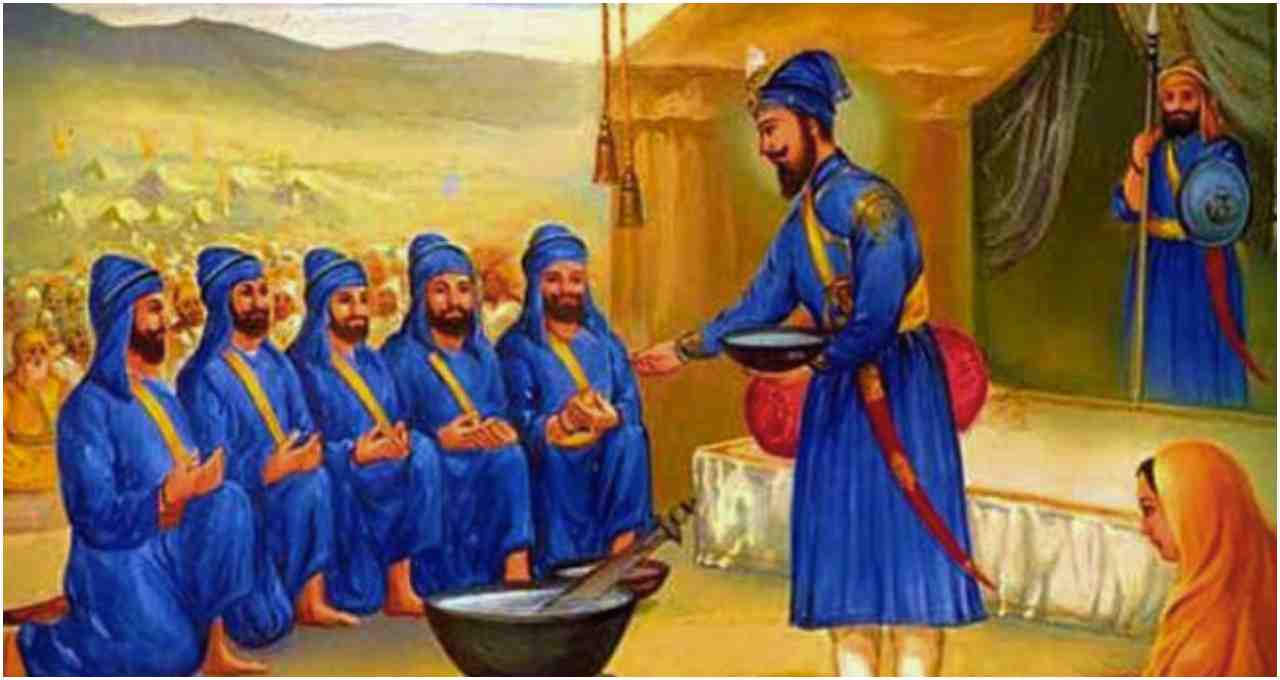
One of the most historical events in the life of Guru Gobind Singh Ji was Baisakhi in 1699. It was on this day that he established the Khalsa Panth, which changed the course of Sikh history. In a large gathering held at Anandpur Sahib, Guru Gobind Singh suddenly drew his sword and asked the crowd who was willing to offer their heads to defend their faith.
This announcement created silence in the assembly. After a few moments, Dayaram from Lahore came forward. Following him were Dharam Rai from Hastinapur, Bhai Himmat Rai from Jagannath in Odisha, Bhai Mohkam Rai from Dwarka in Gujarat, and Bhai Sahib Chand from Bidar in Karnataka. Guru Gobind Singh took these five into a tent.
After some time, when Guru Gobind Singh emerged with the five, they were all wearing saffron robes and turbans. Then people realized that this was not a test of sacrifice, but of courage and faith. The Guru honored these five as the Panj Pyare (the beloved five).
The Amrit Ceremony and the Title of 'Singh'
Following this, Guru Gobind Singh initiated the Amrit ceremony. He filled an iron cauldron with water, added sugar, and stirred it with his kirpan (sword) while reciting mantras. This Amrit was given to the five Panj Pyare to drink. At the same time, their old names were changed and all were given the title of 'Singh,' which became a symbol of courage and equality.
This message was clear that in the Khalsa Panth, humanity and character hold a place above birth, caste, or region. Later, Guru Gobind Singh himself partook of the Amrit and adopted the title of 'Singh.' With this, Gobind Rai was established as Guru Gobind Singh.
Even today, the Panj Pyare are given a special place in front of the palanquin of Guru Granth Sahib during Nagar Kirtan, which is a vibrant symbol of the Khalsa tradition.
The Five Ks of the Khalsa and the Message of Life
Guru Gobind Singh gave five fundamental principles to connect the Khalsa Panth with discipline and self-control, known as the five Ks. These include Kesh (uncut hair), Kangha (wooden comb), Kara (iron bracelet), Kachera (undergarments), and Kirpan (sword). These are not merely external symbols, but convey messages of character building and responsibility.
Guru Gobind Singh's famous slogan, "Wahe Guru Ji Ka Khalsa, Wahe Guru Ji Ki Fateh," still reflects the confidence and faith of the Sikhs in God. He believed that only a person of character can face oppression and adversity.
The life of Guru Gobind Singh teaches us that religion is not just a matter of worship, but also the courage to stand up for justice, equality, and humanity. Paying tribute to him on his birth anniversary is to adopt his ideals.