A retired teacher in Haryana's Kaithal has allegedly been cheated of Rs 1.23 crore by cybercriminals who threatened her with arrest and subjected her to a fake digital arrest. The fraudsters allegedly conducted a mock court hearing over a WhatsApp video call and persuaded her to transfer her savings to bank accounts in the name of an investigation. The fraud came to light when her son visited her home.
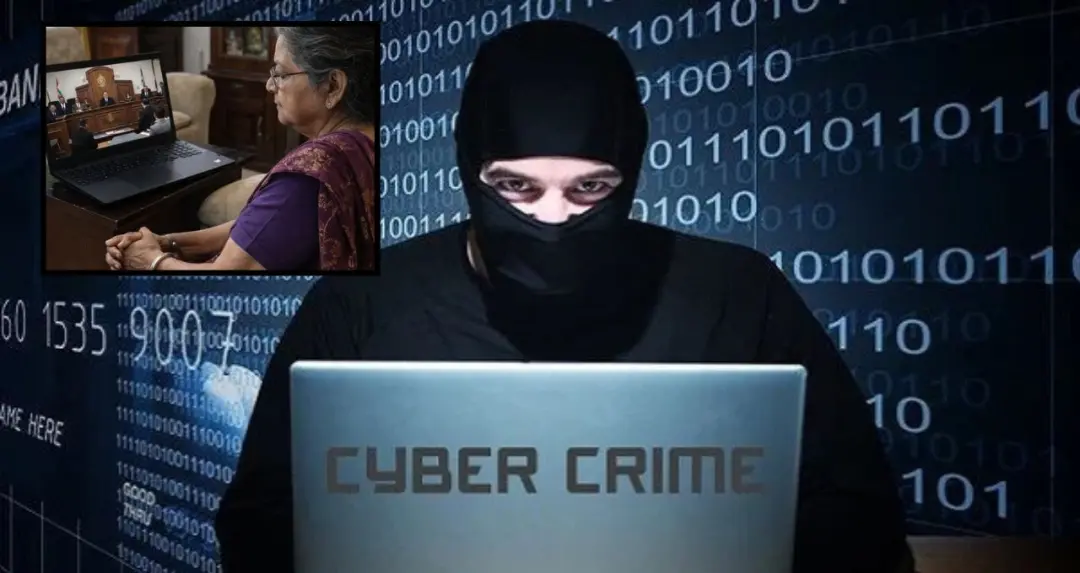
The incident took place in the Pratap Gate area of Kaithal, where retired teacher Ved Kumari was allegedly targeted by cybercriminals. The accused initially claimed that suspicious transactions had taken place in a bank account opened in her name. They subsequently impersonated police officers and threatened her with arrest.
The fraudsters allegedly conducted a fake court proceeding over a WhatsApp video call and persuaded the woman to transfer her savings under the pretext of a financial investigation. A complaint has been filed alleging fraud involving Rs 1.23 crore.
According to the complaint, the incident began on November 3, when Ved Kumari received a call from an unknown number. The caller claimed that a bank account had been opened in her name with Canara Bank and that money linked to fraudulent activities had been deposited into it.
The caller also referred to suspicious transactions involving the alleged account.
When the woman clarified that she did not have any such bank account, the caller allegedly threatened her with arrest and warned that legal action could be initiated against her.
After convincing her through these claims, the fraudsters contacted her again the following day, this time through WhatsApp.
On November 4, the woman received a WhatsApp call from a person who identified himself as Vijay Khanna and claimed to be a police officer. He allegedly told her that an arrest warrant had been issued against her.




To make the claim appear genuine, the accused sent her a purported arrest warrant. They subsequently told her that she had been placed under digital arrest and would have to remain in front of the camera until the investigation was completed.
The fraudsters also instructed her not to disclose any information about the case to anyone else. By keeping her under continuous surveillance through video calls, they allegedly intimidated her into following their instructions.
On November 5, the accused allegedly adopted another method to convince the woman that legal proceedings were underway against her.
During a WhatsApp video call, they created an arrangement resembling a courtroom and told her that a hearing concerning her case was taking place.
A person identified as Rahul Garg was allegedly presented as her lawyer, while another individual appeared in the role of a judge.
During the purported hearing, the woman was told that the money deposited in her bank accounts had to be transferred to a government account for investigation purposes. The accused allegedly attempted to convince her that the transfer was part of a legitimate legal procedure.
Fearing arrest, Ved Kumari followed their instructions. She broke a fixed deposit (FD) held with HDFC Bank and transferred Rs 33 lakh through the Real Time Gross Settlement (RTGS) system to a bank account provided by the accused.
Even after receiving the first payment, the accused allegedly continued targeting the woman.
On November 6, they conducted another purported court hearing through a video call and instructed her to transfer the remaining savings in the name of the investigation.
According to the complaint, the woman had approximately 28 Kisan Vikas Patras (KVPs) with the post office. She deposited approximately Rs 90 lakh received from these instruments into her State Bank of India (SBI) account.
On November 7, she transferred Rs 50 lakh through RTGS to an account specified by the fraudsters.

The accused subsequently asked her to transfer the remaining Rs 40 lakh to a Bandhan Bank account.
The complaint alleges that the total amount involved in the fraud was Rs 1.23 crore. However, the available details do not separately clarify whether the final transfer of Rs 40 lakh was completed. The complete transaction record is expected to emerge during the police investigation.
The accused allegedly kept the woman occupied through video calls for several days and prevented her from communicating with others. As a result, she could neither recognise the fraud nor seek advice from her family during this period.
On November 8, her son visited her home. She informed him about the phone calls, the purported arrest warrant and the court hearings conducted over video calls.
When her son spoke to the person who had been communicating with her over the phone, he became suspicious. Further examination revealed that the individuals posing as police officers, lawyers and court officials were allegedly cybercriminals.
The woman subsequently lodged a complaint with the police.
Kaithal Cyber Crime Police Station in-charge Inspector Sahil Kumar said that a case had been registered based on the woman's complaint and an investigation had been initiated.
As part of the investigation, police will collect details of the bank accounts and transactions through which the money was allegedly transferred. Investigators will also attempt to establish the identities of the accused and trace the subsequent movement of the funds.
The accused allegedly used the identities of police officers, court officials and government investigators to intimidate the woman. However, there is no legal provision in India for placing an individual under digital arrest through WhatsApp or video calls.
Cybercriminals often intimidate people by referring to allegations involving money laundering, fraudulent bank accounts, illegal items in parcels or arrest warrants. They subsequently demand money under the pretext of an investigation.
People receiving such calls should not panic or transfer money in response to threats. They should avoid sharing banking details, one-time passwords (OTPs) or personal documents during video calls.
If someone claims to be a police officer and demands money, their identity should be independently verified through the relevant department.