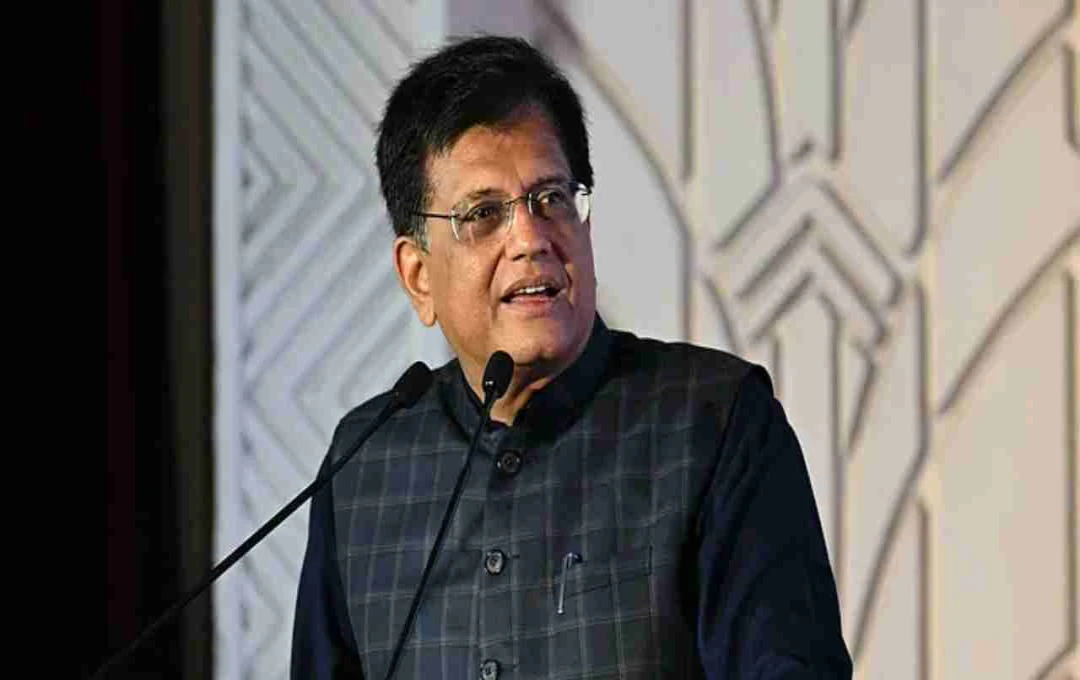
Commerce Minister Piyush Goyal stated that India always protects the interests of its sensitive sectors such as dairy and MSMEs in FTA negotiations. Significant progress has been made in the fourth round of talks between India and New Zealand.
New Delhi: Commerce and Industry Minister Piyush Goyal clarified on Wednesday that India consistently safeguards the interests of sensitive sectors like dairy and Micro, Small, and Medium Enterprises (MSMEs) in its Free Trade Agreements (FTAs). Goyal made these remarks during the ongoing discussions on the proposed FTA between India and New Zealand. He stated that senior officials from both countries are currently engaged in the fourth round of talks, which has seen significant progress.
Goyal said, ‘‘India never compromises on the interests of dairy, farmers, and MSMEs. We always protect the interests of these sensitive sectors.’’ He further explained that India's primary focus in trade agreements is always on safeguarding domestic production, farmers, and small industries.
Special Focus on Dairy and MSMEs
New Zealand is one of the world's leading dairy-producing countries. In this context, India's stance on New Zealand's demand for increased access to the dairy market in the FTA is crucial. Goyal stated that India is cautious in this regard and does not grant tariff concessions to partner countries in the dairy or agricultural sectors in any trade agreement without proper review.
He further added, ‘‘We do not overlook such sensitive issues. India and partner countries should work towards an agreement while protecting their respective interests.’’ He emphasized that respecting each other's sensitivities in trade negotiations is extremely important.
Significant Progress in Talks
According to Goyal, discussions on the FTA between India and New Zealand have reached the fourth stage, with agreement reached on several important points. He said, ‘‘In the subsequent phases of negotiations, we may not need many more rounds, as significant progress has already been made.’’
He indicated that opportunities exist to enhance cooperation between the two countries in areas such as agricultural technology and dairy machinery. Focus can be placed on shared technology and innovation in this direction.
Respecting Each Other's Sensitivities
Goyal stated that both countries have agreed to respect each other's sensitivities in the trade agreement. India has not, to date, granted special concessions to a partner country in the dairy or agricultural sector in any trade agreement. The reason behind this is that these sectors are highly sensitive and crucial for India.
He said, ‘‘We respect each other's sensitivities and always prioritize this in trade agreements.’’ Through this policy, India ensures that domestic producers, farmers, and MSMEs remain secure and their interests are protected.
Other Areas of Cooperation Between India and New Zealand
Goyal informed that trade cooperation between India and New Zealand is not limited to the FTA. Both countries have significant potential for cooperation in areas such as defense, agriculture, space, education, and tourism. He added that during this visit, the Indian delegation is also deliberating on enhancing cooperation in these sectors.
Expectation of FTA Completion
Goyal assured that the proposed FTA between India and New Zealand could be finalized soon. He stated, ‘‘Clarity has emerged on several important issues in the fourth round of talks. Substantive discussions are underway, and it is hoped that finalizing the trade agreement will not take much time.’’
He also mentioned that India can explore opportunities to enhance cooperation in agricultural technology, which will benefit farmers and dairy producers. Additionally, opportunities will be available for MSMEs to access international markets.
Visit of Business Delegation
Goyal is leading the Indian business delegation during this visit. The delegation's objective is to promote trade, investment, and technological cooperation between the two countries. Goyal stated that during this visit, several bilateral meetings and industrial dialogues are being organized to maximize business opportunities.