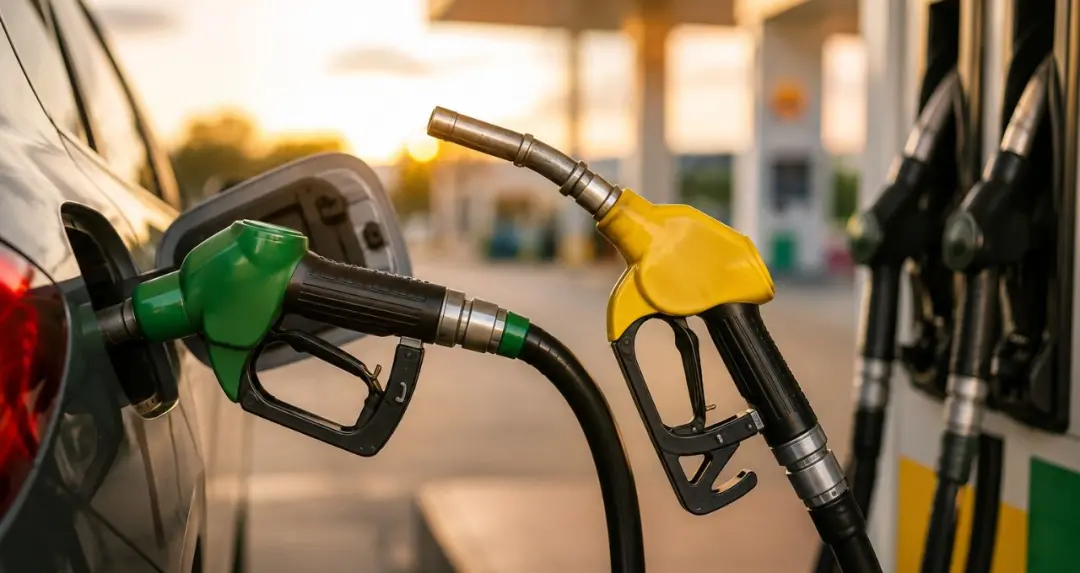
Middle East tensions and rising crude oil prices are increasingly affecting South Asian economies, with India recording another increase in petrol and diesel prices while Pakistan has announced a reduction in fuel rates.
Iran has indicated willingness to remove its highly enriched uranium as part of efforts to end the conflict, increasing the possibility of an agreement between the United States and Iran. Former US President Donald Trump said the chances of both a deal and renewed military action were “50-50.”
Petrol prices in India have increased by ₹0.87 per litre, while diesel prices have risen by ₹0.91 per litre. In New Delhi, petrol prices have reached ₹99.51 per litre and diesel prices are at ₹92.49 per litre.
Pakistan, meanwhile, has reduced petrol prices by 6 Pakistani rupees per litre and high-speed diesel prices by 6.80 Pakistani rupees per litre.
Analysts said volatility in the global oil market, concerns surrounding the Strait of Hormuz and pressure on supply chains could lead to further fluctuations in fuel prices in the coming period.
India has now recorded a second consecutive increase in fuel prices, adding pressure on consumers and the transportation sector. Oil companies announced revised rates under which petrol in Delhi is priced at ₹99.51 per litre and diesel at ₹92.49 per litre.
Fuel prices have also increased in major metropolitan cities including Mumbai, Kolkata and Chennai. Transport companies said higher diesel prices would increase freight costs, potentially affecting prices of food items, agricultural products and daily-use goods.




Analysts noted that India meets a significant portion of its energy requirements through imported crude oil, making domestic fuel prices highly sensitive to international oil market movements.
Recent tensions involving Iran, the United States and Israel have affected global oil markets. The Strait of Hormuz remains one of the world’s most critical oil transit routes, and any disruption in the region could impact supply flows.
Market analysts said crude oil prices could rise further if military tensions escalate or oil supplies are disrupted, directly affecting import-dependent economies such as India.
The Indian government is continuing to monitor market conditions, although concerns are increasing that sustained fuel price increases could add pressure on inflation.
Pakistan’s government said the reduction in fuel prices was possible due to some stability in international markets and improvements in the currency exchange rate. However, the country continues to face economic challenges and remains dependent on energy imports.
Economic analysts said the reduction in fuel prices in Pakistan is also aimed at controlling domestic inflation and providing relief to consumers.
Higher fuel prices in India are expected to affect transportation costs, with potential implications for prices of food products, construction materials and other essential goods.
The increase in diesel prices is also expected to impact the agricultural sector, where diesel is widely used for tractors, irrigation pumps and transportation.
Economists said prolonged elevation in global crude oil prices could place additional pressure on India’s retail inflation rate.
Amid rising fuel costs, the Indian government has announced plans to develop 100 new industrial parks across the country to accelerate industrial growth.
The government said the initiative aims to strengthen the manufacturing sector, attract investment and create employment opportunities. The proposed industrial parks will be integrated with logistics networks, exports infrastructure and modern industrial facilities.
Industry analysts said effective implementation of the plan could enhance India’s manufacturing capacity and strengthen its role in global supply chains.
However, industry representatives said rising energy costs could also affect production expenses, requiring a balance between industrial expansion and inflation management.
Global investors and energy companies are closely monitoring developments in the Middle East, particularly around the Strait of Hormuz, through which a significant share of global oil supplies passes.
Analysts said stability could return to oil markets if tensions between the United States and Iran ease. However, further deterioration in geopolitical conditions could lead to additional increases in crude oil prices.
The impact could extend to major economies across Asia, Europe and the United States.
Higher fuel prices in India have increased operating costs for private vehicle owners, taxi operators, truck companies and bus services.
Several Indian states already have elevated fuel prices due to high taxation, and consumers are expecting possible government measures including tax relief or other interventions.
Pakistan’s fuel price reduction has provided temporary relief to consumers, although economic instability and inflation remain major challenges for the country.
Energy analysts said the coming weeks will be critical for global oil markets. If tensions in the Middle East ease and oil supplies remain stable, prices could stabilize.
However, further escalation in geopolitical tensions could increase fuel and inflationary pressures in India and several other economies. Global markets remain focused on oil supply conditions, US-Iran relations and developments in international supply chains.