The fourth T20 match between India and South Africa, scheduled to be played on Wednesday, was cancelled without a ball being bowled due to dense fog at the Ekana Stadium, which completely eliminated visibility.
Sports News: The fourth match of the ongoing T20 International series between India and South Africa was called off on Wednesday in Lucknow without a single ball being bowled. Dense fog at the Ekana Cricket Stadium resulted in complete loss of visibility, making it impossible to conduct the match. This unexpected development has raised serious questions about the scheduling and organizational policies of the Board of Control for Cricket in India (BCCI).


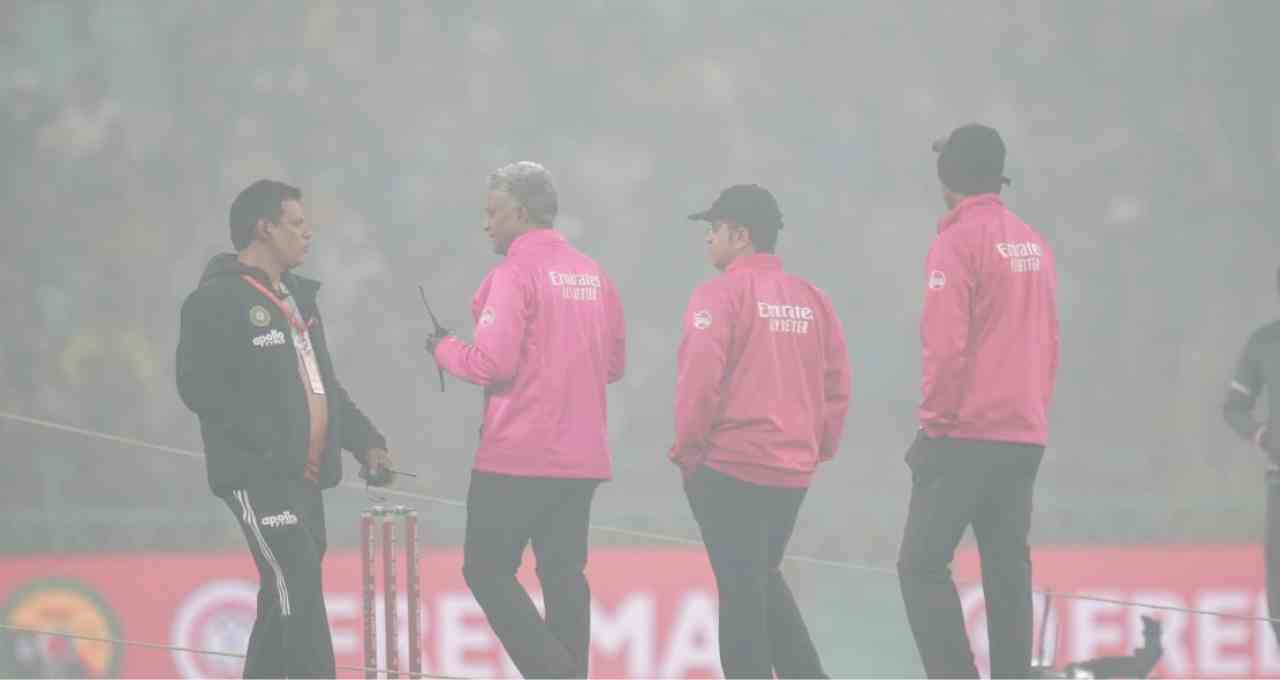
The match was scheduled to begin at 7 pm, but umpires had to inspect the pitch seven times due to consistently deteriorating visibility. After a wait of nearly three hours, the match was officially cancelled at 9:30 pm due to “excessive fog.” This is considered a rare instance in the history of international T20 cricket where a match was called off without a toss due to fog.
Why a Night Match in North India in December?
Three matches of this series were scheduled in North Indian cities like Lucknow, New Chandigarh, and Dharamsala. While matches in New Chandigarh and Dharamsala were somehow completed, November-December is considered the most challenging time in North India in terms of weather and pollution. Dense fog, falling temperatures, and poor air quality are common during this period.
On Wednesday, Lucknow’s Air Quality Index (AQI) exceeded 300, falling into the ‘hazardous’ category. The stadium was covered in a thick layer of fog, and players also appeared concerned about their health. Indian all-rounder Hardik Pandya was seen wearing a mask during practice, reflecting the seriousness of the situation.
Reactions from Players and Experts
Former cricketer and commentator Robin Uthappa expressed his displeasure during live commentary over the umpires’ repeated inspections. He stated that the fog was unlikely to dissipate as the night progressed, but rather become denser. Therefore, there was no logic in a prolonged wait. After the third T20 played in Dharamsala, Indian spinner Varun Chakravarthy also admitted that playing in temperatures below 10 degrees Celsius was extremely difficult. The AQI in New Chandigarh also reached ‘severe’ levels. All these instances have raised questions about the BCCI’s planning and risk assessment process.
Cricket experts and former players believe that if weather and pollution data were available beforehand, day matches or matches starting in the afternoon would have been a better option. Ashok Bambi, a former Ranji cricketer from Uttar Pradesh, said that the problem of fog is well-known in North India during this season, yet scheduling a night match is incomprehensible.
He believes that if the match had been played during the day at the Ekana Stadium, it might not have been cancelled, and thousands of spectators would not have had to return home disappointed.