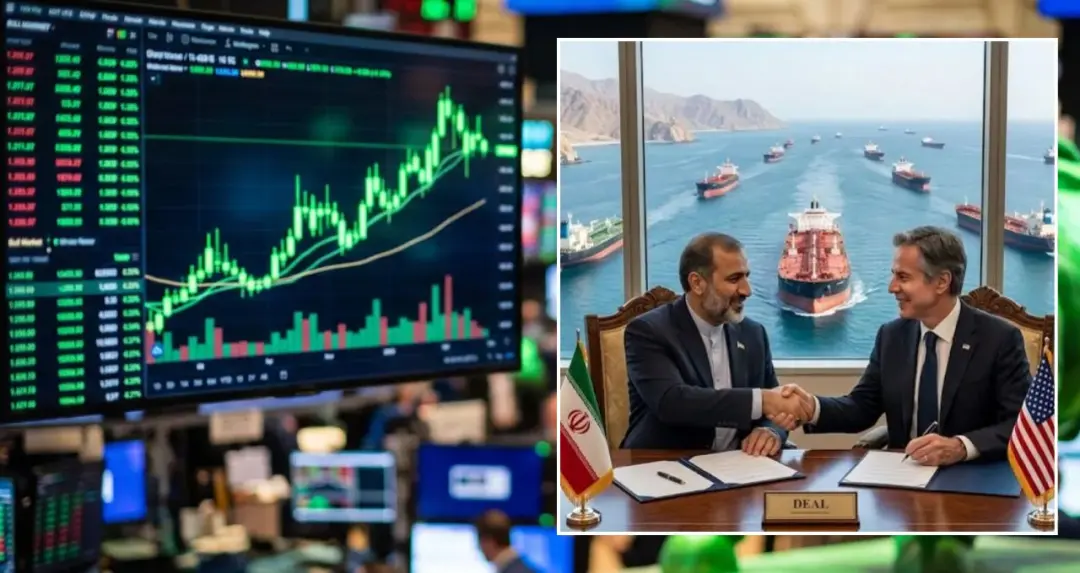
Indian equity markets are expected to open higher on Tuesday, November 3, following a sharp rally in the previous session. GIFT Nifty was trading higher, indicating a positive start for domestic benchmark indices. Expectations of easing tensions between the United States and Iran, along with a decline in crude oil prices, are supporting market sentiment. Investors will also track the September-quarter earnings of several major companies, including State Bank of India (SBI), Bajaj Finserv and Lupin.
At 8:05 am, GIFT Nifty was trading at around 23,523.50. However, tensions between the United States and Iran remain unresolved. Market movements are therefore likely to depend on global cues and corporate earnings announcements.
Indian equity markets recorded substantial gains on Monday, November 2. The Sensex advanced 1,233.25 points to close at 75,692.78, while the Nifty gained 387.70 points to settle at 23,440.80.
Reliance Industries played a major role in the rally, with its shares rising more than 11%.
Buying by foreign investors also supported the market. Foreign portfolio investors purchased shares worth approximately Rs 3,115 crore on Monday. In contrast, domestic institutional investors recorded net selling of around Rs 392 crore.
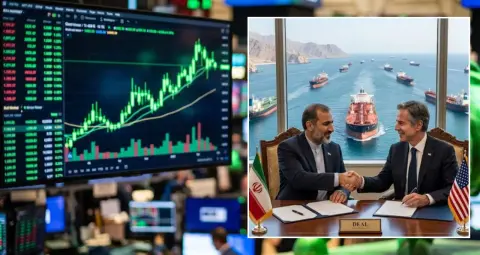
Meanwhile, discussions involving Iran and Qatari mediators have raised expectations of an end to the conflict. Brent crude remained around $105 per barrel after declining approximately 7% in the previous session.
However, reports of a US attack on Iran's Qeshm Island have kept geopolitical tensions in focus. According to market analysts, 23,200 could act as the first key support level for the Nifty in the event of a decline. The 23,000 level would be another important support.
Several major companies are scheduled to announce their September-quarter results on Tuesday. These include State Bank of India (SBI), Bajaj Finserv, Lupin, the National Stock Exchange and Bajaj Holdings and Investment.
Other companies scheduled to report their earnings include Bata India, Emcure Pharmaceuticals, Endurance Technologies, Graphite India, Inox India, MCX, Mahanagar Gas, Metropolis Healthcare and Utkarsh Small Finance Bank.
In the banking and financial services sectors, investors will particularly track the performance of SBI and Bajaj Finserv. Their profit and business performance figures could influence movements in their respective shares.
Quarterly results announced on Monday showed varied performances across companies.

ITC reported an 18.5% year-on-year decline in profit to Rs 4,229.3 crore. However, its revenue increased 43.85% to Rs 30,578.4 crore.
State-owned aluminium producer NALCO reported a 28.3% increase in profit to Rs 1,835 crore. Its revenue also rose 26.3% to Rs 5,419.4 crore.
Marico reported a 29.2% increase in profit to Rs 558 crore, while revenue grew 13% to Rs 3,897 crore.
Among pharmaceutical companies, Akums Drugs reported a 176.7% increase in profit to Rs 112.9 crore. Granules India recorded a 39.2% rise in profit to Rs 181.8 crore.
In contrast, KEC International reported an 81.5% decline in profit to Rs 29.7 crore. Gujarat State Fertilizers & Chemicals also recorded a 38.2% decline in profit to Rs 200.2 crore.
Trident reported a 93.1% increase in profit to Rs 175.6 crore. The company's board also approved a Rs 4,650 crore capacity expansion and modernisation plan.
Pharmaceutical company Lupin has received approval from the US Food and Drug Administration (USFDA) for its 10 mg Amifampridine tablets. The development is expected to keep the company's shares in focus.
Samvardhana Motherson International announced that it would work with Singapore's Nanyang Technological University on Spinheat technology. The technology can dry industrial coatings faster while consuming less energy.
TVS Holdings has received additional shares worth Rs 483.91 crore in its associate company, Home Credit India Finance, through a rights issue.
Meanwhile, state-owned construction company NBCC has signed agreements with various departments of the Bihar government for four redevelopment projects in Patna. The projects will be executed under a self-financing model without government budgetary support.