
The Indian Space Research Organisation (ISRO) successfully launched its advanced Earth observation satellite EOS-05 aboard the GSLV-F17 rocket on Friday. The satellite was placed into the designated sub-geosynchronous transfer orbit about 18 minutes after liftoff.
According to ISRO, the GSLV-F17 lifted off from the spaceport on Friday and successfully deployed EOS-05 into the designated sub-geosynchronous transfer orbit about 18 minutes later. An ISRO senior scientist described EOS-05 as an “Eye in the Sky” because of its Earth-monitoring capabilities and ability to provide high-quality imagery.
The satellite’s images and data can be used to monitor agricultural activities, assess natural disasters and support various development projects. The data is also intended for use in agriculture, disaster management and other important areas.
Prime Minister Narendra Modi congratulated ISRO on the successful EOS-05 mission through social media platform X. He described the mission as an example of the growing strength of India’s space programme.
Modi said the successful launch of GSLV-F17 reflects excellence, innovation and growing technological capabilities in India’s space sector. He also highlighted the strengthening cooperation between ISRO and Indian industry.
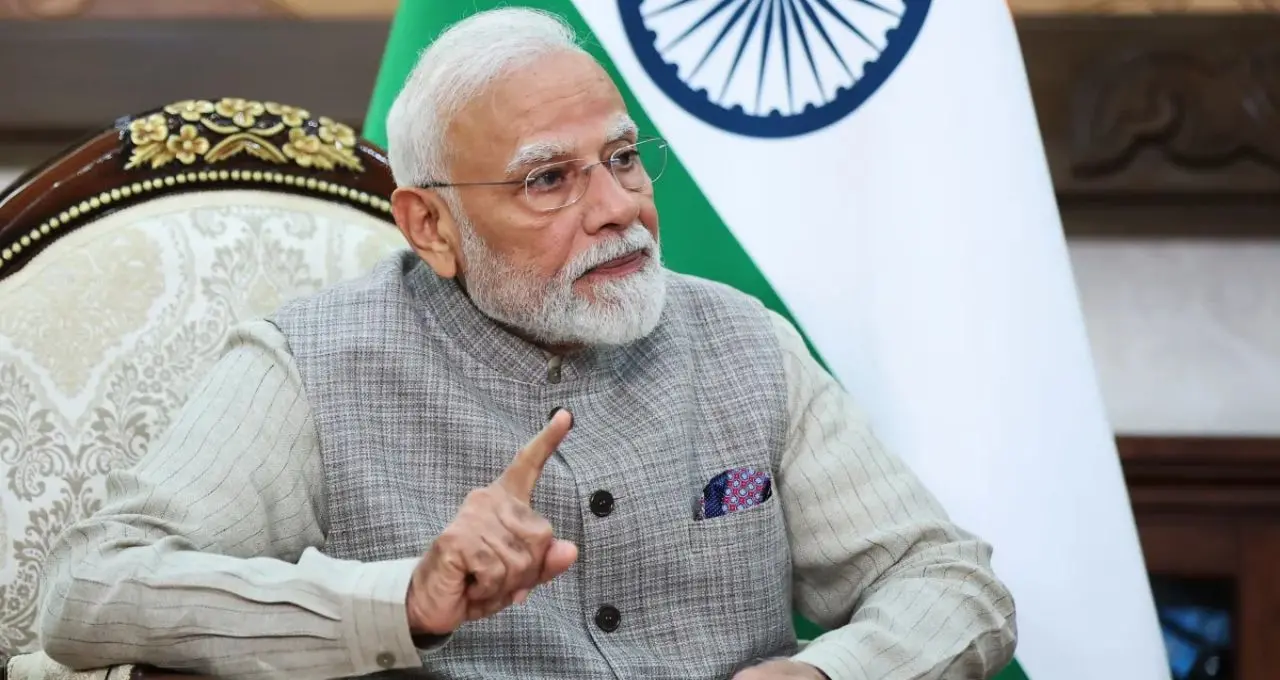
According to the Prime Minister, the growing partnership between government institutions and private industry in the space sector is giving new momentum to India’s space programme and helping expand the capabilities of the country’s overall space ecosystem.
ISRO Chairman V. Narayanan described the successful EOS-05 mission as the organisation’s first major achievement of the current financial year. He said the success was the result of the hard work of scientists and engineers and would provide further motivation for the team’s future responsibilities.
Narayanan also said ISRO teams are working with Indian industries and other institutions to prepare for the first uncrewed test of the Gaganyaan mission, with work continuing toward a launch target in the current calendar year.
Gaganyaan is India’s ambitious human spaceflight programme. Under the programme, uncrewed missions will first be used to test technical systems and safety arrangements.
According to V. Narayanan, ISRO has set a target of conducting six more launches during the financial year. These include the navigation satellite NVS-03.
Through successive launch missions, ISRO is working to strengthen India’s space infrastructure related to Earth observation, navigation, communications and scientific research.
At a press conference, the ISRO Chairman shared details about EOS-05 and said the Earth observation satellite has an operational life of about nine years.
He also rejected speculation that EOS-05 would be used as a spy satellite. According to him, it is an Earth observation mission intended to provide important Earth-related data and imagery.