External Affairs Minister S. Jaishankar said in Kyiv that stopping purchases of Russian oil, minerals or other goods would not end the Russia-Ukraine war. He said a lasting solution could only be achieved through diplomacy, dialogue and an agreement, and offered India’s assistance, including mediation if required.
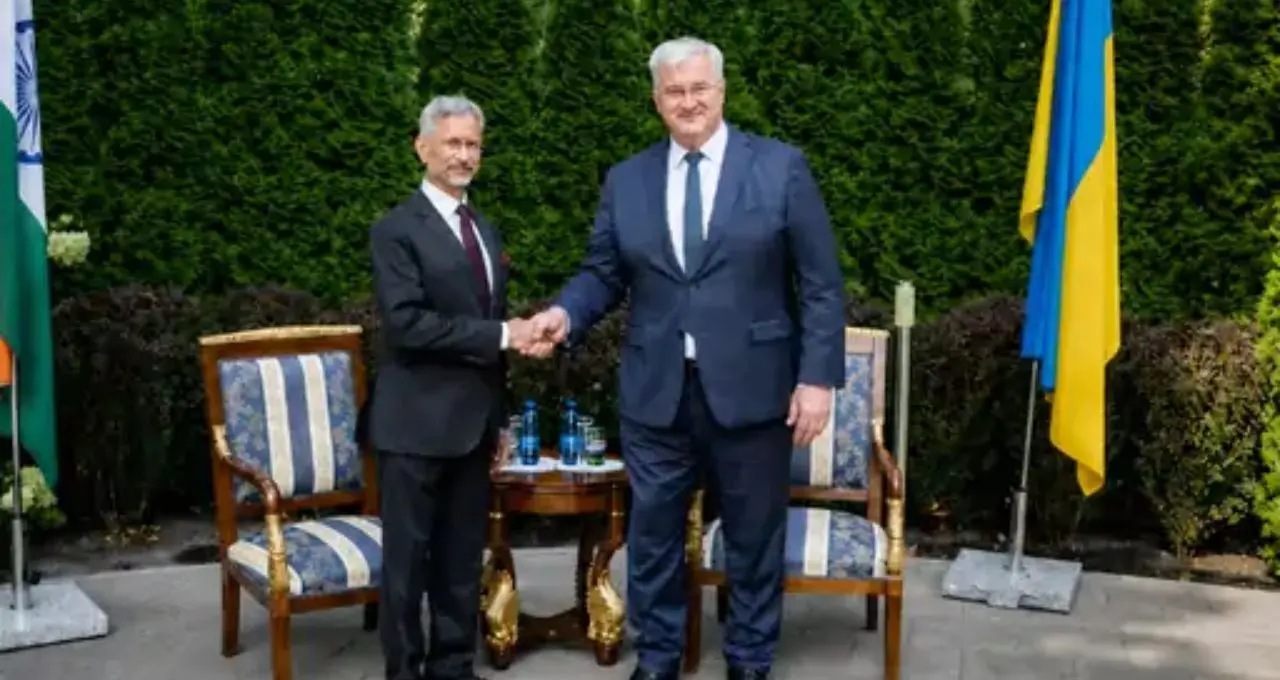
Jaishankar made the remarks on Thursday in Kyiv during a media interaction with Ukrainian Foreign Minister Andrii Sybiha. He reiterated India’s position on resolving the Russia-Ukraine conflict.
He said the conflict had entered its fifth year and could not be ended by purchasing or stopping purchases of oil, alumina, minerals, metals or fertilisers. According to him, the solution lies in an agreement reached through dialogue and diplomacy.
Jaishankar’s remarks came amid international discussion and pressure on several countries, including India, over purchases of Russian oil. India has consistently maintained that the Russia-Ukraine conflict should be resolved through dialogue and diplomacy rather than military action.
Jaishankar said India was ready to help bring an end to the ongoing war between Russia and Ukraine. He also said India was prepared to play a mediating role if required.
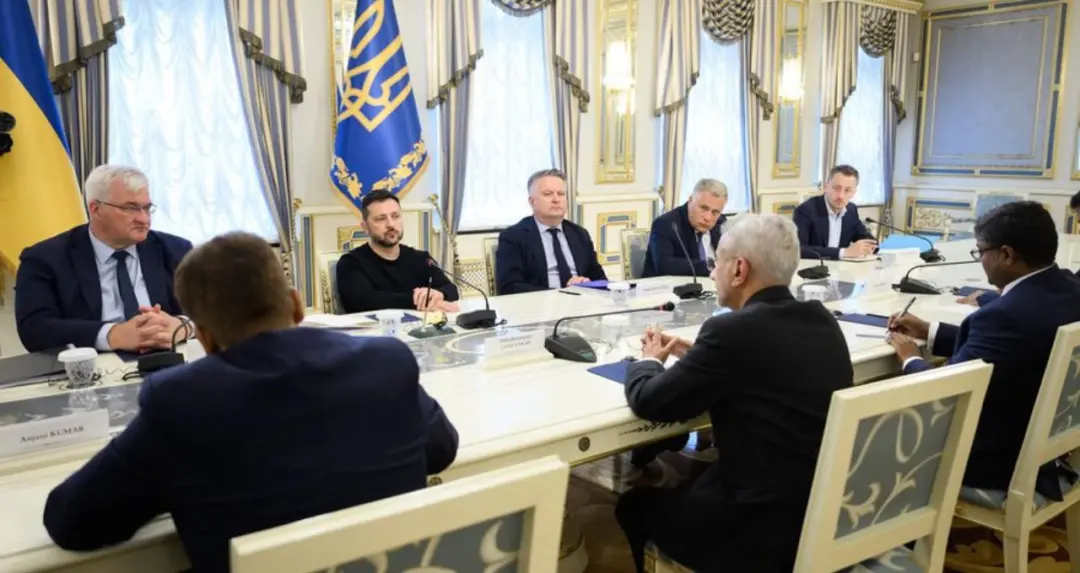
During his visit to Kyiv, Jaishankar also met Ukrainian President Volodymyr Zelenskyy. The discussions covered bilateral relations as well as issues related to the war and regional circumstances.
India has maintained that the dispute between Russia and Ukraine should be resolved through direct dialogue between the two sides. New Delhi has repeatedly called on all parties to pursue the diplomatic route and move towards peace.
Ukrainian Foreign Minister Andrii Sybiha described Jaishankar’s visit to Kyiv as important. He said the visit by the Indian External Affairs Minister was particularly significant amid Russia’s continuing attacks.
According to Sybiha, Russia was continuously targeting Ukrainian cities, ports and civilian vessels. In this situation, the arrival of India’s External Affairs Minister in Ukraine was important for dialogue between the two countries.
The two foreign ministers also discussed normalising maritime traffic in the Black Sea and related global food security issues. Sybiha welcomed Prime Minister Narendra Modi’s position that India had consistently advocated ending the war through dialogue and diplomacy.
India and Ukraine also agreed to hold the next meeting of the Inter-Governmental Commission.
The discussions between Jaishankar and Sybiha were not limited to the war. They also discussed ways to expand economic and technological cooperation between India and Ukraine.
The talks focused on strengthening cooperation in areas including infrastructure, pharmaceuticals, technology and the digital sector. These areas were discussed in the context of taking bilateral relations between the two countries forward.
The war has created several challenges in India-Ukraine relations, but both sides are exploring possibilities for advancing economic and technological cooperation.
The Black Sea has become an important strategic and trading region during the Russia-Ukraine war. Jaishankar stressed the need to ensure the safety of all sailors in the region, including Indian nationals.
According to Ukraine, more than 300 vessels have been targeted by Russia and Ukraine over the past approximately one and a half months. The vessels include ships carrying grain, oil tankers and other cargo vessels.
The continuing attacks are affecting maritime trade in the Black Sea. Ship owners are facing risks in using the route, raising concerns over transportation and freight costs.
Russia and Ukraine export large quantities of agricultural products through the Black Sea. Together, the two countries account for around 30 percent of global wheat exports.
Continued attacks on the maritime route could therefore affect global food supplies. Prices of major agricultural commodities such as wheat and maize could also face pressure.
Disruptions to maritime trade could increase export costs and affect the supply of food products to several countries. The situation could be a particular concern for developing countries and countries dependent on imports.
The full-scale war between Russia and Ukraine began in February 2022. Russia subsequently took control of several areas of Ukraine, and the conflict has continued between the two countries.
The war has caused large-scale loss of life. Reports have documented the deaths of thousands of civilians and soldiers, while millions of Ukrainians have been displaced. By June 2023, around 8 million people had left Ukraine for other countries.
Russia and Ukraine have held several rounds of talks and peace efforts during the war, but no agreement acceptable to both sides has been reached so far.
The Donbas region remains one of the key issues in the dispute between Russia and Ukraine. Russia wants to retain control over the region, while Ukraine is not prepared to give up its territory.
Russian President Vladimir Putin has previously said that for a peace agreement, Ukraine would have to give up its claim to territories under Russian control and recognise those territories as part of Russia.
Ukraine does not accept this demand. The issue of territorial control is therefore among the biggest obstacles to a possible peace agreement between the two countries.
US President Donald Trump has held talks with the leaders of both sides as part of efforts to end the Russia-Ukraine war. He recently also met Russian President Vladimir Putin in Alaska.
The visit was notable as the first visit to Alaska by a Russian leader in several decades. However, a permanent resolution to the fundamental disputes between Russia and Ukraine has not yet been reached.
External Affairs Minister S. Jaishankar is on an official visit to Ukraine and Poland from September 3 to 5. After completing his visit to Ukraine, he will travel to Poland.
In Poland, Jaishankar will hold bilateral talks with Deputy Prime Minister and Foreign Minister Radoslaw Sikorski. According to the Ministry of External Affairs, the visit aims to further strengthen India’s relations with the two European countries.
The discussions will cover regional circumstances, bilateral relations and important issues related to shared interests.