The Karkardooma Court has acquitted 12 accused, including Lokesh Solanki and Pankaj Sharma, in the Mursaleen murder case linked to the February 2020 Delhi riots. The court held that the prosecution failed to present sufficient evidence to prove the charges beyond reasonable doubt.
Additional Sessions Judge Praveen Singh pronounced the judgment on August 25 after examining the witnesses and other evidence presented in the case. The court found that sufficient and reliable evidence was not available on record to establish the serious offences alleged against the accused. However, accused Himanshu Thakur was convicted for possessing stolen property.
The accused acquitted by the court are Lokesh Solanki, Pankaj Sharma, Ankit Chaudhary alias Fauji, Prince alias DJ Wala, Jatin Sharma alias Rohit, Himanshu Thakur, Vivek Panchal alias Nandu, Rishabh Chaudhary alias Tapas, Sumit Chaudhary alias Badshah, Tinku Arora, Sandeep alias Mowgli and Sahil alias Babu.
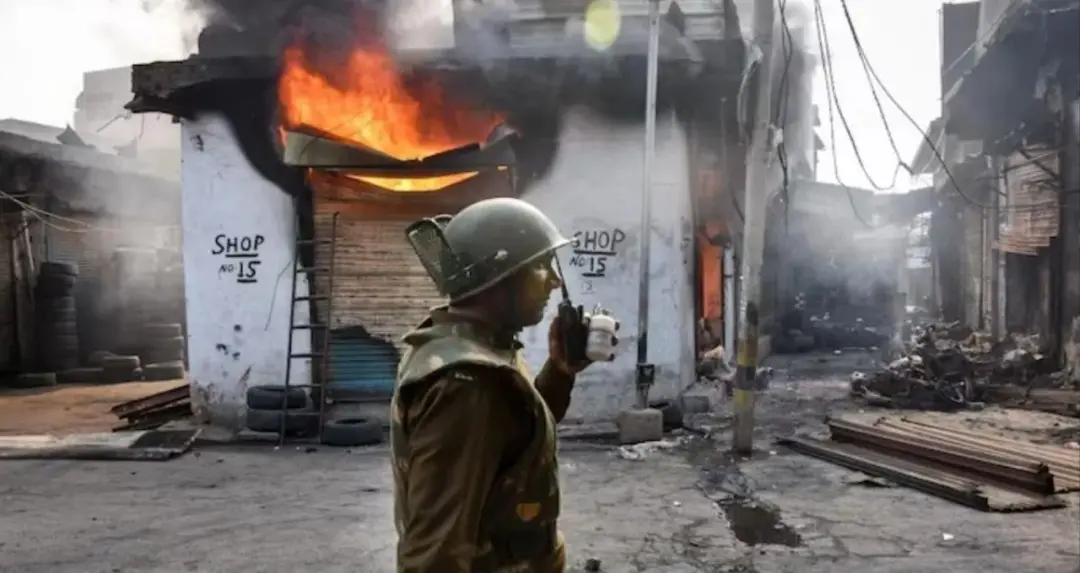
The case relates to violence in the Gokulpuri area of northeast Delhi in February 2020. According to the prosecution, Mursaleen was killed during the riots. Following a police investigation, several people were named as accused and prosecuted under various provisions of the Indian Penal Code.
The court held that the material presented by the prosecution was insufficient to establish the principal charges against the accused and consequently extended them the benefit of doubt.
During the trial, the prosecution charged the accused with offences including unlawful assembly, rioting, rioting with deadly weapons, common liability, murder, destruction of evidence, arson and dacoity.

The court held that it was the prosecution's responsibility to establish the legal elements required for these charges. However, the record did not contain sufficient evidence to establish that all the accused were individually involved in the relevant incidents or had committed the alleged offences.
The court also clarified that merely being present in a crowd cannot by itself be the basis for imposing serious criminal liability. Concrete evidence concerning each accused's individual conduct and role in the alleged offence was required.
In its judgment, the court observed that merely being part of a riotous crowd was not sufficient to convict an accused. The prosecution was required to establish what the accused had actually done and what individual role they had played in the alleged offence.
The court further said that even if the presence of the accused in the crowd was accepted, it was necessary to establish that they possessed deadly weapons or actively participated in violent activities. According to the court, there was no concrete evidence on record establishing that the accused concerned were carrying weapons.
For this reason, the prosecution could not sufficiently establish the necessary elements of the provisions relating to unlawful assembly and rioting.
While examining the murder charge, the court also considered the statements of the eyewitnesses presented by the prosecution. According to the court, none of the persons described as eyewitnesses supported the prosecution's case.
The witnesses did not confirm that they had seen a riotous crowd killing Mursaleen near Johri Pur Puliya between around 4 pm and 4:30 pm on February 25, 2020.
The court said that when the alleged eyewitnesses themselves did not support the prosecution's case, there was insufficient basis to establish the murder charge. Consequently, the charge of murder under Section 302 of the IPC could not be sustained.
Charges relating to dacoity and murder during dacoity were also brought in the case. However, after reviewing the record, the court found that sufficient evidence had not been presented to prove these charges.
During the proceedings, the Special Public Prosecutor also acknowledged that the prosecution did not have sufficient evidence against the accused under the provisions relating to murder and dacoity. The court accepted this conclusion on the basis of the available record and extended the accused the benefit of doubt in these charges.
According to the prosecution, at around 10:13 am on February 28, 2020, the Gokulpuri police station received information that a body was lying in a drain near Johri Pur Tiraha. Police reached the spot and the body was sent to Guru Tegh Bahadur Hospital.
A medico-legal case was prepared at the hospital and the body was subsequently kept in the mortuary. Meanwhile, on March 1, 2020, Nargis filed a missing-person complaint for her husband Mursaleen at Gokulpuri police station.
Around 11 days later, on March 12, 2020, Nargis identified the body recovered from the drain as that of her husband Mursaleen. The police investigation subsequently examined the connection between the murder and the riots, and proceedings against several accused were pursued.
While the court acquitted 12 accused of murder, rioting, arson, dacoity and other serious charges, Himanshu Thakur did not receive complete acquittal. The court convicted him under Section 411 of the Indian Penal Code for knowingly possessing stolen property.
The court held that the prosecution had successfully proved the necessary facts for this charge beyond reasonable doubt. Himanshu Thakur was therefore convicted for the offence.
Several cases connected with the February 2020 Delhi violence have reached courts in the years since the riots. Separate proceedings have involved allegations of murder, rioting, arson and other serious offences.
The verdict in the Mursaleen murder case forms part of these legal proceedings. The court reiterated that in a criminal trial, merely making allegations is insufficient and that the prosecution must prove each charge beyond reasonable doubt through reliable evidence.
After examining the witness testimony and documentary evidence available in the case, the court found that the evidence required to establish the serious charges of murder, rioting and dacoity was insufficient. The 12 accused were therefore acquitted of those charges, while Himanshu Thakur was convicted separately for possessing stolen property.