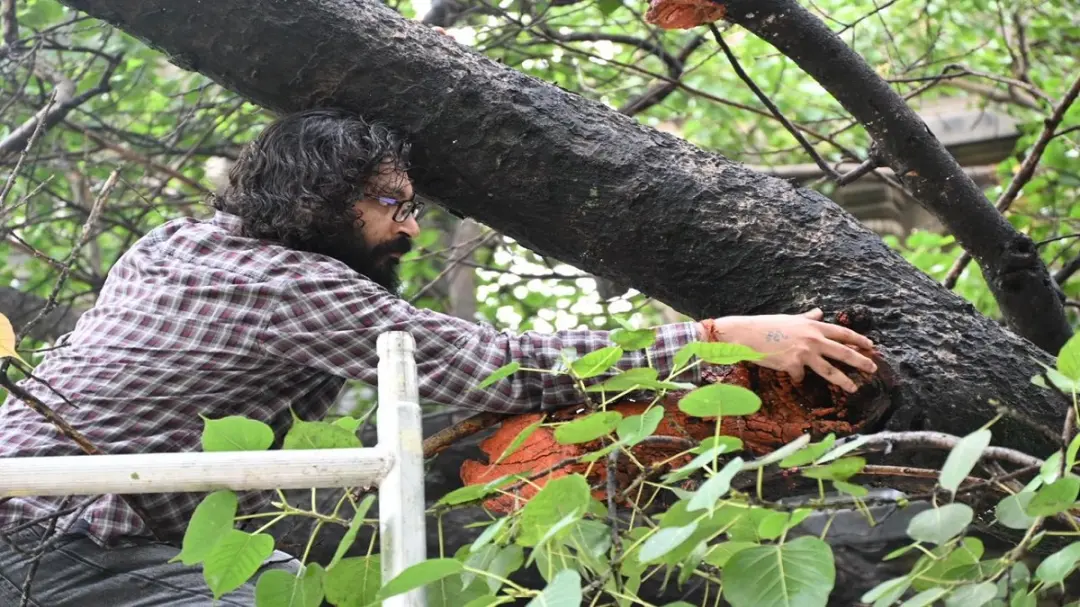
The Mahabodhi Temple administration and experts have launched a special conservation initiative to protect the world-renowned Bodhi Tree located within the temple complex in Bodh Gaya. The move follows signs that some of the tree's leaves had turned yellow and showed indications of infestation by the mealybug pest. Acting on scientific advice, authorities conducted spraying with an eco-friendly pesticide to control the pest without harming the sacred tree while maintaining its natural health.
The Bodhi Tree is regarded as a sacred symbol by millions of Buddhist devotees. It is believed that Gautama Buddha attained enlightenment beneath this tree. Every year, millions of pilgrims and tourists from India and abroad visit Bodh Gaya, making the protection and conservation of the tree one of the administration's highest priorities.
According to experts, routine inspections found that some of the tree's leaves appeared more yellow than usual. After signs of mealybug infestation were detected, botanical scientists and agricultural experts were consulted. They recommended the use of organic or eco-friendly pesticides instead of chemical treatments to avoid any adverse impact on the tree's biological structure and the surrounding environment.
The pesticide was subsequently sprayed under expert supervision using prescribed quantities and scientific methods. During the process, care was taken to ensure that the tree's roots, trunk and new leaves were not damaged. Following the treatment, the condition of the tree is being continuously monitored, and periodic health assessments are being conducted.
Botanical scientists said that mealybugs are pests that feed on the sap of plants and trees, affecting their growth. If not controlled in time, the infestation can cause leaves to turn yellow and affect the overall health of the plant. Experts, however, said the situation can be controlled when appropriate measures are taken at an early stage.
The management committee and the concerned departments have also strengthened the monitoring system for the Bodhi Tree. A team of experts will periodically inspect the leaves, branches and roots. If any future signs of infestation or pest activity are detected, treatment will be carried out immediately in accordance with scientific advice.
Environmental experts said that the balanced use of modern scientific techniques and traditional conservation measures is essential for preserving trees of historical and religious importance. Such an approach helps protect the tree's natural structure and supports its long-term conservation.
Devotees have also been urged not to damage the tree's branches, leaves or roots while offering prayers and to follow the prescribed rules within the temple premises. The administration said that safeguarding the Bodhi Tree is a shared responsibility of government agencies, devotees and citizens alike.
Experts continue to monitor the condition of the Bodhi Tree. The administration expects that the eco-friendly pesticide treatment and regular scientific supervision will help control the impact of mealybugs and preserve the historic and religious heritage for future generations.