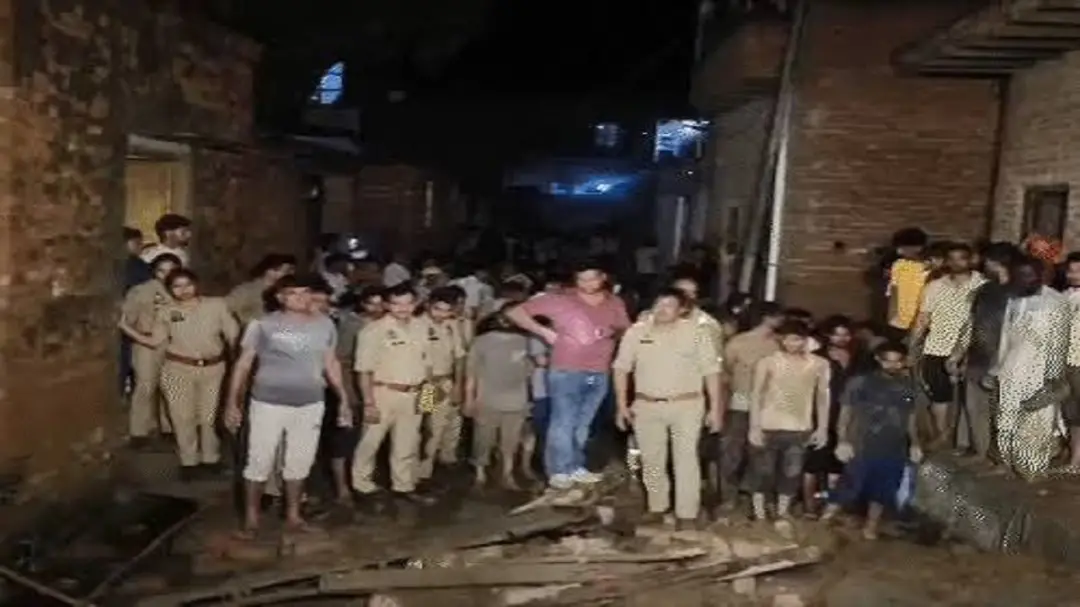
Chaos broke out during a coaching class in Muzaffarpur after plaster from the ceiling of a community building suddenly broke away and fell to the ground. Children were studying inside the building at the time of the incident. Around a dozen children are reported to have been injured after the plaster and debris fell. The sudden fall of the debris triggered screams among the children, and a stampede-like situation developed briefly inside the classroom. The injured children were subsequently taken to hospital for treatment.
The incident has raised questions about the safety and dilapidated condition of the community building. The fall of ceiling plaster in a building being used for coaching classes has also increased concern among local residents. Parents of the children have demanded that the condition of the building be inspected and that necessary measures be taken to prevent a recurrence of such an incident.
According to the information available, the children were attending their regular coaching class when the incident occurred. The teacher was conducting the class and all the students were seated in their respective places. During the class, a portion of the building's ceiling suddenly broke away. The plaster and debris fell on the children sitting below. The incident happened so suddenly that the children and teacher had no time to react.
As soon as the plaster fell, panic spread among the students in the classroom. Some children, frightened by the incident, got up from their places and ran towards the exit, while fellow students and people nearby helped the injured children get outside. Local residents reached the spot after receiving information about the incident. The children's relatives also began arriving at the site and the hospital after learning about the incident.




Around 12 children are reported to have been injured in the incident. They were immediately taken to hospital for treatment. The injuries caused concern among the children's parents, and several relatives reached the hospital to check on their children. The children were examined and treated at the hospital.
The incident has raised questions about why the safety condition of the community building had not been inspected earlier, despite coaching classes being conducted there. If the ceiling or plaster of the building was weak, conducting classes for children there could have posed a risk. Regular inspections of ceilings, walls, beams and other parts of public buildings are necessary, particularly when large numbers of children or other people regularly visit such premises.
Local residents said the community building has been used for various activities for a long time. In such circumstances, responsibility for the building's maintenance and periodic repairs rests with the concerned department or local administration. Following the fall of the plaster, there is now a need for a complete structural inspection of the building to determine whether only the plaster had weakened or whether defects were also present in other parts of the structure.
Muzaffarpur, a major city, has several community buildings and public premises that are used for various social, educational and administrative activities. Local coaching classes and other classes are also conducted at several such places. The capacity of buildings and applicable safety standards need to be considered at such locations. This is particularly relevant for activities involving children, where any lapse can have serious consequences.
The incident has also increased concern among parents. Parents who send their children to coaching classes expect the places where their children spend several hours to be safe. When ceiling plaster suddenly falls and injures several children, questions arise for parents regarding the safety of the building.
Following the incident, there may also be a demand at the local level for a review of all activities being conducted in such buildings. If a building is found to be in an unsafe condition, children's classes and other activities involving crowds should not be conducted there until repairs are completed. Other community buildings in the area may also be inspected to prevent a similar incident from occurring elsewhere.
Incidents involving falling plaster are sometimes considered minor, but they can turn into serious accidents when people are present underneath. Moisture, a prolonged lack of repairs, poor-quality construction materials or the age of a building can be among the reasons behind ceiling plaster falling. The actual cause can be established only after a technical inspection. A technical assessment of the building will therefore be important following the incident.
The incident has also raised the question of how regularly safety audits are conducted in public buildings. Periodic inspections of ceilings and walls can help identify weakened sections in advance. Timely minor repairs can help prevent major accidents. Such inspections are particularly important in schools, coaching centres, community buildings and other public premises.
For the families of the children injured during the incident, their treatment is currently the most important concern. The health of the injured children is being monitored. The incident has created fear among relatives, who want to ensure that their children do not have to study in an unsafe place in the future.
The local administration now faces responsibility on two levels. The first is to ensure that the injured children receive necessary medical assistance, while the second is to inspect the safety of the building. It will also be necessary to examine under what permission or arrangement the coaching class was being conducted there. If the building was being used for an activity other than its designated purpose, the rules associated with such use may also be examined.
The incident, which occurred while children were present in a public building, highlights the importance of safety arrangements. Before classes for children are conducted in any building, its structural safety should be ensured. Existing signs such as peeling plaster, cracks in the ceiling, water leakage or other defects should not be ignored.
Following the Muzaffarpur incident, local residents are now watching for administrative action. They have demanded an impartial inspection of the building to determine the cause of the incident. If negligence in maintenance is found, action to fix responsibility should also be considered.
For now, the incident involving the fall of plaster from a community building during a coaching class, in which around a dozen children were injured, has caused concern in the city. Safety should be the first priority in any building used by children. Timely inspection and maintenance of buildings can reduce the possibility of such incidents.
The incident underscores the need for regular inspection and maintenance of buildings used for public and educational activities. A minor structural defect can become a serious accident when dozens of children are present underneath. The Muzaffarpur incident has therefore raised questions before the departments responsible for safety and the operators of buildings regarding the adequacy of existing safety arrangements.