Netaji Subhas Chandra Bose undertook a covert submarine journey from Germany to Japan in 1943 as part of efforts to secure international support for India’s independence. The mission involved severe spatial constraints, limited ventilation, and constant security risks at sea.
The journey began on 9 February 1943 from Kiel port aboard the German submarine U-180, with Bose accompanied by his associate Abid Hasan. To avoid enemy detection, the submarine remained submerged for most of the voyage, surfacing primarily at night for battery charging and ventilation.

Conditions inside the submarine were confined and suffocating, with narrow passages, dense machinery, persistent diesel fumes, metallic interiors, and artificial lighting eliminating any distinction between day and night. Sustaining mental discipline was essential under these circumstances.
Food and rest posed logistical difficulties. Long-preservation canned food and hard bread formed the standard provisions. Abid Hasan arranged rice and lentil khichdi for Bose, ensuring continuity of familiar dietary practices during the voyage.
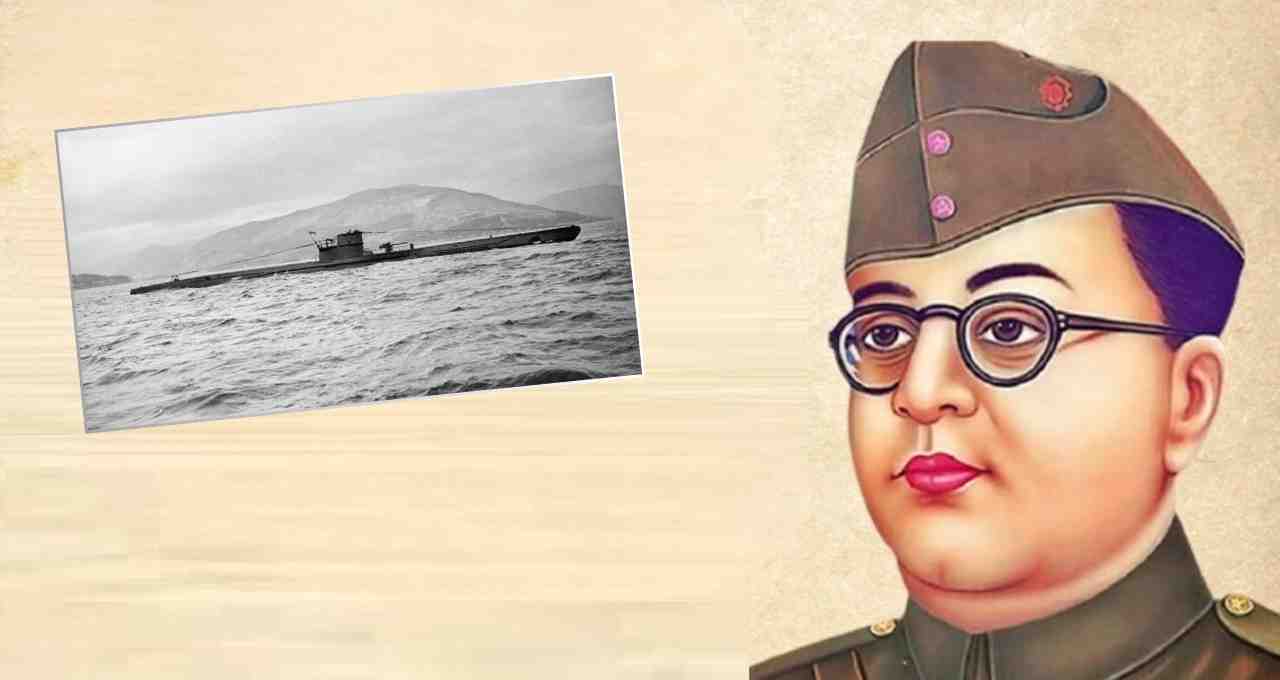
In late April 1943, Bose and Abid Hasan were transferred from the German submarine U-180 to the Japanese submarine I-29. The transfer took place on the sea surface using a rubber boat amid waves and security threats, requiring precise coordination between the two submarines.
The Japanese submarine provided meals prepared with Indian spices and allocated a designated cabin for Bose. Despite language barriers and communication limitations, the mission objectives remained unchanged throughout the journey.
On 13 May 1943, submarine I-29 reached Sabang near the northern coast of Sumatra. From this point, Bose continued his political and military efforts from East Asia, including radio broadcasts aimed at mobilising support and organisation among Indians.