More than 2,000 citizens have written to Chief Justice of India (CJI) Surya Kant seeking a halt to the Special Intensive Revision (SIR) of electoral rolls until judicial review of the process and its legality is completed. The letter also seeks suo motu action concerning the Election Commission’s role and an independent inquiry into the technical systems associated with electoral data.
The letter has been signed by people from different fields, including former Navy chief Admiral Vishnu Bhagwat, former IAS officer Aditi Mehta, senior advocate Prashant Bhushan, historian Aditya Mukherjee and actor Prakash Raj, along with academics, lawyers, journalists and social activists.
The petition urges the Supreme Court to stay the SIR process until its legality and the procedure adopted are reviewed. It also seeks a court-monitored investigation into alleged unauthorised changes to voter registration software and related forms.
The letter further seeks appropriate legal action against Chief Election Commissioner Gyanesh Kumar and other concerned officials. It also calls for a security and legal audit of ECINet by an independent expert committee appointed by the Supreme Court.
SIR, or Special Intensive Revision, is the Election Commission’s process for intensive revision of electoral rolls. Its objective is to update voter lists and verify records relating to eligible voters.
The current process has, however, been questioned on several grounds. Critics have said that large numbers of names were left out of draft electoral rolls during the exercise, raising questions about the possible exclusion of eligible voters.
The Election Commission has said that people whose names were left out during SIR can apply to the concerned Electoral Registration Officer (ERO) for inclusion as part of the continuous updating process for electoral rolls.


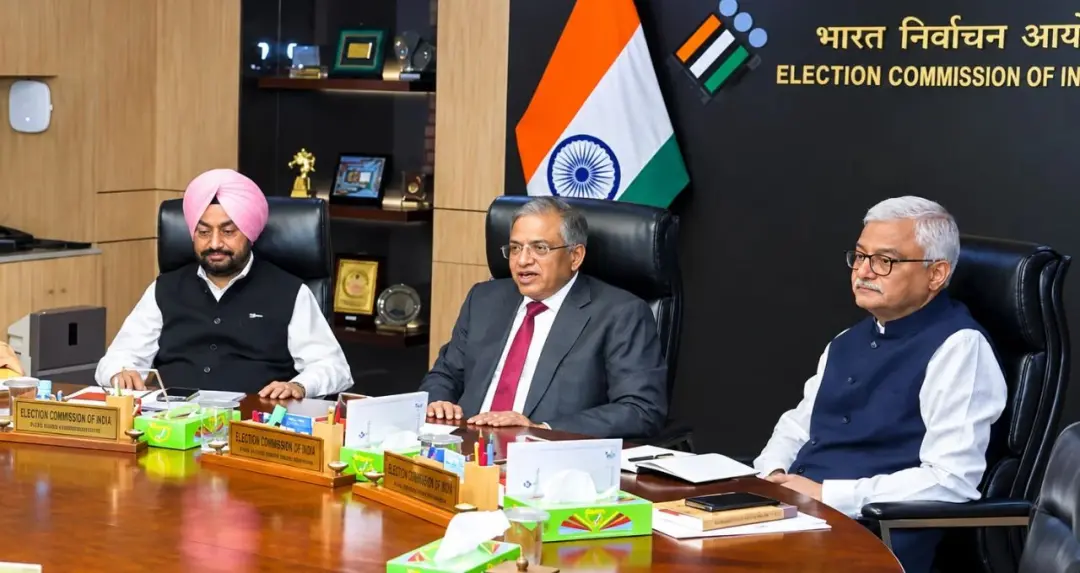
Amid the controversy over SIR, the Election Commission took nine decisions at a meeting on Saturday concerning its functioning and the electoral system.
The Commission said agendas would be shared before meetings in the future and records of decisions would be prepared after meetings. It also decided that new IT modules and portals would be reviewed before implementation.
Chief Election Commissioner Gyanesh Kumar and Election Commissioners Sukhbir Singh Sandhu and Vivek Joshi attended the meeting.
The Commission also clarified that decisions relating to the Special Intensive Revision of electoral rolls were taken unanimously. Election Commission officials have said that all decisions, including SIR, had the approval of all three commissioners.
The functioning of the Election Commission and reported differences among its members have also come under discussion during the SIR process. The Indian Express reported that over the previous 10 months, Election Commissioners Sukhbir Singh Sandhu and Vivek Joshi had formally objected at least 14 times to decisions and orders issued in the name of the Commission.
According to the Election Commission’s response, letters sent by Sandhu and Joshi to the Cabinet Secretary related to an officer appointed on deputation.
The report had stated that the two Election Commissioners objected to an order that could have resulted in the centralisation of powers relating to the addition, deletion and updating of names in electoral rolls.
The Commission said the work-reallocation order issued by the concerned officer was never implemented. It also clarified that all directions issued by the Election Commissioners to officials would be followed carefully.
The Election Commission has decided to constitute a committee to examine ECINet. According to the Commission, the committee will be headed by a senior Deputy Election Commissioner and will include an independent expert from an IIT or IIIT.
ECINet forms part of the Election Commission’s digital and technical systems. The decision to include an independent expert comes amid questions concerning the security and functioning of the system.
The letter sent to the CJI over SIR, however, seeks a security and legal audit of ECINet under the supervision of an independent expert committee appointed by the Supreme Court.
According to the Election Commission, people whose names could not be included in the draft electoral roll during SIR can apply to the concerned ERO for inclusion under the continuous updating process. The Commission has clarified that this also covers young and first-time voters.
Chief Electoral Officers (CEOs), District Election Officers (DEOs) and Electoral Registration Officers (EROs) have been directed to conduct special drives to add the names of such voters.
According to Election Commission data, 13.37 crore names have so far been reduced from the draft electoral rolls of 30 states and Union territories during the SIR process. The Commission’s figures put the total number of voters in the country at more than 96.88 crore. On this basis, around 14.1% of voters were reduced from the draft rolls during SIR.
The figures have brought the electoral-roll process, removal of names and issues concerning the rights of eligible voters into public discussion.
Despite the new decisions announced by the Election Commission, some questions relating to SIR remain unresolved. There is no clear information on why a question relating to parents was added to online Form-6. It has also not been clarified who directed the change or whether it has since been removed.
There is also no clear response on whose instructions led to appeals being filed against around 16 lakh names related to electoral rolls in West Bengal. Similarly, the Commission’s new decisions did not provide information on why the software feature for restoring a voter’s name in Goa was not activated or what action was taken on questions raised concerning certain officials in the IT department.
A group of citizens has sought Supreme Court intervention and a halt to the SIR process, while the Election Commission has announced decisions concerning its internal functioning, the revision process and its technical systems.
The issues currently raised in connection with SIR include the legal validity and procedure of the exercise, the reduction of a large number of voter names from draft electoral rolls, and the transparency and security of electoral IT systems. The next developments will depend on judicial proceedings concerning the matter and the Election Commission’s response to the remaining questions surrounding SIR and its digital systems.