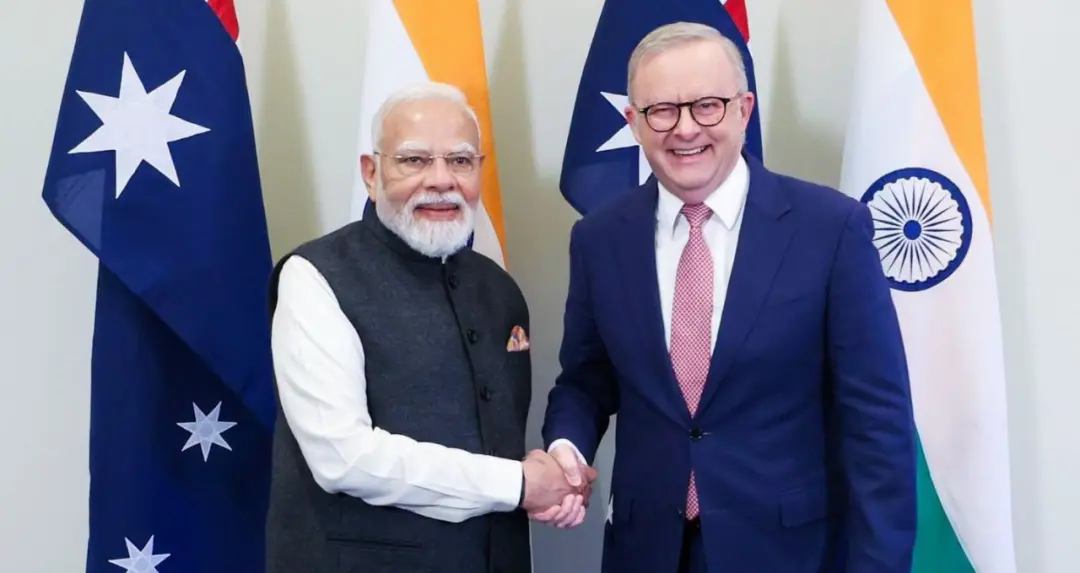
Prime Minister Narendra Modi called for strengthening the India–Australia economic partnership by expanding cooperation in investment, clean energy, defence, semiconductors, technology and trade while addressing the India–Australia CEO Forum and Economic Roadmap Business Reception in Melbourne.
The Prime Minister said that in the current global environment, closer cooperation between trusted democratic countries such as India and Australia is important not only for both nations but also for the global economy. He said the world is facing uncertainties, supply chain disruptions and energy-related challenges, and that a ber partnership between India and Australia could provide a model for stability and growth.
Following the event, Australian Prime Minister Anthony Albanese took a selfie with Prime Minister Modi. During the visit, members of the Indian community also welcomed the Prime Minister.
Prime Minister Modi is scheduled to address nearly 40,000 people of Indian origin at Melbourne's Marvel Stadium.
The Prime Minister said India is rapidly emerging as one of the world's leading economies and offers significant opportunities for foreign investors. He invited Australian investors to participate in sectors including ports, airports, railways, roads, logistics, data centres, artificial intelligence (AI), semiconductors and digital infrastructure.


He said the Government of India is creating a secure, stable and transparent business environment for investors and added that Australia's major pension funds can play an important role in India's long-term growth.
The Prime Minister described clean energy as a key pillar of future cooperation between the two countries. He said India has set a target of achieving 500 GW of renewable energy capacity by 2030 and net-zero emissions by 2070.
He said India is expanding rapidly in green hydrogen, solar modules, wind turbines and hydro projects, and that Australia's technology, capital and natural resources could contribute to these efforts.
The Prime Minister also said India has set a target of developing 100 GW of nuclear power capacity by 2047 and noted that Australia's uranium reserves could support India's nuclear energy plans.
On emerging technologies, the Prime Minister said India is investing heavily in future technologies. He said the government is providing more than USD 10 billion in support through the AI Mission, Quantum Mission and semiconductor programmes.
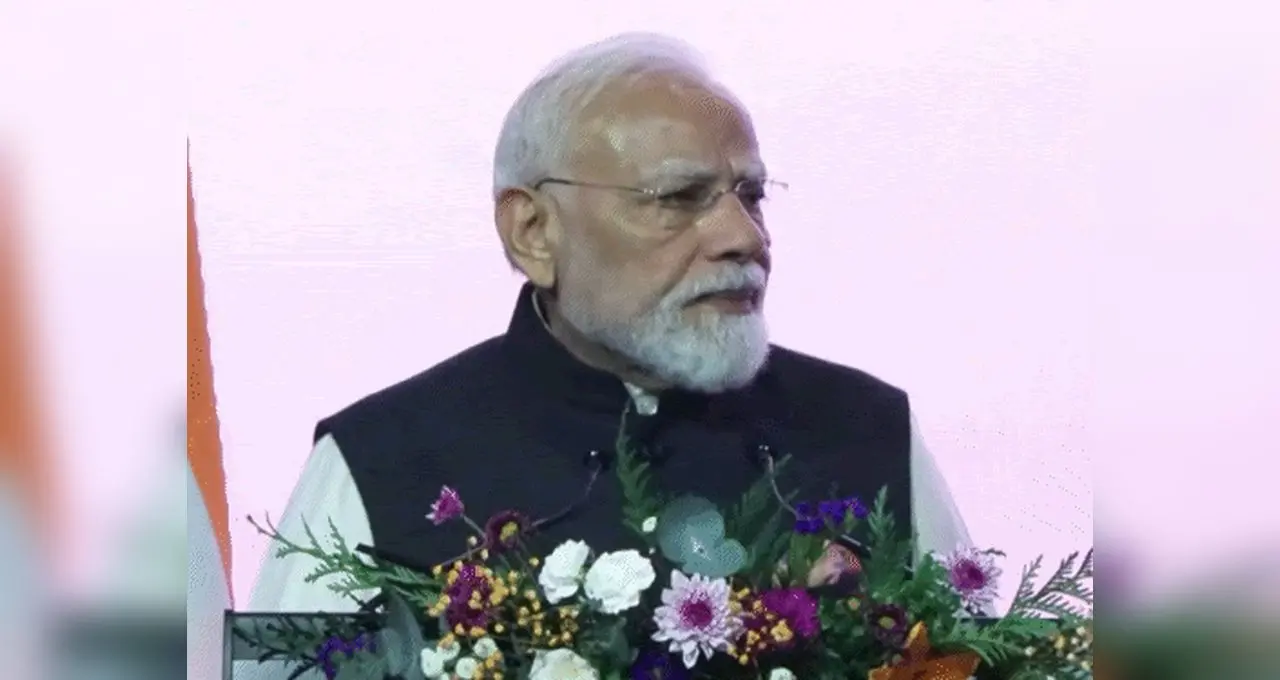
He proposed greater collaboration between the two countries in data centres, digital public infrastructure, quantum computing, semiconductor manufacturing and advanced technologies to develop global solutions.
The Prime Minister also called for expanding cooperation beyond the national level by strengthening partnerships among states, smaller cities, universities and industries.
He suggested linking Western Australia's critical minerals with the manufacturing capabilities of Odisha and Gujarat. He also said the agricultural and clean energy expertise of Queensland and Tasmania could contribute to the development of Indian states.
The Prime Minister highlighted opportunities for cooperation in education and skill development and cited the establishment of campuses by Deakin University and the University of Wollongong in GIFT City as examples of growing institutional collaboration.
The Prime Minister said that since the implementation of the Economic Cooperation and Trade Agreement (ECTA), India's exports to Australia have increased significantly. He said both countries are now moving towards the Comprehensive Economic Cooperation Agreement (CECA).
He said the two governments have created a b foundation for investment and innovation and called on industry to utilise these opportunities to further strengthen bilateral partnership.
During the Prime Minister's visit, discussions are also expected on cooperation in the defence sector, including maritime security, the Indo-Pacific region, defence industry collaboration and strategic partnership.
India and Australia are already expanding cooperation in regional security, supply chains and critical minerals.