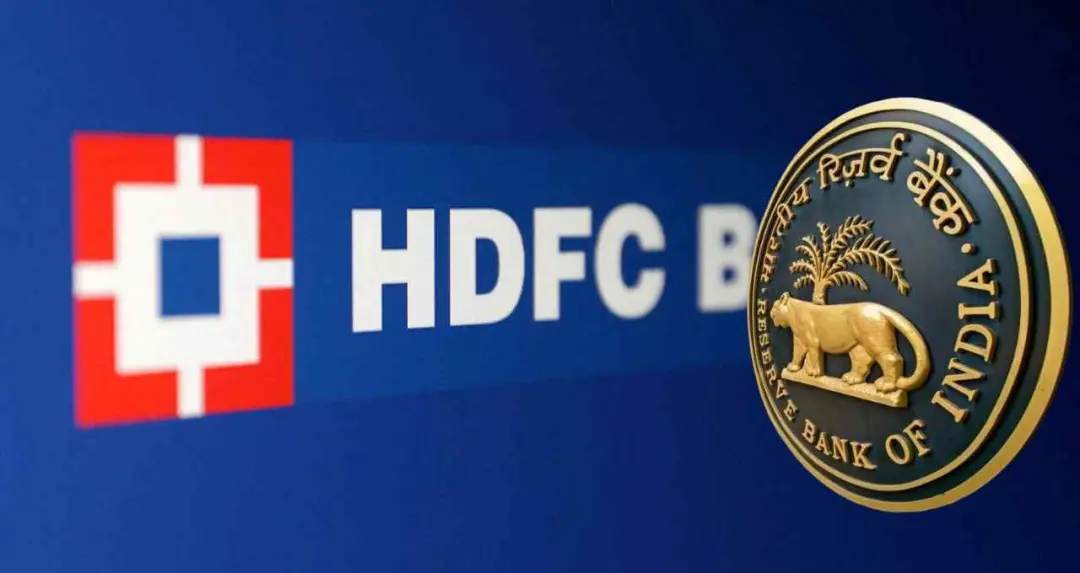
The Reserve Bank of India has stated that HDFC Bank remains financially b and that there are no major concerns regarding its governance, following market uncertainty after the resignation of its chairman.
Amid recent negative developments surrounding HDFC Bank, the Reserve Bank of India (RBI) said the bank’s financial position remains b and that there are no serious concerns regarding its governance or operations. The statement comes after the resignation of the bank’s part-time chairman Atanu Chakraborty led to uncertainty in the market.
The RBI said HDFC Bank is a domestic systemically important bank and continues to maintain a b financial position. It added that the bank’s board is functioning professionally and the management team is capable. The central bank also stated that its regular reviews have not identified any major deficiencies in governance or operations.




Atanu Chakraborty, part-time chairman and independent director of HDFC Bank, recently resigned from his position. In his resignation, he stated that certain events and working methods within the bank over the past two years were not aligned with his personal values and ethics.
Following this statement, concerns emerged in the market regarding potential governance issues within the bank. Investors treated the development as a serious signal, leading to a sharp decline in the bank’s share price.
According to the RBI, HDFC Bank is well capitalised and maintains adequate liquidity. This indicates that the bank is capable of meeting its financial obligations and that its balance sheet remains in a b position.
After Chakraborty’s resignation, the RBI approved a transition arrangement at the bank’s request. Keki Mistry has been appointed as part-time chairman for a period of three months. The appointment ensures continuity in leadership and that operations will continue as usual.
Keki Mistry stated that the bank’s board is fully committed to maintaining institutional strength and governance. He said the bank operates with b governance standards, strict internal controls, and an experienced management team. He also stated that the bank’s strategy, business priorities, and execution capabilities remain unchanged.
Before the RBI’s statement, HDFC Bank shares saw a sharp decline in the market. In early trading, the stock fell by around 8.6 percent to approximately ₹770. Heavy trading volumes were recorded during the session, with a large number of shares changing hands. The overall market trend was also weak, contributing to the decline.
Over the past one month, the stock has declined by about 8 percent, and in 2026 so far, it has recorded a decline of approximately 15 percent.
Market experts attributed the decline primarily to uncertainty. Questions regarding internal conditions within the bank and coordination between the board and management contributed to pressure on the stock. The RBI’s statement is expected to provide some stability.
The RBI’s statement reflects continued regulatory confidence in HDFC Bank’s financial strength and governance. It indicates that the bank’s fundamentals remain intact.
Investors are advised to consider official statements and the bank’s fundamentals rather than making decisions based solely on market developments.